

Reuters —
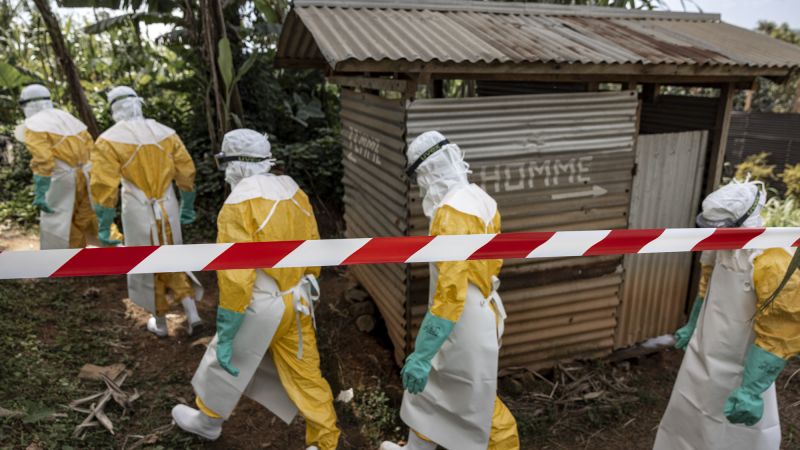
The World Health Organization (WHO) announced on Sunday that four nurses who were being treated for Ebola caused by the Bundibugyo strain of the virus have recovered from a hospital in Bunia, Democratic Republic of Congo (DRC).
More recoveries are expected, especially as people are diagnosed and treated earlier and as the response to the outbreak strengthens.
According to the agency, one laboratory employee also recovered, bringing the total number of people who have recovered from the virus to five. However, Brazil and Italy are investigating suspected cases related to travel to affected countries.
According to data distributed by the Ministry of Communications, the number of confirmed Ebola cases in the country rose to 282, with 42 deaths after 19 new positive test results were recorded.
Last month, the WHO declared the outbreak of the rare Bundibugyo virus in the Democratic Republic of the Congo and Uganda a public health emergency of international concern, although it does not meet the criteria for a pandemic emergency.
WHO Director-General Tedros Adhanom Ghebreyesus said during a visit to Bunia, the capital of eastern Congo’s Ituri region, on Saturday that there is currently no approved vaccine or treatment for Ebola, caused by the Bundibugyo virus, but “there is no lack of hope” as people can survive with the right medical care.
The outbreak is the 17th in the Democratic Republic of the Congo and the third largest since Ebola was discovered half a century ago, but it has outpaced the slow global response.
“The risk of regional spread is already occurring,” Jean Kaseya, director of the Africa Centers for Disease Control and Prevention, said in an FT editorial published on Sunday. It said more than 1,100 suspected cases were being investigated.
In Brazil, a man suspected of having Ebola in São Paulo tested positive for meningitis. Another suspected case has surfaced in Rio de Janeiro, where a patient has tested positive for malaria, local health authorities announced on Sunday. In both cases, the diagnosis does not rule out Ebola, they said.
In the São Paulo case, a man from the Democratic Republic of Congo complained of a fever after recently visiting an African country, and in Rio, the patient had recently traveled to Uganda.
In Italy, suspected Ebola cases were opened in Sardinia’s capital Cagliari on a man who returned from the Democratic Republic of the Congo with symptoms on Saturday, but the Health Ministry announced early Monday that the man had tested negative.
“We have confirmed that the risk (of Ebola) in Italy remains very low,” the ministry said.
