

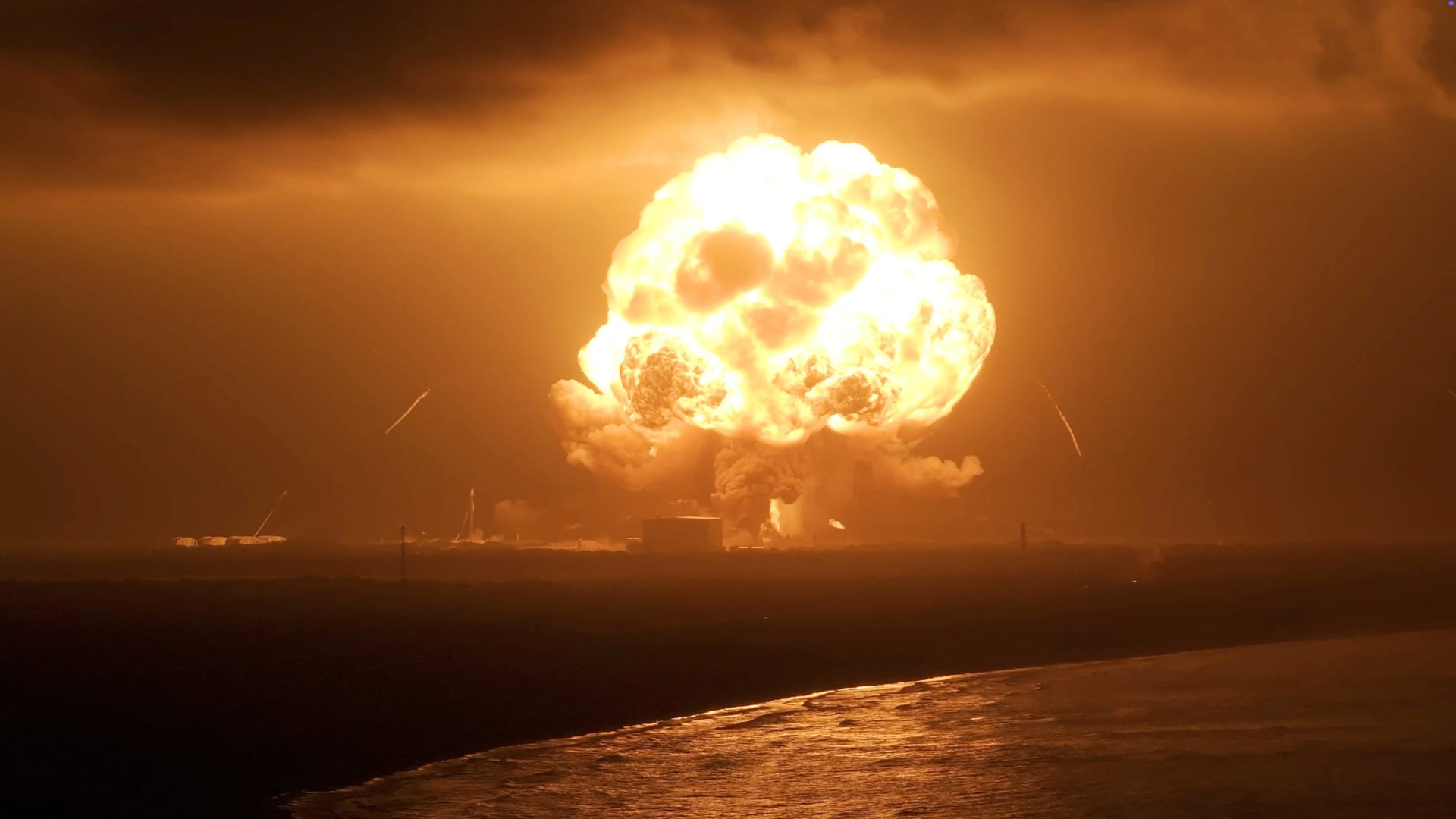
NASA Administrator Jared Isaacman told CNBC on Monday that repairing the launch pad, which was damaged last week by the Blue Origin rocket explosion, “will take a significant amount of time.”
Jeff Bezos’ Blue Origin was conducting a high-temperature test of its massive New Glenn rocket at the Space Force’s launch facility in Cape Canaveral, Florida, on Thursday when the rocket exploded in a fireball. After the incident, Bezos confirmed that all Blue Origin employees were safe and said it was a “very difficult day” but vowed to rebuild.
Isaacman said in an interview on CNBC’s CEO Council Summit that the 2028 deadline is “within” a possible launch pad recovery.
“We’ve all collectively rallied around the idea that we want to make sure we see Blue Origin be a huge success,” Isaacman said. “So we have to recover, we have to retrieve the pads, we have to provide subject matter expertise, we have to make sure we analyze the root cause. Let’s figure out what’s broken. And we have to keep moving forward.”
Isaacman, Bezos and Blue Origin CEO Dave Limp toured the launch pad on Friday and addressed the space startup’s employees. Limp wrote in a post on Saturday’s X that Blue Origin has since regained some access to the launch pad and has developed a rebuilding plan.
NASA has multiple contracts with Blue Origin as part of the space agency’s Artemis program to return U.S. astronauts to the moon by 2028. NASA has contracted Blue Origin to launch an unmanned Blue Moon lander, known as MK1, atop New Glenn later this year.
Isaacman said getting a lander to the moon will require a rocket that can carry significant mass. That likely puts NASA in “Falcon Heavy Land,” a term referring to the super heavy-lift rockets developed by Elon Musk’s SpaceX, he said.
“When it comes to heavy goods, the real heavy goods are SpaceX and Blue Origin, and obviously one of them is down on the pad right now,” Isaacman said.
New Glenn was designed by Blue Origin to compete with SpaceX’s Falcon 9 rocket and United Launch Alliance’s Vulcan heavy-lift rocket.
Thursday’s explosion was particularly devastating because Blue Origin has only one launch pad, New Glenn. The plan is to operate the New Glenn launch pad from Vandenberg Space Force Base in California, but the launch pad is still under development.
“We have a lot of data. In fact, it was one of the first things that my team made available, a timeline of the history of human spaceflight, every launch pad we’ve built, every launch pad we’ve ever had to rebuild,” Isaacman said. “It’s going to take quite a while, even if we’re moving at a fairly fast pace.”
This incident also affects other Blue Origin customers. Amazon. Blue Origin was scheduled to deliver 48 satellites this week for Amazon’s nascent internet-from-space venture, Leo, as part of several upcoming missions.
Amazon, which Bezos founded in 1994, is holding off on a Federal Communications Commission deadline to deploy about half of its group by next month. The company is also working on bringing its Leo service online for commercial customers later this year, with the aim of competing with SpaceX’s Starlink.
AST Space Mobileis building a direct-to-device satellite system and also relies on Blue Origin for some rocket launches. The stock fell about 17% on Friday and closed more than 6% lower on Monday.
