

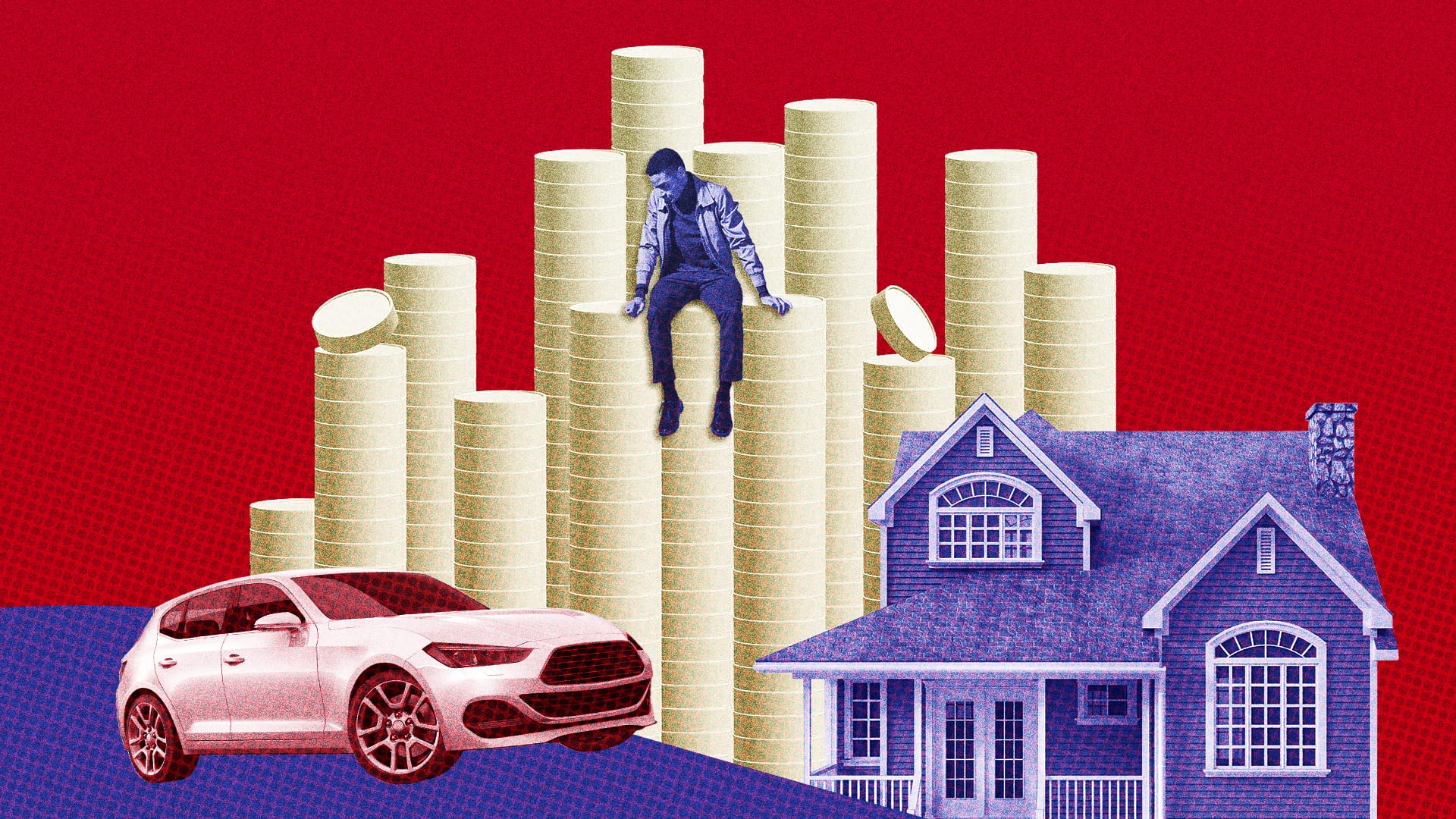
In 2018, Alexandra Friedman moved to Seattle to start a new marketing job at Amazon. She is 36 years old and has had to rebuild her friendships and professional network after being away for 18 years, even though she grew up there. It was “really lonely,” she says.
Her story reflects the trade-offs many Americans face. Pursuing opportunity often means leaving community behind.
Today, 72% of Americans define the American Dream as achieving financial security, and 58% define it as owning a home, according to a recent CNBC/SurveyMonkey survey of 4,130 U.S. adults. Only 35% said it was about feeling part of a community. But a sense of belonging is essential to a good life, researchers say.
When it’s all about financial security and you don’t feel like you belong in a community, “life is pretty tough,” says Robert Waldinger, professor of psychiatry at Harvard Medical School and director of the Harvard Adult Development Study.
He added that isolation can have a huge impact on our health and well-being and can make it much harder to succeed overall.
Choosing between achievement and community has long been part of the American tradition, but these days social connectedness has diminished for many Americans.
Here’s how communities have contributed to the American Dream throughout U.S. history and what today’s trends mean for its future.
Where the classic definition of the American Dream falls short
Mary Battenfeld, clinical professor of American studies at Boston University, said the American Dream has always been “associated with a definition of success that centers on material success.”
But that material success is also reflected in the rituals and traditions that bring neighbors together, and the promise of what will come after achieving their dreams.
Alina Rudia/Bell Collective | Digital Vision | Getty Images
“There are ice cream socials, there are parades, there are picnics,” said Benjamin Cornwell, a sociology professor at Cornell University and author of “Friends and Fortunes: Social Capital Inequality in America.” “All of this is an example of the kind of collective enthusiasm that goes on with the American Dream.”
But in a country as large as the United States, where the best opportunities may be geographically far away from family and friends, moving forward is almost a prerequisite for success, says Jeffrey Hall, a communications professor at the University of Kansas. Hall added, “Achieving the American Dream often requires leaving and largely avoiding one’s community.”
The tension between gaining and relinquishing connections is reinforced by America’s highly individualistic culture. The self-made ideal suggests that success comes solely from grit and hard work. But in reality, “no one made it themselves,” Waldinger said.
“Relationships actually drive individual success,” he says. “For example, your next job is most likely to come through social networks.”
“No wonder all we hear is loneliness.”
There is ample evidence that this deprioritization of cultural communities may be influencing behavior on the ground. The United States has long seen a decline in social connectedness.
These days, Americans over the age of 15 spend an average of less than 35 minutes a day socializing and communicating with others during their leisure time, according to the Bureau of Labor Statistics. This is down from about 47 minutes per day in 2003, and about 26% less social time.
According to the 2025 America’s Social Connections Report, nearly three-quarters of U.S. adults get together with close friends less than twice a month, and 29% have little or no conversations on the phone or video calls.
Julian Holt-Runstad, a professor of psychology and neuroscience at Brigham Young University and the report’s director and chief scientific officer, said values that place material success above all else can contribute to people’s personal decisions about whether to make time for family and friends.
“We have a very individualistic perspective when it comes to social connections, so it’s no wonder we only hear about loneliness,” she says.
“You can decide to contact someone every day on your way to work.”
Andrew Tepper, a New York-based psychotherapist, says it’s only a matter of time before Americans stop talking to each other, unable to reach friends or ordering everything they need. “I don’t think it’s a question of if,” Tepper added. “I think it’s just a matter of when.”
Without social connections, people are at increased risk of heart disease, stroke, and self-harm. These health challenges alone can make it difficult to achieve financial and professional success. But without people to support you and connect you to new opportunities, achieving the American Dream becomes even more difficult for both individuals and society.
“The more isolated we become, the less we can thrive,” Waldinger says.
Relationships actually promote individual success.
robert waldinger
Director, Institute of Adult Development, Harvard University
Some daily habits can help strengthen personal bonds. Make time to talk to those closest to you regularly, advises Waldinger. “You could decide to reach out to someone every day on your commute.” Set up a time to meet up with people, like a weekly walk or coffee. Send regular texts and emails to people around you.
As for Friedman, shortly after moving to Seattle, she began hosting monthly dinner parties so people, including herself, could find like-minded friends. She now works full time as a friendship coach, and she says she has helped thousands of people develop the skills to make connections.
Do you want to get ahead at work? Next, you need to learn how to make effective small talk. In CNBC’s new online course, “How to Talk to People at Work,” expert instructors share practical strategies for using everyday conversations to increase visibility, build meaningful relationships, and accelerate career growth. Sign up now!

