

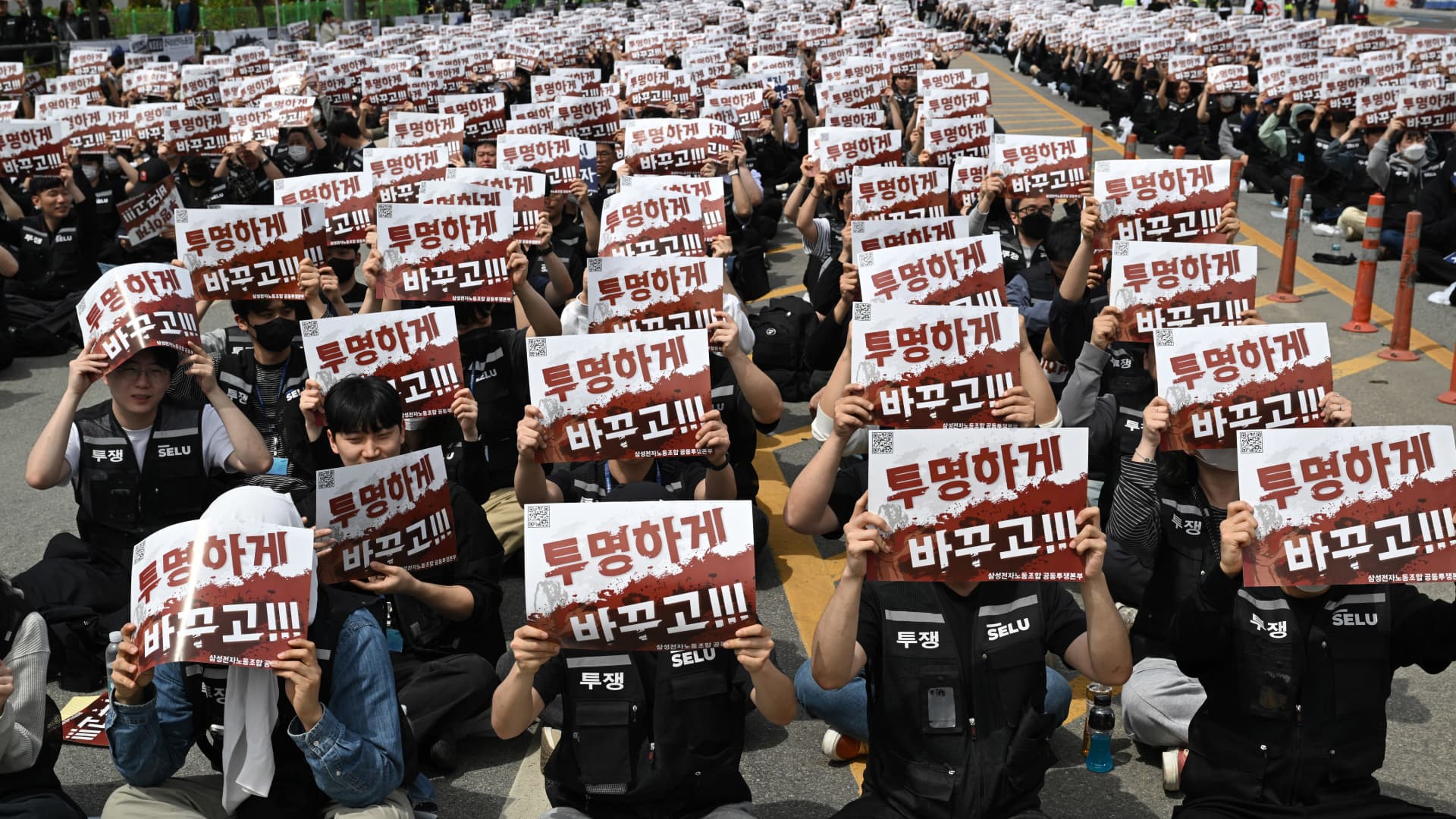
TOPSHOT – Members of the Samsung Electronics Labor Union hold up placards that read, “Be transparent!” On April 23, 2026, a large rally is held outside the company’s foundry and semiconductor factory in Pyeongtaek to demand the removal of caps on performance bonuses. (Photo credit: Jung Yeon-je/AFP via Getty Images)
Jung Young Jae | AFP | Getty Images
South Korea’s largest Samsung Electronics suffered a market capitalization loss of 99.7 trillion won ($66.18 billion) on Wednesday after failing to reach a wage agreement with its labor union.
This meant that the company’s stock price fell by 6.09% during the day from the previous day’s closing price of 279,000 won, after the labor union threatened to go on strike for 18 days starting May 21 if its demands were not met.
More than 41,000 workers are expected to take part in the strike, which was first announced at a rally on April 23.
“I would like to express my regret that none of the topics requested by the labor union were taken up,” labor union representative Choi Seung-ho told reporters on Wednesday, Reuters reported.
Demands center on Samsung’s performance-based bonus system. The union is reportedly demanding that Samsung allocate 15% of operating profits to employees as performance bonuses, remove caps on bonus payments, and formalize the bonus structure.
According to South Korea’s Yonhap news agency, Samsung management has proposed dedicating 10% of operating profits to bonuses and offering a one-time special compensation package.
According to the union, 40,000 workers attended the April 23 rally, and Samsung’s foundry production fell by 58% that day, and memory production fell by 18%.
It added that the 18-day strike could cost Samsung 30 trillion won, or about $20 billion.
South Korean Finance Minister Koo Yun-chul said in a post on X that he “deeply regrets” the government’s failure to reach a resolution and warned that “a strike should never occur under any circumstances.”
“Samsung Electronics is an important company that the world is watching,” Koo wrote. “Given the current business situation and the impact on the national economy, both labor and management must continue to strive for principled negotiations.”
Samsung’s stock subsequently reversed its losses and turned positive following Koo’s post and Prime Minister Kim Min-seok’s remarks instructing the government to “closely manage the situation” and provide “active support” to avert a strike.
Samsung Electronics reported in April that operating profit increased more than eight times in the first quarter due to explosive growth in its chip business.
The company recorded operating profit of 57.2 trillion won in the first quarter, a significant increase of 750% compared to the same period last year.
—CNBC’s Blair Baek contributed to this report.
