

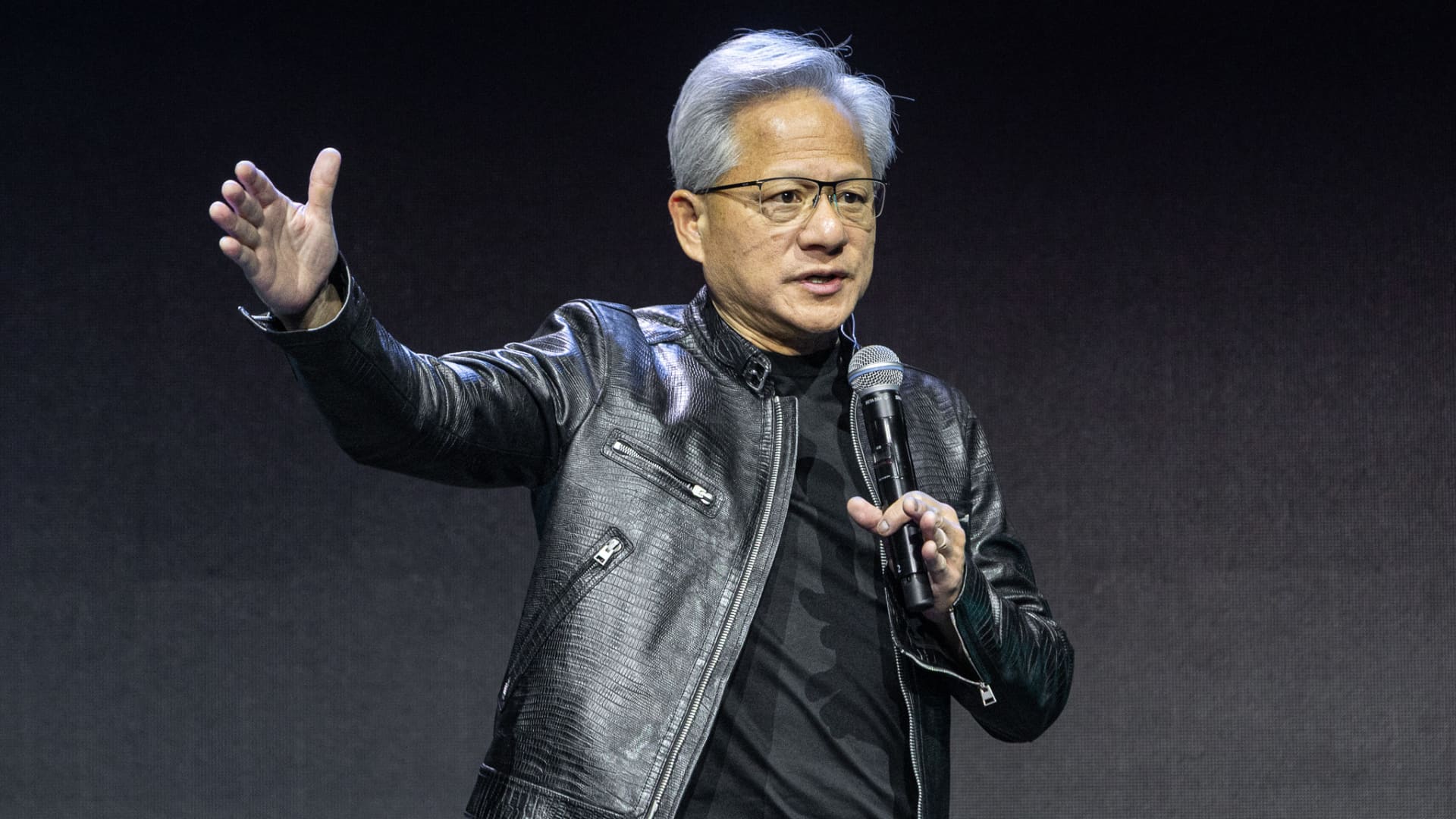
NVIDIA CEO Jensen Huang arrives at a Korean barbecue restaurant for a dinner with SK Group Chairman Choi Tae-won, LG Group Chairman Koo Kwang-mo, and Naver Chairman Lee Hae-jin on June 5, 2026 in Seoul, South Korea.
Chris John | Null Photo | Getty Images
Nvidia CEO Jensen Huang declined an invitation from Sen. Elizabeth Warren to testify before the Senate Banking Committee this Thursday, amid increased scrutiny from lawmakers over the company’s China operations and its role at the center of the global AI boom.
Mr. Hwang’s decision means that one of the most powerful executives in the AI field will not appear at a hearing focused on U.S. AI development, innovation, affordability, and U.S. technological superiority.
Warren, D-Mass., had asked Huang to testify about Nvidia’s China operations and the company’s views on U.S. export regulations governing the sale of advanced American technology overseas. Mr. Huang said, “I am unable to attend.”
The exchange highlights the growing pressure Nvidia faces in Washington as policymakers debate whether advanced AI chips should be sold more widely around the world or more tightly restricted to keep them out of the hands of China and other U.S. rivals. The topic was at the forefront when President Donald Trump visited Beijing in May to meet with Chinese President Xi Jinping. Mr. Hwang was among a group of CEOs who accompanied Mr. Trump.
“I appreciate Mr. Hwang’s response, but the American people deserve a public response,” Warren said in a statement. “NVIDIA is at the center of some of the most important issues facing our country around artificial intelligence, economic competition, and national security.”
“If Mr. Huang has time to fly around the world to attend a $1 million-a-person dinner at Mar-a-Lago and meet with Chinese President Xi Jinping, he should be able to find time to answer questions from Congress,” Warren added.
In a letter to Warren, Hwang declined an invitation to the hearing titled “AI and the American Dream: Promoting Innovation, Affordability, and American Advantage,” but said NVIDIA appreciated the committee’s focus on the issue.
“NVIDIA designed, built, and delivered the first AI supercomputer to American researchers more than a decade ago,” Huang wrote. “Since then, we have been dedicated to keeping America’s researchers, academics, startups, and businesses at the forefront of AI-related technologies.”
“While America’s leadership in AI technology cannot be taken for granted, we are confident in the future and believe in America’s systems,” Huang added.
Huang welcomed Warren and other members of the committee to Nvidia’s headquarters in Santa Clara, Calif., to “discuss our technology, the U.S. AI ecosystem, and how we can support U.S. leadership.”
Hwang, who serves on the Trump administration’s Science and Technology Advisory Council, has repeatedly urged U.S. officials to let U.S. companies compete in China and other foreign markets.
“We should allow U.S. companies to be the first to offer the best and the most,” Huang told reporters in December, according to the Associated Press, adding, “We should also provide the Chinese market with the most competitive chips possible.”
Warren criticized those comments at the time, saying Huang’s lobbying efforts “could provoke China’s military and undermine U.S. technological leadership.”
