

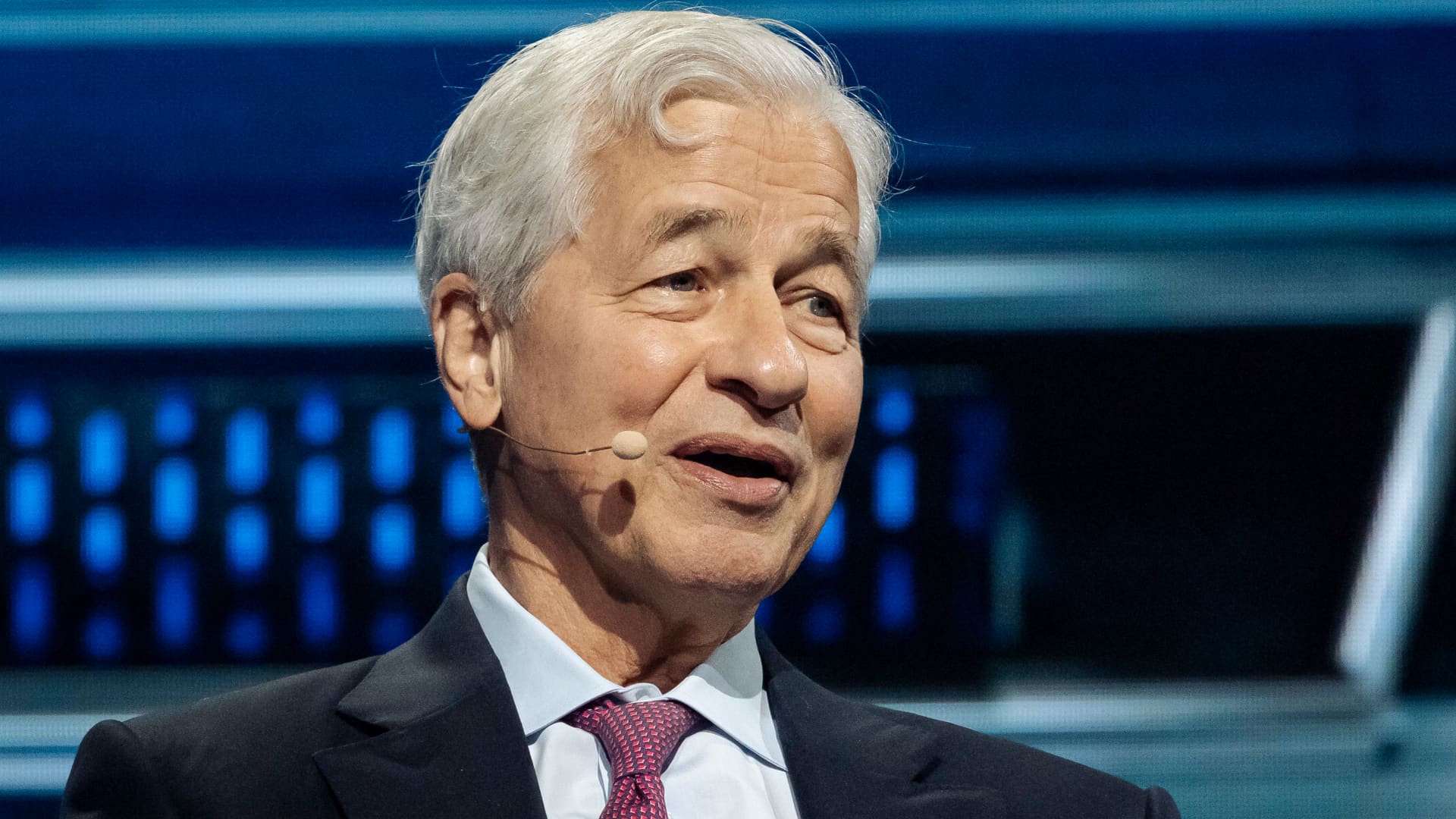
JPMorgan Chase CEO Jamie Dimon attends the American Business Forum on Thursday, November 6, 2025 in Miami, Florida, USA.
Eva Marie Uzcategui | Bloomberg | Getty Images
JP Morgan Chase The company on Wednesday announced a new $50 billion share buyback program and raised its quarterly dividend after the Federal Reserve determined the industry remains well-capitalized under annual stress tests.
The nation’s largest bank by assets announced a 10% increase in its quarterly dividend to $1.65 per share, subject to board approval, and authorized a stock repurchase program starting July 1.
“The board’s intention to increase the dividend is supported by our consistent investment in the business and strong financial performance,” Jamie Dimon, CEO of JPMorgan, said in a statement. “As always, we are prepared for a wide range of scenarios, including a highly unfavorable hypothetical scenario for 2026.”
goldman sachs also increased its quarterly dividend, announcing an 11% increase in dividends to $5 per share, citing the company’s strong earnings and capital position.
wells fargo said it expects to increase its dividend by 11% to 50 cents a share. morgan stanley The company increased its dividend by 15% to $1.15 per share and reauthorized its $20 billion share buyback program.
bank of america Chief Executive Officer Brian Moynihan said in a statement that the bank will announce a dividend next month.
The announcement came on the heels of the release of the Federal Reserve’s annual stress test, which found that all 32 large banks still exceeded minimum capital requirements even after a recession that projected industry-wide losses of more than $708 billion.
However, unlike in previous years, this result will not affect banks’ capital requirements. The Fed announced earlier this year that it would leave stress capital buffers in place until 2027 while overhauling its testing methods, meaning banks entered Wednesday with a clear understanding of their capital requirements.
Analysts expected the exercise to have little immediate impact, but banks opted to go ahead with dividend increases in a show of confidence despite the regulatory impasse.
In a note ahead of the results, KBW described this year’s stress test as “on track” and argued that investors were more focused on the pending Basel III endgame proposal expected later this year than on the Fed’s annual exercise.
This story is developing. Please check back for the latest information.
