

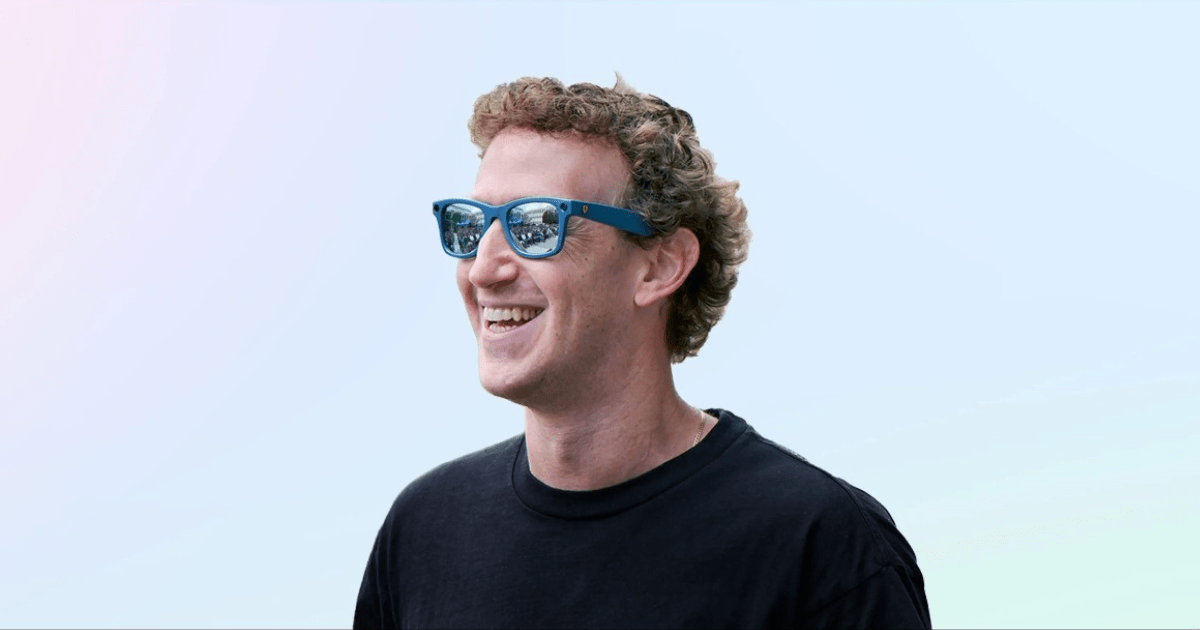
Meta founder and CEO Mark Zuckerberg is touting to investors his prediction that billions of people will have their own personal AI agents over the next five years. (Let’s hope that data centers will be efficient enough in the future to power all these agents without causing another wave of climate disaster.)
“If you look, say, five years from now, I think it’s extremely unlikely that there won’t be billions of individual agents who understand your goals and work on your behalf 24 hours a day, 7 days a week to help you achieve your goals in the areas you care about,” Zuckerberg said during Wednesday’s quarterly earnings call.
He added that he sees people using these agents to help with finances, health, relationships and household management.
“As we move towards a future where we all interact with multiple agents, I think WhatsApp and other messaging surfaces will become increasingly important,” he said, noting that WhatsApp is already the primary platform for users to interact with meta-AI.
Meta is not the only company that has high hopes for AI systems that can do more than just answer questions. Google highlighted custom AI agents as a key new feature in its search overhaul, which sparked an outcry from users who felt bogged down by the constant onslaught of AI results on Google. Meanwhile, subscriptions to Anthropic’s Claude are surging as engineers turn to Claude Code, an agent coding assistant.
But compared to its competitors, Meta may not be as trusted by investors because it continues to invest in innovative projects that may or may not work. Meta’s stock price fell almost 10% after the company announced this quarter’s earnings. Meta’s Reality Labs, the organization responsible for AR glasses, VR headsets, and related software, lost about $4.6 billion this quarter, about the same loss the division has posted every quarter since 2021. This currently totals approximately $88 billion.
Meta’s AI spending is likely to increase further, which is more of a concern at this point. The company reported free cash flow of $784 million for the quarter, down from $8.55 billion in the year-ago period. This was a 91% year-over-year decline, compounded by the company’s investments in AI infrastructure. This week, Meta and BlackRock announced a partnership to build a $14 billion data center in El Paso, Texas.
“We think selling intelligence will continue to be significantly more profitable than selling computing directly, but of course we also think there’s a huge opportunity in selling computing,” Zuckerberg said.
Ultimately, he believes the personal agents Meta is developing will be “the foundation for our next products and revenue lines in the months and years ahead.”
So far, Meta’s business agents, which rolled out globally on WhatsApp and Messenger this quarter, have been adopted by more than 1 million businesses. Getting people to adopt consumer AI agents may be difficult, but the road to billions has to start somewhere. The company can’t get there with enterprise agents alone.
If you buy through links in our articles, we may earn a small commission. This does not affect editorial independence.
