

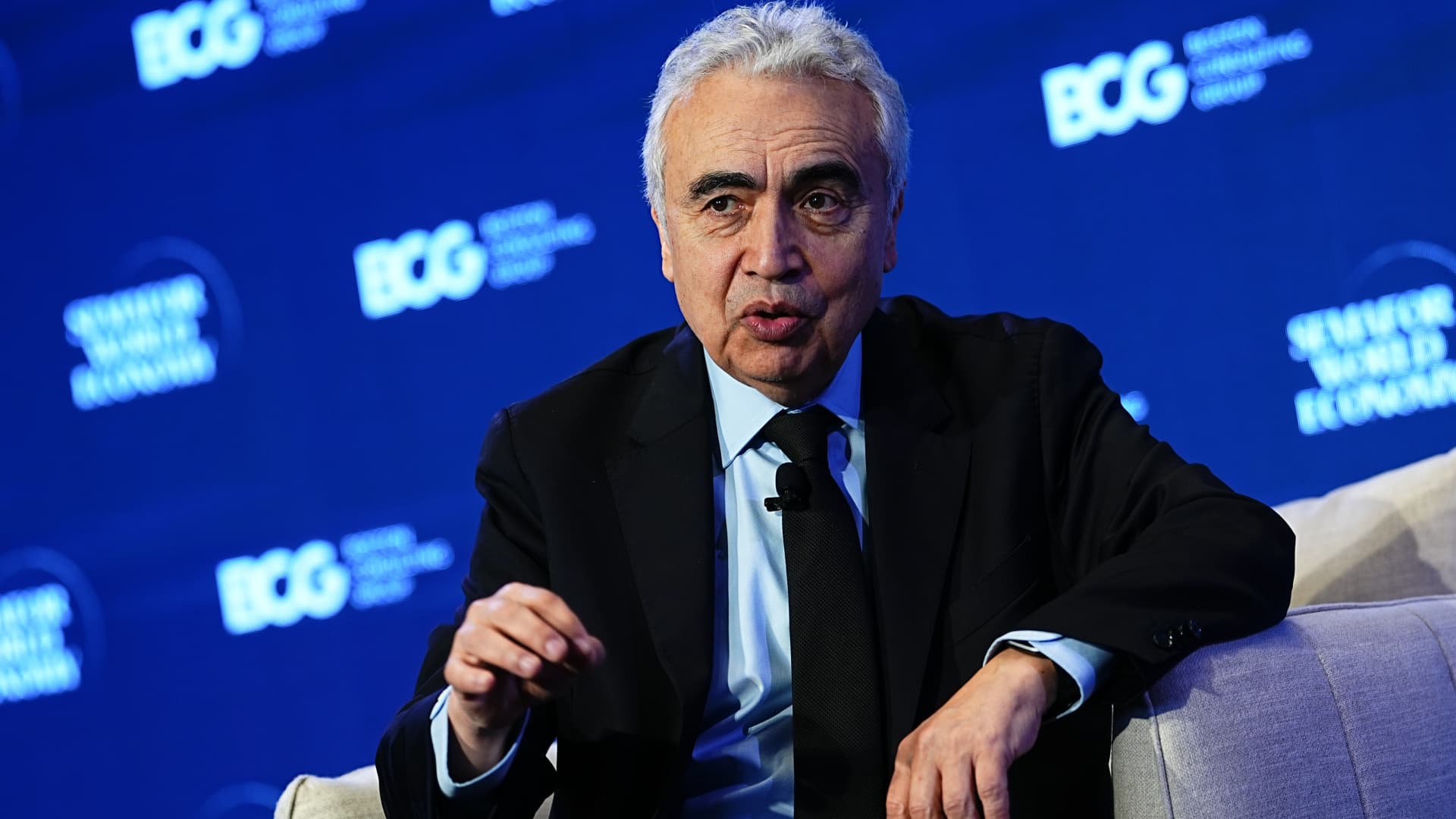
International Energy Agency (IEA) Director-General Fatih Birol attended the Semaphore Global Economic Summit held during the Spring Meetings of the International Monetary Fund (IMF) and World Bank on Tuesday, April 14, 2026 in Washington, DC, USA.
Bloomberg | Bloomberg | Getty Images
The head of the International Energy Agency warned on Thursday that the oil market could soon enter the “red zone” as global stocks are depleted and demand increases during the summer travel season.
IEA Director-General Fatih Birol said the single most important solution to the Iran war energy shock is the full and unconditional reopening of the strategically important Strait of Hormuz.
Birol said that if crude oil cannot restart and new oil supplies do not come from the Middle East, continued declines in global inventories, combined with increased demand during the summer travel season, mean the oil market “could enter the red zone in July or August,” without elaborating further.
His comments were made during a Chatham House session on the Strait of Hormuz crisis and global energy security.
The IEA has previously said global markets are facing the most severe disruption in history. Nevertheless, markets benefit from being in the “fortunate” position of entering the crisis with excess cash to absorb shocks, Birol said. But those stocks are now being eroded, Birol said.
Normally, about 20% of the world’s oil and liquefied natural gas passes through the Strait of Hormuz, but shipping traffic has virtually stopped since the U.S.-Israel-led offensive against Iran began on February 28.
“The greatest pain of this crisis will be felt in the developing regions of Asia and Africa,” the IEA chief said, adding that he was concerned about the impact of the Iran war on global food security, as well as energy security.
Birol warned that it would likely “take a significant amount of time” for oil production and refining in the Middle East to return to pre-war levels, and said the IEA was “ready to act” to coordinate further Strategic Oil Reserve releases if necessary.
In March, the world’s energy watchdog coordinated the release of 400 million barrels of oil from strategic reserves to deal with supply disruptions caused by the Iran war. This was the largest such action in the organization’s history.
“Incredibly difficult situation”
Lydia Rainforth, head of European equity strategy at Barclays, said the current situation was “incredibly challenging” for the global oil market.
“This is the biggest supply outage we’ve ever experienced. We’re now over 1 billion barrels of lost production, and even if the Strait were to open tomorrow, it would take a long time to normalize,” Rainfors told CNBC’s Ben Boulos on Thursday.
Oil prices rose during afternoon trading in London as market participants closely monitored the outcome of talks between the United States and Iran.
international brent Crude oil futures traded 1.9% higher at $106.92 a barrel, recouping some of the losses from the previous session. us west texas intermediate Futures were last trading at $100.59 per barrel, up 2.4%. Both contracts have risen about 45% since the Iran war began.
