

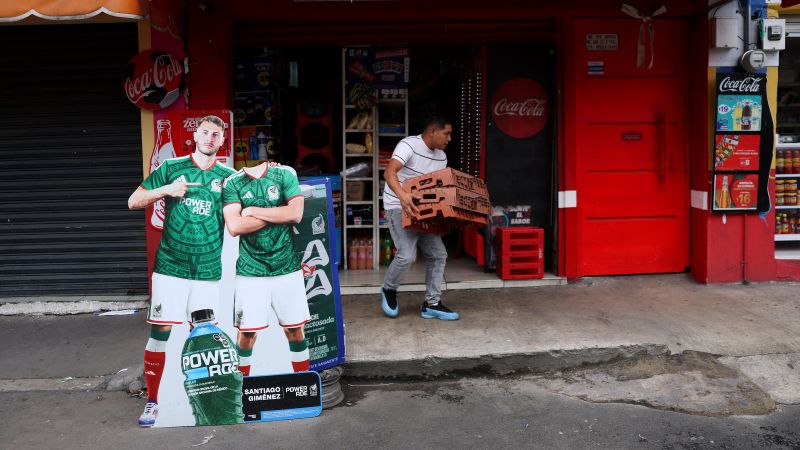
Parts of Mexico City are covered in the green, white and red of the Mexican flag as the Mexican capital prepares to host its opening World Cup match this Thursday.
From the stores selling the Mexican national team’s bright green soccer uniforms to the digital billboards advertising the matches, everyone seems eager to make money from this tournament.
According to one estimate, the country could generate around $3.7 billion (MX$65 billion) in revenue from the event, with tourism alone expected to bring nearly half of that to Mexico City.
Here we take a look at which companies could benefit and which could be left behind.
The influx of World Cup fans is gradually starting to benefit businesses in tourist spots, workers and entrepreneurs say, with more profits expected after the tournament opens on June 11.
In Mexico City’s main square, El Zocalo, shops, kiosks, and restaurants are filled with colorful (albeit “unofficial”) World Cup memorabilia.
Vendors sell everything from soccer ball key chains to a stuffed animal of Mexico’s president wearing a national team jersey.
The Salon Corona restaurant, one of the most popular places to watch soccer matches, is already packed with customers, and manager Miguel Laguna expects footfall to increase by 45 to 50 percent during the month-long tournament.
Juan Carlos, one of the city’s many organ polishers between the Metropolitan Cathedral and the presidential palace, said tourists from all over the world are starting to arrive.
“We’re here because this part of the city, the barrel organ, is a tradition in this city,” he said, wearing the iconic beige uniform and kepi hat that buskers are famous for.

Alejandro Gonzalez said he also expects business to pick up once the tournament starts, even though his restaurant, Garage Burger, in a quiet residential area to the south, is in a “less touristy area.”
Like other businesses in the city, he runs promotions and installs sports-themed decorations such as football-shaped balloons and ice coolers to attract customers.
“I’m kind of telling people you have to seize the moment,” he said.
cartels and scammers
Cartels and organized crime networks are also expected to benefit.
Security analysts say one of the most profitable strategies this summer is extortion. They expect World Cup tourists will be largely spared, but businesses frequented by fans are likely to be targeted.
Resorts like Cancun and Puerto Vallarta, which are not hosting games but are expected to benefit from day-trip fans, have a history of criminals robbing restaurants, nightclubs and hotels and extorting some of the proceeds from tourists.
“These local businesses have become very profitable, especially for regional organized crime groups,” said Victoria Dittmar, a senior researcher at Insight Crime, a Mexican think tank.
Criminals are also expected to profit from fraud and cyber fraud, officials said.
One of the biggest concerns is that scammers will try to defraud fans by selling counterfeit goods and services, including tickets to the 13 games Mexico will host. Officials also warned that fake apps and websites could be developed that promise to broadcast live matches but are actually used to install malware on users’ devices.
“The purpose of these platforms is not to provide entertainment, but to compromise victims’ personal and financial information through tools that can steal banking credentials, monitor device activity, and integrate into bot networks used for illegal activities,” the Mexican government said.
Other potential scams include fake hospitality packages, rentals and merchandise, officials and researchers said.
The government has issued multiple notifications warning the public to avoid unreliable third-party vendors and only buy from official or authorized sources.
While some Mexicans are excited about the World Cup being hosted in their country, others say they are yet to realize the benefits.
In El Zocalo, kiosk manager Nayeri says small businesses like hers can be pushed to the margins, despite their prime location.

World Cup organizers have set up a “Fan Fest” zone in the plaza with a giant screen, stage and market booths with licensed vendors.
Nayeri fears such incidents could lead to road closures and limit the flow of customers to his shop. A similar incident happened previously during a large concert at El Zocalo.
Sergio, who works for an agency that organizes tours and expeditions for visitors, said businesses around El Zocalo are sometimes disrupted by protests held nearby by teachers’ unions demanding better wages.
On the other hand, some hotels and rental apartments are complaining that they are not seeing the boom they had hoped for.
While Airbnb claims demand for accommodations during the World Cup is already higher than expected, some hoteliers and hosts on the platform are painting a more benign scenario in which bookings are there but not as many as they had imagined.
“The World Cup has not had an impact,” said co-organizer Elisa Lugarcia, who manages six properties in some of Mexico City’s most popular areas for foreign tourists. “We expected it to be almost full throughout June, but that’s not actually the case.”
Some residents say there is a lack of enthusiasm for the games across the country, despite authorities trying to create a festive mood.
Some people who have been to previous World Cups say this year’s edition looks low-key due to ongoing security concerns, Mexico hosting only 13 of 104 games, and the increased costs associated with the tournament.
A widespread complaint across Mexico is that the working class is being victimized. Tickets are so expensive that few people in Mexico will be able to attend the games, even if they live in co-hosting countries. They say the tournament will be enjoyed primarily by a privileged minority of Mexicans, but primarily by an overwhelming number of foreigners.

When FIFA released the second round of tickets in April, prices for the first leg in Mexico on June 11 ranged from $3,000 to $10,000. The typical minimum wage in Mexico is approximately $18 per day.
Asked about ticket prices in Mexico, FIFA said it had “established a ticket sales and secondary market model that reflects standard ticket market practices for major sporting and entertainment events across host countries.”
“It’s too expensive, at least for the average Mexican, it would be impossible to go to a game,” said Garage Burger’s Gonzalez.
One of his employees, Diego, said more Mexicans should participate in the event.
“I feel there should be at least some pressure from the government to present local people with a variety of options to witness this. After all, this is something that affects us all and we should be able to enjoy it too.”
