

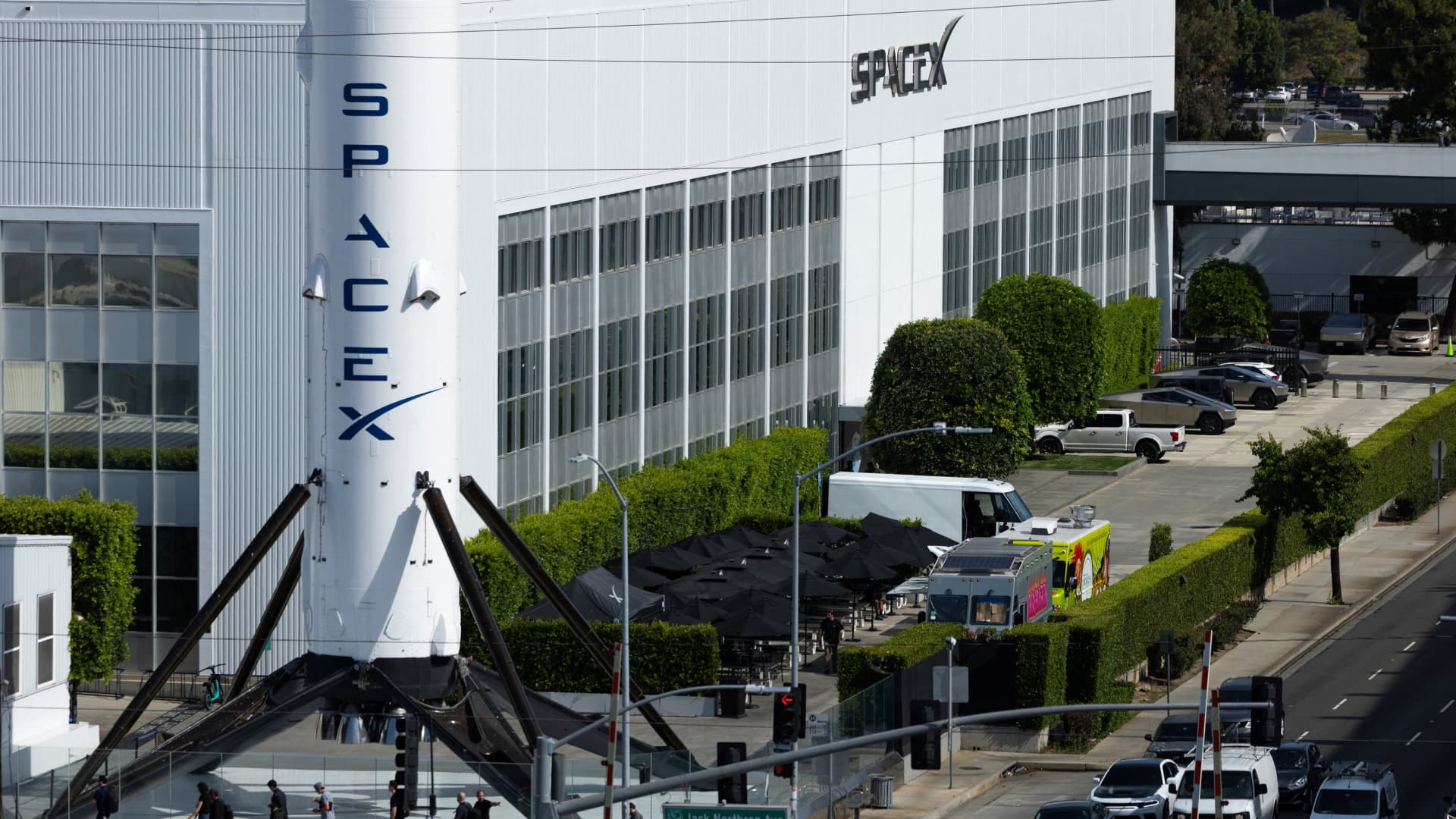
Aswath Damodaran, a finance professor at New York University, says he understands why some people are starting to pay for SpaceX, but “the price is too high for my taste.” As Elon Musk’s company prepares for a blockbuster public market debut this week, Damodaran shared his valuation analysis on his blog. SpaceX is targeting a price of $135, valuing it at $1.77 trillion, but Damodaran values the company at between $1.25 trillion and $1.35 trillion. While some call the high valuation overhyped, others are focused on the numbers. This professor, also known as the “evaluation director,” falls into the second category. Damodaran reached his conclusion after reviewing SpaceX’s recently released prospectus, but he also admits that he is “more of an investor than a trader,” as he prefers to buy stocks based on valuation rather than market momentum. Damodaran said in an interview with CNBC on Thursday that pricing SpaceX’s initial public offering at nearly $1.8 trillion is justified. That’s because SpaceX, as a privately held company, was already valued at $1.2 trillion a few months ago. But from a valuation perspective, investors need to ask questions about the company’s business, he said. SpaceX’s Biggest Wildcard SpaceX has three main businesses: space (rockets and launches), connectivity (Starlink), and artificial intelligence (xAI). Space launches and connectivity are great in terms of unit economics and competitive advantage, but the biggest wildcard is the AI business, Damodaran said. While it has the greatest advantages, it also has the weakest unit economics, the most competition, and the highest capital expenditures of any SpaceX business. “If you’re OK with that, spend $1.8 trillion. But if you’re not, you’re in trouble,” he said in an interview on “Closing Bell.” In his blog, Damodaran breaks down the numbers for these businesses, which clearly reflect Starlink taking over the company in 2025. In terms of profitability, the AI business not only has the lowest gross margins among the three sectors, but margins have deteriorated in 2025 due to intense competition from other large language models and rising costs of providing AI products and services, he said. A big bet on AI and Musk SpaceX is a “unique, cutting-edge company,” but investing in the company at this price is a big bet on AI and Elon Musk, Damodaran said. This does not mean he will never buy SpaceX stock because the market will change its mind, he explained. In the past, companies have gone from overvalued to undervalued, such as Facebook, which was sold for half its public price a few months after its IPO, and Uber, which lost more than 50% of its market capitalization within a year of its debut. Damodaran also doesn’t rule out Musk’s history with deliveries. In an interview with CNBC, he said there will be “major disruptions” along the way for Musk’s companies. “Good things and bad things come at you super fast,” he says. “If you’re invested in SpaceX, it’s not fair to complain about it. It comes as a package.” SpaceX plans to list on the Nasdaq on June 12.
