


MAIDSTONE, UK — Izzy Woodrow is a believer.
Four weeks ago, he joined a small but growing number of Britons buying Chinese-made cars.
“I enjoy driving (and) I have a very comfortable car. It’s very quiet, the fit and finish is great, and I enjoy the technology experience,” Woodrow said in an interview at Lipscomb Cars in Maidstone, England. A Geely dealership in south-east London has opened within the past year.
It’s part of a trend as sales of Chinese-made cars soar in the UK.
In 2015, Britons bought just 384 Chinese cars imported into the country, according to automotive consultancy Mobility Global. By 2020, that number had increased to 25,302, and last year it exceeded 285,000.
Despite only selling two Geely models, Lipscomb attracts buyers like Chris and Tracy Smith.
Chris Smith said: “It’s great value for money, has fewer accessories and is well-equipped as opposed to some of the top brands that probably sell at a higher price.”
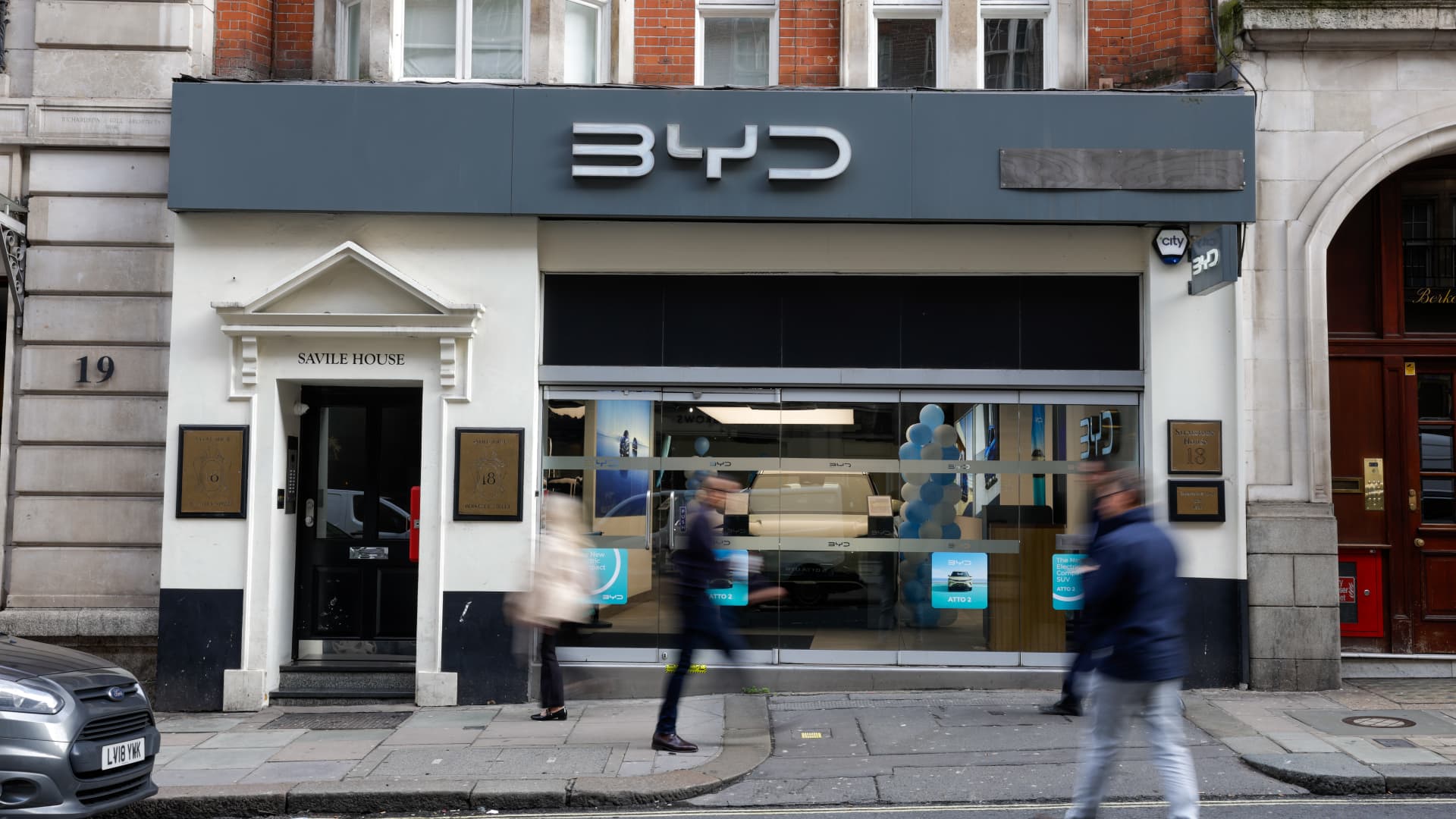
Will Roberts, an analyst at automotive consultancy Benchmark, said Chinese-made cars from companies like BYD were no longer new to the UK.
“I remember a few years ago noticing BYD crossing London Bridge for the first time. That was kind of a big moment. From then on, it became second nature,” Roberts said.
A BYD Sealion 7 EV is charging at a roadside charging point in central London, UK, on Monday, February 9, 2026.
Jason Alden | Bloomberg | Getty Images
China’s automobile exports have grown rapidly in recent years, even as demand for new models has cooled. According to the China Automobile Manufacturers Association, retail car sales in the first half of 2026 decreased by 26% year-on-year, but car exports increased by 72%.
While there has been an influx of Chinese-made cars and SUVs across Europe, Britain stands out because it does not impose additional tariffs on plug-in hybrid electric vehicles, as is the case in the European Union.
This created an opportunity for Chinese automakers.
“This market is well on its way to electrification, there is a demand for cheaper vehicles to fill that gap, and it’s a good size market,” Roberts said.
Many Chinese models cost thousands of pounds less than equivalent models from traditional car manufacturers. For example, the new German-built Volkswagen Tiguan plug-in hybrid sells for just over £43,000 ($58,000) in the UK. By comparison, a BYD Seal U made in China costs almost £10,000 less.
Executives at legacy automakers, including America’s so-called Big Three, have long complained that subsidies provided by the Chinese government to automakers allow these companies to sell cars at much lower prices than other automakers in Asia, the United States and Europe. Despite these complaints, China’s automobile exports continue to grow.
“The Chinese are coming to Europe with really attractive cars with technology that blows away what you can buy from European manufacturers, at really attractive prices,” Yuan said. general motors board member John McNeil told CNBC.
Lipscomb Cars dealer John Panda Noah said while competitive pricing may attract buyers, he believes the fit, finish and technology of the new Geely vehicles will attract buyers.
“They look at the car and are amazed at how good it looks,” he says.
