

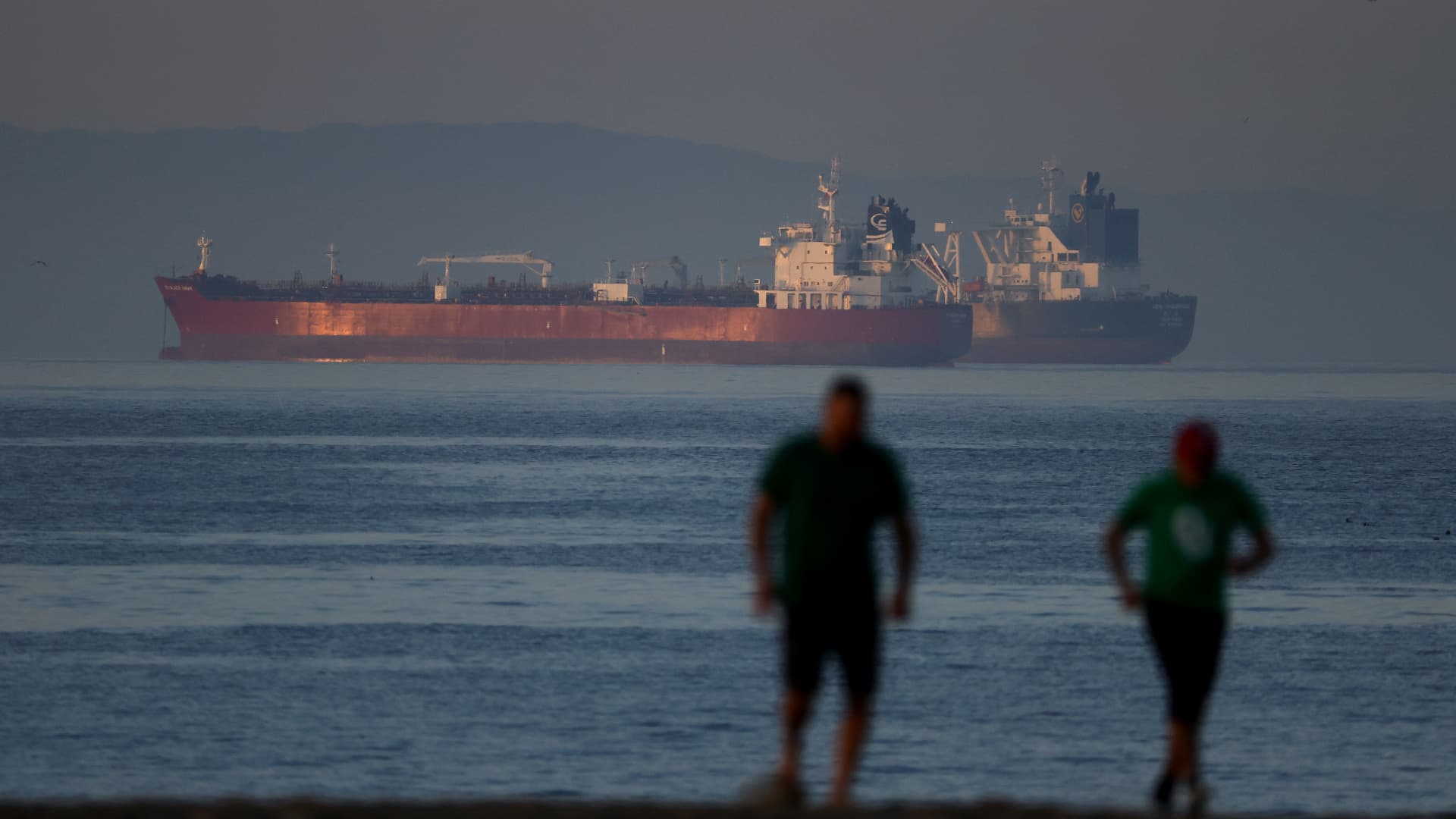
On March 11, 2026, in Mumbai, India, the Liberian-flagged crude oil tanker Shenron Suezmax successfully navigated the highly dangerous Strait of Hormuz and entered the Port of Mumbai amid the intensifying conflict in West Asia.
Hindustan Times | Getty Images
Oil prices rose on Monday after Israeli Prime Minister Benjamin Netanyahu warned that the conflict with Iran is “not over,” raising concerns that tensions in the Middle East could rise again and energy supplies could be further threatened.
Meanwhile, US President Donald Trump has rejected Iran’s counter-offer to end the US war with Israel. “I read the response from Iran’s so-called ‘representative’. I don’t like it — completely unacceptable!”
U.S. West Texas Intermediate futures for June delivery rose more than 2% to $97.88 a barrel by 7:39 a.m. ET. International benchmark Brent crude oil futures for July delivery rose more than 2% to $103.93.
WTI and Brent have both risen about 40% since the US-Israel-led war against Iran began on February 28th.

Brent crude oil price this year
“There is still nuclear material, enriched uranium, that has to be taken out of Iran,” Netanyahu said Sunday in an interview on CBS’s “60 Minutes,” scheduled to air Sunday night. “There are still enrichment facilities that have to be dismantled, there are still Iranian-backed proxy facilities, there are still ballistic missiles that they still want to build…There is work to be done.”
Asked how the United States and Israel would remove nuclear material, Netanyahu said: “We’ll go in and take it out.”
Prices could rise further if Iran and the U.S. fail to reach a deal, Citi analysts wrote in their latest oil report, adding that oil markets are being cushioned by high inventories, strategic oil reserve releases, weaker demand in developing economies and intermittent signs of possible de-escalation in the Middle East.
Citi argued that risks to oil prices remain tilted to the upside as Iran retains significant control over the timing and terms of any deal that could reopen the vital Strait of Hormuz energy route.
“We assume the administration will reach an agreement to reopen the Strait around the end of May…However, we continue to see risks skewing toward a delayed or partial reopening of this timeline, which would mean prolonged disruption.”
“Demand destruction”
Felipe Elinck-Schulman, co-founder and CEO of Sparta Commodities, said the coronavirus pandemic serves as a good analogy for current developments in the oil market.
“In 2020, we lost an average of 9 million barrels a day in demand compared to 2019. That’s about the same amount we’re losing on the supply side right now. So the market has to correct and we have to get the level of demand destruction to that level,” Schuurman said on CNBC’s “Squawk Box Europe” on Monday.
“The question now is, ‘Where is that demand destruction going to occur?'” And unfortunately, we’re going to end up with a situation where wealthier countries end up paying the price. “You may not see $200 in oil, but you will see it regularly in the products people consume,” he continued.
“We will end up with a scenario where poor countries are hit by a humanitarian crisis, Europe is hit by an economic crisis, and the United States is hit by a political crisis.”
—CNBC’s Garrett Downs contributed to this report.
