

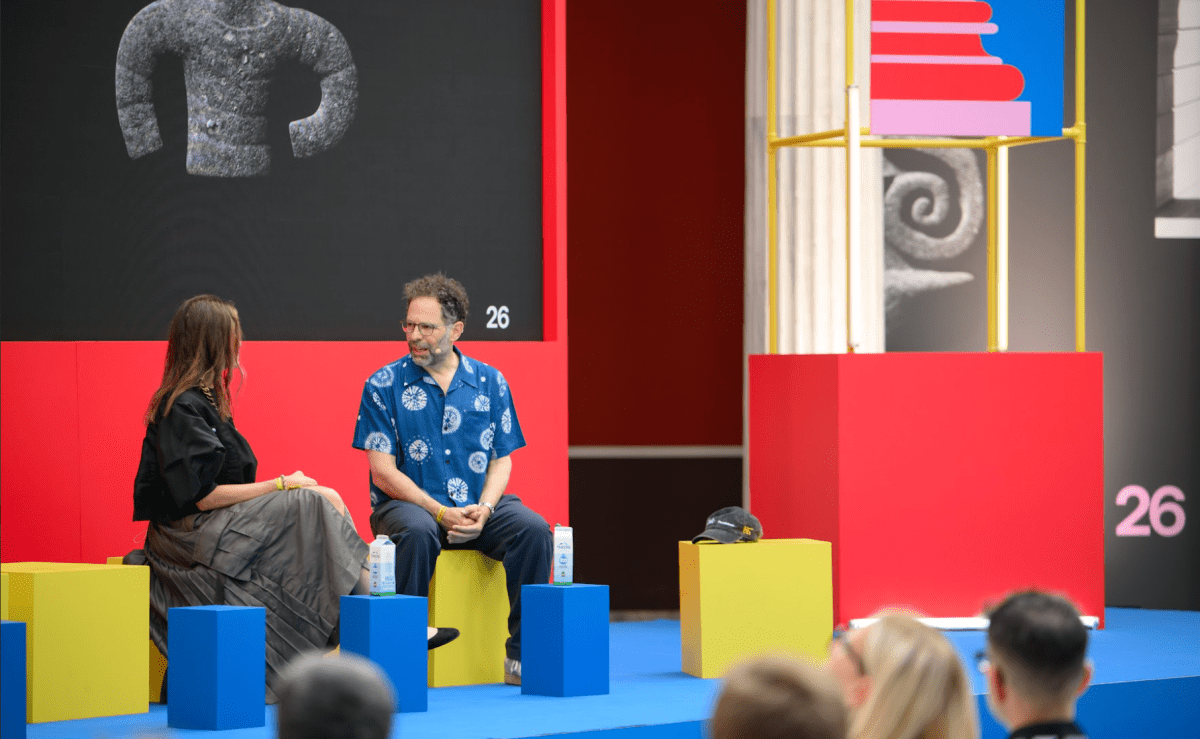
I still can’t shake the words Neil Reimer said during a roundtable discussion I held in Athens in late May. Speaking at a vibrant new technology festival in the city, he said he had a “strong sense that some kind of redistribution is going to happen,” speaking about the wealth accumulating around AI. he continued. “It may be voluntary or involuntary, but it’s going to happen, and I hope it’s voluntary,” he told me, adding that he thinks technology leaders “can play a leading role in getting it done.”
To most people, that will sound like standard populism. Coming from Rimer, co-founder of Index Ventures, one of the most successful venture firms of the past 30 years, it seemed shocking to say out loud.
Reimer stepped away from day-to-day investing in 2021, spending much of his time in Athens, where his wife is from and where his children cherish their Greek passports. He showed up to the interview wearing a rumpled button-down and jeans, rather than the quarter-zips and fine knitwear characteristic of many of his colleagues. But Index’s recent returns have been exceptional, with the company raising about $15 billion from outside investors since its founding, and last year’s exits, including Figma’s IPO and Google’s acquisition of cybersecurity company Wiz, reportedly netting Index about $9 billion in profits.
Reimer found a way to give back. He serves on the board of Endeavor Greece, which mentors entrepreneurs in emerging markets, and served as chairman of Human Rights Watch from 2019 to 2025. In late 2021, he, his father, and two brothers donated $13 million to McGill University to renovate a campus building (now the Rymer Building) and establish a new Institute for Indigenous Studies and Knowledge.
On the other hand, his comments on redistribution come at an odd time for philanthropy and donations. The Giving Pledge, a promise that Warren Buffett and Bill Gates made in 2010 to get billionaires to donate half of their wealth to charity, is becoming increasingly meaningless. The New York Times reported in March that 113 households signed on in the first five years, followed by 72, 43, and just four in all of 2024. The report highlighted how philanthropy has become outdated among the tech industry’s wealthiest people. (Note: “Elon Musk, the world’s richest man, said his business is ‘philanthropy.'”)
This pattern appears to hold even beyond pledges. According to the Stanford Social Innovation Review, total U.S. charitable giving reached a record high of $592.5 billion in 2024, but the number of Americans actually donating has declined for the fifth consecutive year, dropping by 4.5% in 2024 alone. In 2000, two-thirds of households donated. About half now donate, and even wealthy households’ donations fell from 90% in 2017 to 81% last year, according to data from Bank of America and Lilly Family Schools.
This pattern also appears in Index’s own portfolio, which includes Anthropic. Business Insider recently asked financial planner Alex Caswell whether his newly wealthy clients, many of them Anthrop employees tied to effective altruism, have committed to giving away a large portion of their wealth. Anthropic donates up to 25% of its employees’ stock to charity, and while some of Caswell’s clients take advantage of that, he told BI, most don’t incorporate philanthropy into their plans at all. They focused on angel investing and starting their own companies. “More than a desire to do charity work, that’s what I see,” he told the outlet.
Unsurprisingly, the absence of voluntary donations now faces attempts to legislate the results instead. California voters will decide this year on a one-time 5% wealth tax on the state’s billionaires. Some people, including Google founders Sergey Brin and Larry Page, have already moved their headquarters to South Florida to be safer.
OpenAI is reportedly considering going public in 2027, ironically in part because if the tax passes, net worth would be calculated based on a person’s global assets as of the end of this calendar year.
Naturally, there is much opposition to a wealth redistribution measure of this magnitude, including from Governor Gavin Newsom and economists who point out that many developed countries have abolished similar wealth taxes since 1990 in response to the antics of their wealthy residents.
Other options on the table are equally controversial. OpenAI is reportedly considering selling a 5% stake to the federal government, and while CEO Sam Altman envisions sharing the positive aspects of AI with the public, critics see this as more of a way to buy political cover in Washington. In either case, Silicon Valley was never keen on putting Uncle Sam on the cap table. “Some of the most dangerous words in the world are: ‘I’m a government employee and I’m here to help,'” veteran investor Roelof Botha joked in another roundtable with this editor last year.
It’s worth considering how much wealth lies outside these systems. After SpaceX’s IPO last month, Musk became the first person to be worth more than $1 trillion. Forbes magazine counted 45 new AI billionaires in its 2026 ranking alone, worth a combined $2.9 trillion, and this was before Anthropic and OpenAI went public. In the same BI article about Anthropic’s employees, BI says that once Anthropic and OpenAI complete their IPOs, the combined employees of both companies will have enough wealth to buy nearly a third of all homes in the San Francisco metropolitan area.
This feels unprecedented, but whether this is a historical extreme is debatable. The share of wealth held by the top 1% of U.S. households reached 31.7% in the third quarter of last year, a record since the Federal Reserve began tracking the data in 1989, and about the same share of wealth held by the remaining 90% of households outside the top 10 combined.
This is still below the 45% recorded by the top 1% at the peak of the Gilded Age in 1916. However, when you stop the lens down to the tippy top, the photo is reversed. Renowned economist Gabriel Zucman calculated that around 1910, at the height of the Gilded Age, America’s four great wealth groups together accounted for 4% of America’s GDP. Today, that same fraction of the population (now 19 households instead of 4) is worth 14%.
Whether voluntary or forced, Reimer’s two paths have precedent from the last time American wealth concentration reached this level. In 1889, at the height of the First Gilded Age, Andrew Carnegie published a paper arguing that rich people should treat their wealth as a trust to be distributed for the public good during their lifetime, and that it was shameful to die rich. That essay, “The Gospel of Wealth,” became a founding document of modern philanthropy and the intellectual ancestor of the Giving Pledge.
However, I could not continue down another path for long. By the mid-1930s, Louisiana Sen. Huey Long had built up a national following for a program called “Share Our Wealth,” which called for high taxes on the wealthy to provide funds for a guaranteed income for all Americans. Concerned about losing working-class support for Long, Franklin Roosevelt pushed through what the press called a “wealthy infiltration tax,” raising the top marginal income tax rate to 79 percent. Although it did not result in as much redistribution as Long had hoped, it remains the clearest example in American history of politically forced redistribution after voluntary contributions failed to adequately cope with the mounting pressures under it.
None of this is new to Reimer, who has spent his career in the technology industry. Even more interesting to him was the “moral center of a technology company,” a fascination he discovered as an undergraduate at Stanford University in 1984 when he learned that Apple discounted the first Macintosh to students and that Steve Jobs and Apple’s other founders were, in his words, “heroes” who built something they felt was truly good for the world.
What bothers him now, he said, is hearing his children talk about certain tech companies the way previous generations talked about defense contractors and tobacco manufacturers.
Critics may note that Mr. Reimer, as an investor in Anthropic and other tech companies, is a direct beneficiary of the windfall that he says he will eventually have to share. But he hopes other beneficiaries will choose to give some back rather than have their money taken away. There’s an easy way and a hard way to do this, and Reimer is betting that people will choose the easy way before history chooses it.
If you buy through links in our articles, we may earn a small commission. This does not affect editorial independence.
