

Published April 16, 2026
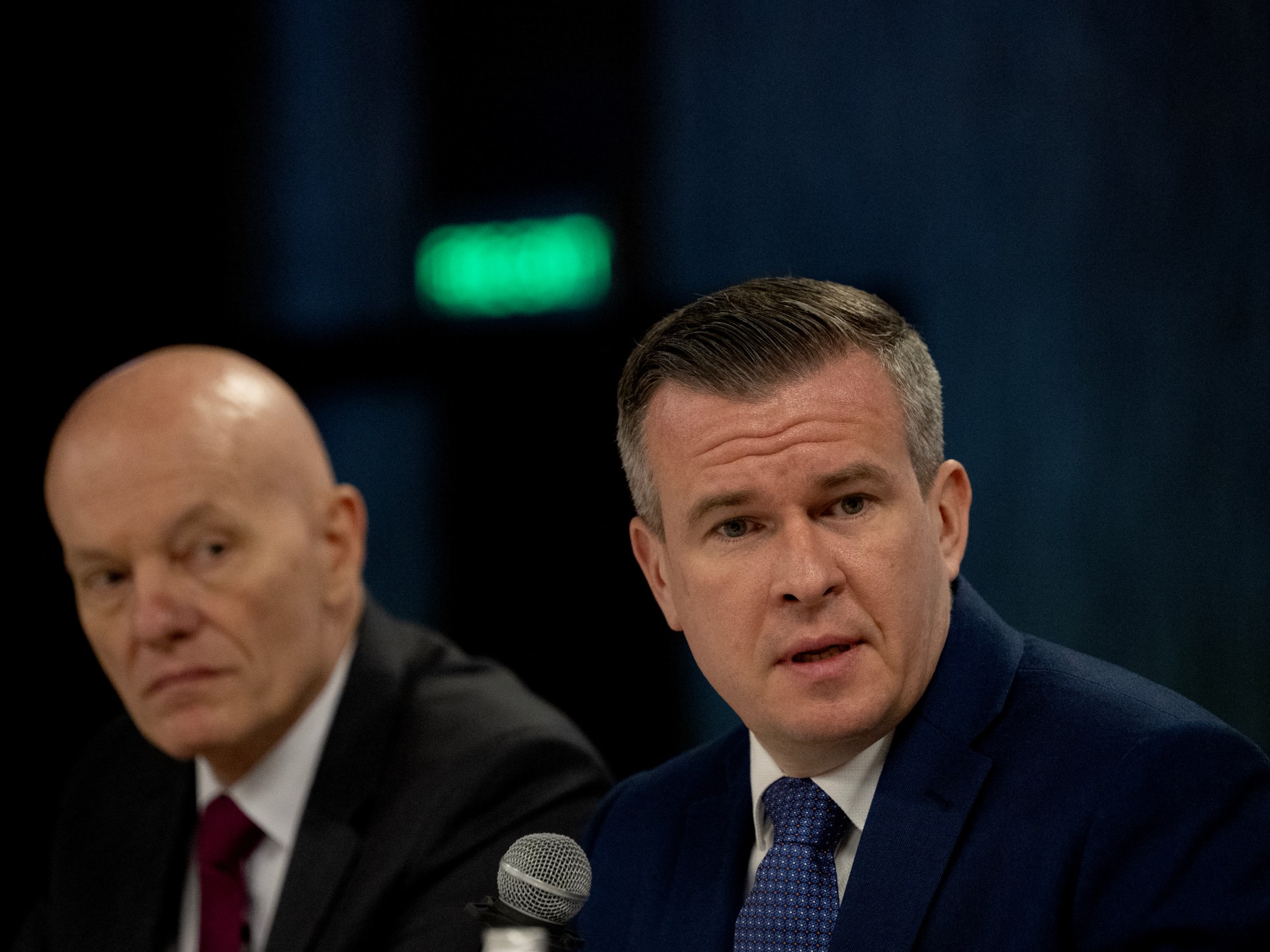
Witold Banka, head of the World Anti-Doping Agency (WADA), said a crackdown on India’s production of performance-enhancing drugs (PEDs), the world’s largest, is key to tackling the threat of doping and protecting athletes.
Banka and his team are in New Delhi as part of an effort to build stronger relationships with the country’s law and order institutions, including cybercrime organizations, to maintain the credibility of professional sports.
WADA has sought assistance from India’s Central Bureau of Investigation (CBI) (federal police force) to reduce the initial supply chain of drug traffickers and agents.
“We recognize that there is a problem in the production of performance-enhancing drugs (PEDs). India is the largest producer of these illegal drugs,” Banka told AFP news agency.
“That is why we are working with the CBI and law enforcement agencies to disrupt this market and truly protect the lives of athletes and the health of society,” he added.
Since 2022, WADA has been actively working to curb the doping crisis through the Global Anti-Doping Information and Investigation Network (GAIIN) initiative.
The Interpol-backed Operation Upstream was a success for WADA, conducting 250 raids around the world, dismantling 88 illegal laboratories, and seizing nearly 90 tonnes of PEDs.
“We are here because we recognize that India is the largest population (1.4 billion people) and how important that is to the Indian authorities, and that we need to strengthen the systems here. It’s a common interest,” Gunter Younger, WADA’s head of research, told AFP.
“Right now, we can see that there is a willingness and willingness on the part of the (Indian) public authorities to work closely with us to address this issue. We know that the problem is not just one of player doping.”
Younger, a former head of the Bavarian State Police’s cybercrime unit, said the focus should be shifted from athletes to PED suppliers to deal a blow to the doping threat.
“We have always been focused on testing, and the whole infrastructure for the last 25 years, the anti-doping community, has been focused on testing, and it started out fine.
“But criminal networks adjust very quickly.
“For example, the fact that we had a hit rate of less than 1% in our tests shows that further improvements can be made with this method.
“So what we want to do with them is to work with the CBI to strengthen their intelligence and investigations and adopt a top-down strategy.
“Why not seek out criminal networks, seek out clients, target coaches and doctors responsible for providing PEDs to athletes, and implement a bottom-up strategy?”
Will India’s Olympic ambitions take a hit?
According to WADA, India is not only a leader in PED manufacturing but also has the unwanted tag of topping the global sports drug cheating list for the third consecutive year in 2025.
According to a WADA report released in December last year, India’s National Anti-Doping Agency (NADA) collected 7,113 urine and blood samples, of which 260 tested positive in 2024.
Experts said this was a major blow to India as it prepares to host the 2030 Commonwealth Games. The event is seen as a stepping stone to the country’s ambitions to host the 2036 Olympics.
However, Banka said this figure has nothing to do with India winning the right to host prestigious global sporting events.
“There is no doubt that India has a big problem with doping. The statistics clearly show the number of positive tests,” he said.
“But if the number of positive tests is decreasing significantly year after year, I would be very concerned that the National Anti-Doping Agency is not doing its job properly.”
“Even if India continues to lead in the number of positive tests, it does not mean we cannot host the Olympics or the World Championships,” Banka added.
“It’s about how the system works from a legal perspective, and it’s our role as a global anti-doping regulator to assess that.”
