

The death of a white student who was handcuffed by police after being stabbed has sparked nationwide protests in Britain, with officers condemned for their actions and far-right leaders accused of using the boy’s killing to incite racist violence for political gain.
Earlier on Tuesday evening, hundreds of demonstrators gathered outside a police station in the southern English coastal city of Southampton, and their protests sparked clashes, incited by far-right activists who clashed with riot police, hurling bricks and other projectiles and injuring 11 police officers.

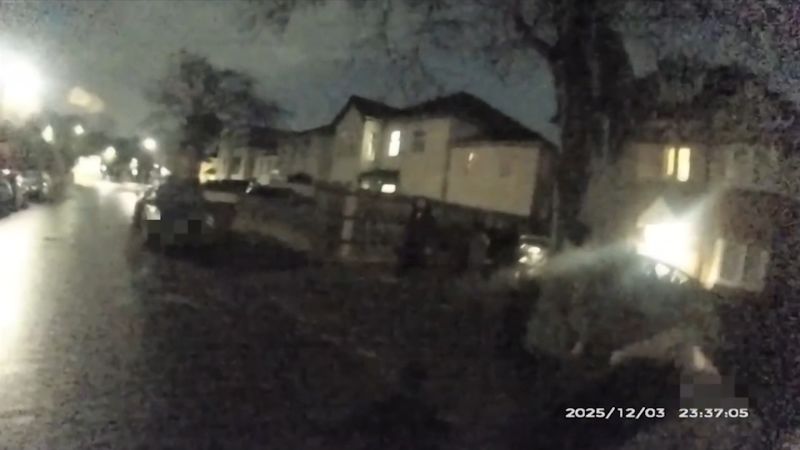
They chanted “Henry, Henry,” referring to Henry Nowak, an 18-year-old white student who was handcuffed by police as he lay dying from a stab wound by Vickram Digwa. A 23-year-old Sikh man falsely claimed to police officers that he was the victim of a racist attack. In disturbing body camera footage released by Hampshire Police, Nowak pleads to officers: “I can’t breathe” and “I’ve been stabbed.” The officer replied, “I don’t think so, dude.”
Mr Digwa was sentenced to life in prison on Monday, concluding a case in which the far right used a false narrative that British institutions, including the police, were biased against white Britons. Stories like this collapse under scrutiny. White defendants on average serve lighter custodial sentences than other ethnicities, and black prisoners serve a larger proportion of their original sentences than other ethnicities, while black, Asian, mixed-race and other ethnicities were more likely to be stopped and searched in London last year, government figures show.


But years of weak economic growth, Britain’s long history of racism, and the collapse of support for the centre-left Labor government elected almost two years ago with promises of fundamental change that have yet to materialize have created fertile ground for such ideas to take root.
And with a key upcoming by-election in which Nigel Farage’s reformists have a chance to defeat Labor leadership candidate Andy Burnham, far-right populist parties are wary of being besieged by more right-wing groups.
British Prime Minister Keir Starmer said on Wednesday: “Using this tragedy to sow discontent and division is wrong under any circumstances, but it cannot be tolerated when families are clearly telling us not to.” He directed his anger specifically at Farage, saying the public should react to the incident with “pure cold anger”.
Far-right and hard-right figures fomented such divisions, even as Sikh community leaders condemned Digwa’s crimes and Nowak’s father, Mark, stood outside court Monday and said he did not want his son’s death to be used to “create further division, hatred and tension.”
Ms Nowak called the police’s treatment of her son “shocking” and called on the government to “treat knife crime as a national emergency”.
“This is not a case about Sikhism. This is not a case about racism. This is a case about murder,” he said, according to British news agency PA Media. “People should not be able to walk openly on British streets with 21cm knives.”

Nowak, a freshman finance student, was on her way home from a night out with friends when she was murdered on December 3, 2025. Digwa stabbed him five times, causing severe internal bleeding from the chest wound, local police said.
Digwa then claimed in body camera footage released by police that Nowak grabbed her by the turban and racially abused her. Nowak died at the scene, and even though officers had not handcuffed him, pathologists were unable to save his life, the police statement added.
Several right-wing figures took advantage of these events. Mr Farage, whose Reform Party currently leads the polls, wrote on X that the police response was “more frightening of being called a racist than of dealing with the murder of Henry Novak”.
Almost immediately, the party announced new policy proposals to ban anti-racist practices adopted by British police forces over the past few years, after an investigation found that some forces were perpetuating a racist internal culture.

Dar Babu, a former Metropolitan Police superintendent, objected to such intervention. “The claims of far-right, anti-immigrant politicians are unacceptable,” he told CNN.
“We have almost a dual citizenship issue here with some politicians. They express great concern when a person of color commits a crime against a white person, but not when a white person commits a crime against a person of color. They are all British nationals and they just happen to have different skin colours,” he said.
At the same time, Babb acknowledged that Nowak should not have been handcuffed and that police should have separated the two men to establish their case. An independent inquiry into police conduct is underway and Mr Starmer told MPs on Wednesday: “There are serious questions to answer, including how accusations of racism have affected the thinking of the police.”

However, this did not quell far-right violence. Interior Minister Shabana Mahmood said on Tuesday that a police officer not involved in the incident had been misidentified online and had been forced to relocate after receiving death threats.
Britain’s far right has a history of hijacking such events to fuel its own rhetoric. Last year, activists used a spate of Elon Musk’s posts on X to highlight historic abuses perpetrated by a group of mostly Pakistani men, primarily in the northern English town of Oldham. Musk also weighed in on Nowak’s murder, echoing Farage’s assertion that racism is recognized as “the greatest crime that can be committed, even worse than rape or murder!”
Britain’s Sikh community is already seeking to de-escalate tensions. “At a time of understandably raw emotion, we appeal to people not to allow the actions of a single murderer to divide communities and incite hostility against innocent people,” the 11 Sikh Labor Party MPs said in a statement.
“The Sikh community shares the grief, shock and anger felt across the country. We mourn Henry Nowak, stand with his family and stand for truth, justice and responsibility.”
