

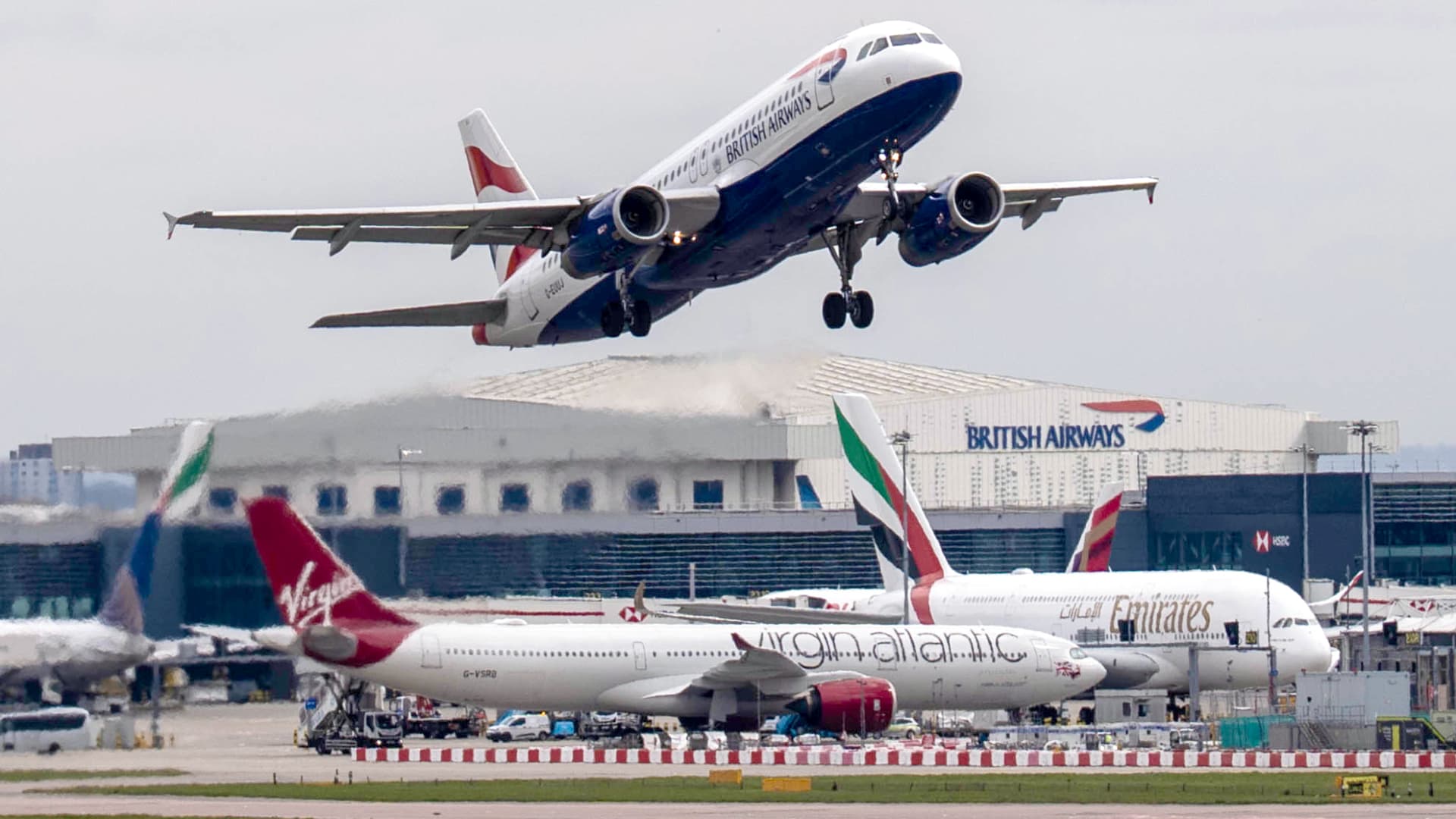
Stock image of a British Airways plane taking off from London Heathrow Airport.
Stéphane Rousseau – PA Images | PA Images | Getty Images
The head of the International Energy Agency warned on Thursday that Europe could have six more weeks of jet fuel left as the aviation industry continues to face headwinds from the Middle East crisis.
IEA Director-General Fatih Birol said in an interview with The Associated Press on Thursday that a blockade of the Strait of Hormuz would result in “the biggest energy crisis we have ever faced.”
“A long time ago, there was a group called ‘Dire Straits.’ We’re in a dire situation right now, and it’s going to have a huge impact on the world economy. And the longer it goes on, the worse economic growth and inflation will be around the world,” he said.
He said the broader economic impact included “higher petrol (petrol) prices, higher gas prices and higher electricity prices,” adding that some regions of the world were “hit harder than others.”

Mr Birol had previously warned that the energy crisis would hit even harder in April as oil supply constraints worsened.
“There will be nothing in April,” Birol said last month. “Oil losses in April will be double the oil losses in March. On top of that, you have things like LNG. I think that will have a ripple effect on inflation and will hurt economic growth in many countries, especially in emerging countries. We may soon see energy rationing in many countries.”
“Hard economic impact”
Analysts echoed similar warnings to CNBC earlier this week, with Rystad Energy chief economist Claudio Galimberti telling CNBC’s Ritika Gupta on CNBC’s “Early Edition” on Tuesday that the situation airlines face “will largely depend on the number of barrels that come through the Straits.”
“We’re seeing these ships grounded now, so we’re running out of supplies from the Middle East and we need replacements,” ING senior economist Rico Luhmann told CNBC’s “Squawk Box Europe” on Tuesday.
According to ACI Europe, air travel generates €851 billion (approximately $1 trillion) in gross domestic product for the European economy each year and supports 14 million jobs.
European airline easyJet said on Thursday it was buying 2% fewer tickets at the end of the year compared to 2025, as conflict in the Middle East and rising fuel costs weighed on customer bookings.
Meanwhile, the low-cost airline said it incurred around 25 million pounds ($34 million) in extra fuel costs in March alone and had hedged at least 70% of its summer fuel to protect against volatility.
ACI Europe, which represents airports across the European Union, said last week that peak summer travel would be disrupted and there would be a “severe economic impact” on some member states dependent on the economic boost.
