

A new AI weather forecasting tool released today by startup WindBorne Systems provides more frequent and accurate predictions for key variables than the world-leading system developed by European governments, thanks to advances in the way sensor readings are fed into deep learning models.
Founded in 2019 by a group of Stanford University students, WindBorne started by building better weather balloons with the idea of selling weather data. However, with the advent of deep learning weather forecasting models in 2022, the team realized they could capture more value by building their own models.
WindBorne says the new version of its model provides more accurate predictions than ECMWF’s traditional and AI systems across several variables. Kai Marshland, WindBorne’s chief product officer, says one easy way to understand that is that WeatherMesh 6 is “as accurate five days in advance as traditional forecasts are the day before,” especially in measuring surface temperatures.
Today, the sixth version of that model, WeatherMesh, was released. The company says its model is more accurate than traditional forecasts and AI forecasts produced by the European Center for Medium-Range Weather Forecasts (ECMWF), a European intergovernmental organization considered by meteorologists as the leading provider of accurate weather forecasts today.
WeatherMesh 6 generates forecasts hourly instead of every 6 hours like traditional models. Currently, resolution is down to 3 km in Europe and the continental United States, where the data quality is highest.
Traditional weather forecasts are generated by complex physical models that require expensive supercomputers and take a long time to run. AI models (built by startups and big research institutions like Google DeepMind) tend to run faster than physical models, but they currently don’t have as high a resolution or number of variables, nor are their predictions as accurate over long periods of time.
Still, weather AI is advancing rapidly and is already being used by major government agencies around the world. Researchers are working on aggregating weather data and integrating it into systems used to create public forecasts.
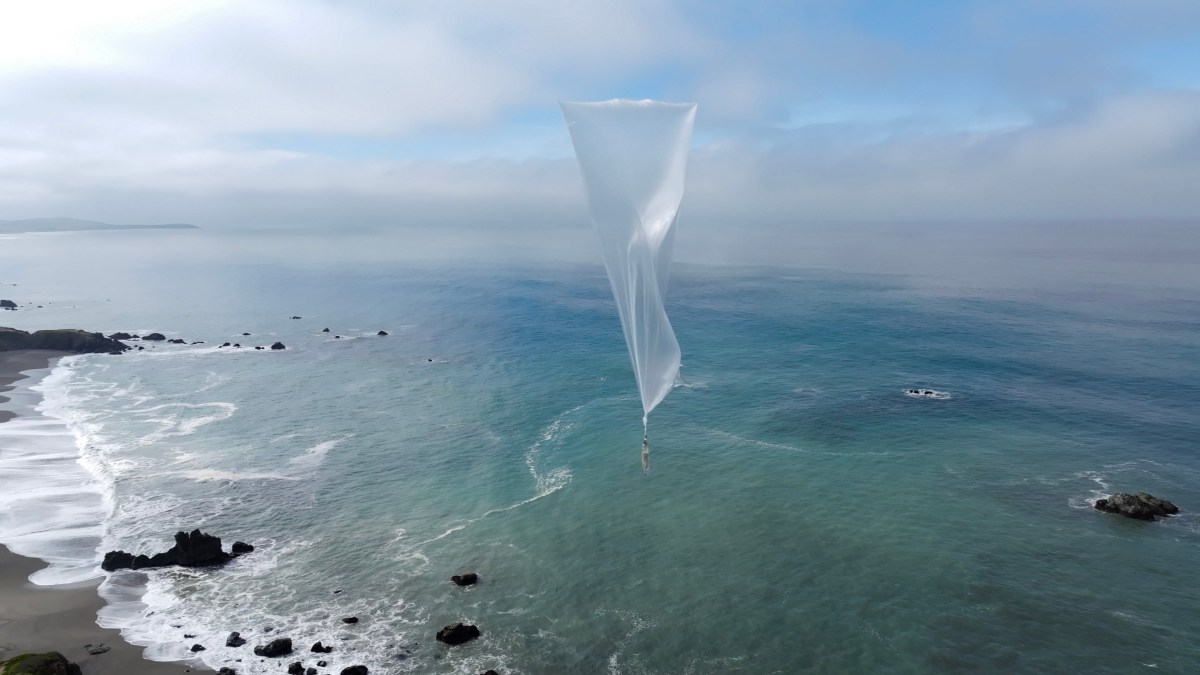
WindBorne benefits from a unique combination of model building and data collection. The company currently flies about 400 balloons launched from 15 locations around the world, constantly collecting sensor readings. Current model advances are driven by improvements in the way data collected by balloons is fed into the model.
“Personally, I don’t understand the business model of an AI-based weather company without the benefit of a dataset,” WindBorne CEO John Dean told TechCrunch.
ECMWF’s advantage stems from the organization’s skill at “data assimilation,” or transforming disparate sensor readings into a comprehensive, machine-readable picture of the world. Currently, AI weather models rely on datasets created by ECMWF and the National Oceanic and Atmospheric Administration.
But WindBorne and other organizations are working on feeding data directly into models, and João Creus-Costa, the company’s head of AI, says that direct ingestion of data from balloons and other sources is a key reason for the improvements in the new version of WeatherMesh. Achieving these predictions without compromising stability took a year of tuning and rebuilding the model’s transformer-based model.
“When we started (data assimilation), we were still relying heavily on ECMWF,” Dean said. “My prediction today is that even if you remove the initial conditions of ECMWF, you’ll actually still get pretty good results.”
Last year, the company suffered a disaster when a United Airlines jetliner crashed into one of its balloons. The plane sustained minor damage, but no one was injured, in part because Windborn complied with U.S. regulations regarding sensor package size. But the company is now using its global aviation surveillance system, ADS-B, to move the balloon out of the way of passing aircraft in an effort to reduce the chance of further crashes.
WindBorne, which has raised $25 million in venture funding at an $85 million valuation in 2024, sells its balloon data to NOAA and is used by U.S. weather forecasting companies and the U.S. Air Force and Navy. The company also sells predictions to investors and commodity traders, but Dean said the company remains focused on building models and data infrastructure rather than commercial products, partly due to the changing nature of the information environment.
“If in two years’ time the way people seek consumer information is through agents, I’m not going to invest a large team building a SaaS product,” Dean said.
Correction: This article incorrectly reported how WindBorne’s balloons use ADS-B to avoid air traffic. The company monitors air traffic and maneuvers balloons around it, but has not yet added ADS-B transponders to its sensor platform.
If you buy through links in our articles, we may earn a small commission. This does not affect editorial independence.
