

Seoul —
Two brothers spent a decade plotting their escape from North Korea – an audacious plan conceived by their late father, whose ashes they carried as they crept toward a boat moored in the shadows. There were guards nearby, and no second chances.
It was May 6, 2023. A three-day spring storm churned over the Yellow Sea, cloaking their movements. Kim Il-hyeok and Kim Yi-hyeok gathered their seven relatives – including women who just tiptoed through a minefield – as they traced their route one last time.
Among the passengers were Kim Yi-hyeok’s two children, ages 4 and 6, hidden in burlap sacks. Kim Il-hyeok’s wife, five months pregnant, reluctantly agreed to join.
“My wife did not want to defect,” Kim Il-hyeok told CNN. “She was especially worried about doing it while pregnant.”
“I kept trying to persuade her, saying we needed to go to South Korea for the sake of the child. I asked her if she wanted our children to grow up in a country like this.”
“In the end, my wife was convinced, and we decided to defect together.”
South Korean officials confirmed details of Kim’s defection, and his descriptions of hardships faced by North Koreans mirror numerous accounts defectors shared with CNN.
Nine people fled that night. Yet only eight are alive today, carrying their stories forward in South Korea.

Inside one of the most daring escapes from North Korea

It was the family patriarch who first planted the idea of escaping North Korea more than 10 years ago, suggesting freedom might come by sea, Kim Il-hyeok began.
“Our family originally had nothing to do with boats or fishing, and we lived inland, far from the sea,” he explained. “My father said, ‘There is no hope in this society, there’s no way to change it … There is a vast, free world out there. Let’s go to South Korea.’”
So, he sent his younger son to find work along the coast.
“After about four to five years, my brother learned the trade and got his own boat,” noted Kim Il-hyeok. Over time, the brother earned the trust of party loyalists and built close relationships with local security officers, aided by bribes.
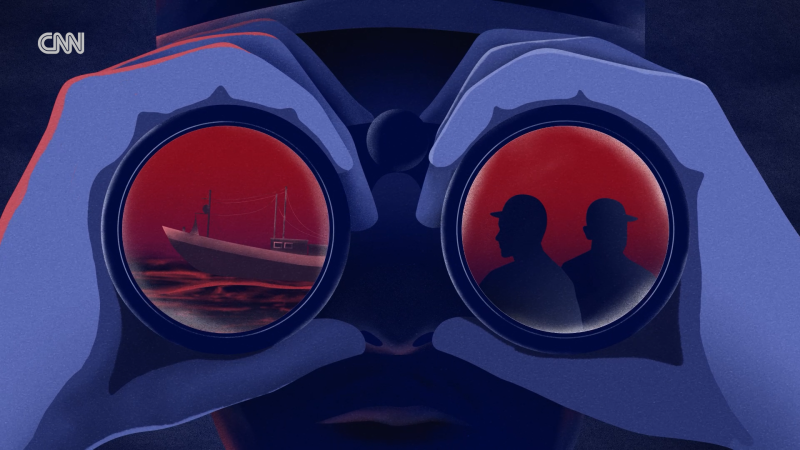
Pyongyang’s maritime patrols serve as gray sentinels of North Korean leader Kim Jong Un’s regime, slicing through the Yellow Sea with cold, unyielding purpose: the interception of defectors.
To escape North Korea, the Kims would need to evade patrol boats and cross what is known as the Northern Limit Line (NLL) – a tense, disputed maritime boundary between North and South Korea.
The waters near the border are rich with sea life, but few dare to fish there because the area is heavily restricted and closely watched. The brothers used this to their advantage, posing as fishermen as they scouted for gaps in patrol coverage.
“The simulations went like this: if we sail toward the NLL, the North Korean military might chase us,” Kim Il-hyeok said matter-of-factly. “If they do, how quickly would they detect us? We calculated everything.”
“Patrols would come faster during the day and slower at night, especially on bad weather days or on days when a maritime warning was issued. We tested this several times. When we were caught by patrols, they treated us as if we were major criminals.”
When Kim and his brother were interrogated over the years, they recounted the same story: They had bribed guards along the coast, begging them to let them fish near the NLL; the abundant catch was too good to ignore.
The guards corroborated the brothers’ stories, again, and again. The Kims took their boat near the maritime border but always came back. It was an alibi played to perfection – a careful act that masked their impending escape.
The Kims were considered well-off in North Korea, where international humanitarian organizations estimate more than half the population lives in poverty.
“My father used to trade antiques, gold, and even sold coal transported by train,” Kim Il-hyeok told CNN.
He and his wife had a large TV, one officially registered with North Korean authorities. Yet they also owned a smaller one, bought in secret, smuggled by traders from China.
From their home near the South Korean border the Kims could watch 10 channels broadcasting from Seoul, Kim recalled.
“We had a makeshift copper wire antenna that we stored crumpled up and would unfold when needed,” he added. “We’d move it around the room in different directions until we found a spot with a signal.”


Kim described how watching that TV was like looking into a different world: seeing homes with electricity at night, plentiful food, free movement across South Korea, hot water. There was a sense of possibility unleashed.
Kim’s father died before the dream of escape became reality. He left his money to his children, an inheritance that grew the Kims’ wealth and shielded them from desperation.
“From 2015 to 2020, I ran a business mainly dealing with home appliances,” he said.
Then came the pandemic, which changed Kim’s trajectory and grew his savings.
“I started selling vegetables, fruits, and agricultural products for people’s survival. During that time, many people starved to death,” Kim continued.
“Every day, I heard stories of someone dying, being robbed, or being assaulted. I once bought rice for 4,000 won (about $4.44) per kilogram, and after just one night, I could sell it for 8,000 won ($8.89) or even 10,000 won ($11.11).”
“My business thrived. I wasn’t the only one. Other merchants like me made even more money, while those who had nothing starved even more.”
By May 2023, Kim Il-hyeok’s wife was in her second trimester, and time was running out to find an escape window before the baby’s birth.
As the Yellow Sea turned rough with a spring storm, the Kims saw their chance. Rain battered the coast, radar visibility dropped – and under that veil, they made their move.
To set the escape plan in motion, the brothers paid off night watchmen, claiming they wanted to embark on a most improbable night of fishing. The brothers would pick up the women in secret, further along the coast.
“In North Korea, men can board a ship, but women cannot,” Kim explained. “Legally, if a woman boards a ship, she is immediately suspected of having impure intentions, assumed to be attempting to defect.”
To reach the rendezvous point, the women had to cross a minefield – a brutal fixture of North Korea’s landscape. But after years of careful preparation, they had memorized a safe route, tracing it in their minds long before that night.
Kim Il-hyeok’s pregnant wife crossed the landmine-strewn terrain alongside his mother, sister-in-law, and Kim Yi-hyeok’s mother-in-law, all reaching the boat at the shoreline.
“The waves could easily crash our boat against the rocks, which would have made it sink right away, but we’d carefully planned everything,” Kim Il-hyeok said. “We slowly got close to the rocks, where we managed to move the women and kids onto the boat.”
With the family’s women on board, plus a brother-in-law joining, all nine family members were now together, along with the ashes of the family patriarch.
“Everyone was completely silent, not even the sound of breathing,” Kim recounted. “The loudest noise was the engine of the boat, even though we had tried to minimize it by modifying the muffler to reduce the sound.”
“We sailed slowly, at the pace of a fast walk, making the engine sound like a steady ‘thud, thud, thud.’ At that speed, the radar would see us as just floating debris.”
The two children were still hidden in burlap bags, told to stay quiet as North Korea drifted farther away.
“When we finally opened the sacks, their eyes were wide open, and they hadn’t made a noise. It was astonishing and miraculous, truly a night of miracles,” Kim said.
“The sound of my own heartbeat was louder than the engine,” he added, recalling the most nerve-wracking moment of the night. “I was so tense that my heart was pounding in my ears… It was silent and still, with no one speaking at all.”
After about two hours, the Kim family crossed into South Korean territory – a rare feat accomplished with remarkable speed. North Koreans who cross the country’s land border into China often describe journeys lasting months or years, as they try to avoid authorities tasked with deporting defectors.
The Kims saw South Korea’s Yeonpyeong Island first, “illuminated like daylight during the midnight hour.” Kim Il-hyeok turned on a searchlight, and a South Korean Navy ship glided towards them.
“The South Korean Navy asked us over a loudspeaker if our engine had broken down, to check our intention,” Kim said. “We replied, ‘No, our engine isn’t broken. We’re North Korean fishermen here to defect to South Korea.’”
“It felt like a huge weight was lifted off my shoulders,” Kim confided.
“My wife was very emotional because we had left her family behind. Her eyes were swollen from crying so much. The other women seemed somewhat dazed and had blank expressions, but at that moment, we all felt relieved.”
Four months after their escape, the couple welcomed a daughter, Yeri. The entire family of defectors gathered a year later to celebrate her first birthday in a bright banquet hall in Seoul. Her proud father donned a smart tuxedo, while Yeri cooed in a pint-sized cream-colored dress.

Many North Korean defectors who make it to the South find themselves struggling. At the party, Kim’s younger brother Yi-hyeok told CNN it was taking time for him to adjust to a free life.
“Sometimes, when I wake up in the middle of the night, I’m confused, thinking I’m still in North Korea,” he said.
And as the family raised a toast to Yeri, Kim Yi-hyeok said his dreams still stirred.
“I want to work hard to make money so that I can fully support my children’s education and make sure they receive a high level of education,” Kim Yi-hyeok said.
Of himself, he added, “I have a goal in life, but it’s difficult to share with you now.”
“I’ll be able to talk about it once it comes true.”

Kim Yi-hyeok discusses his future after escaping from North Korea

That interview would be Kim Yi-hyeok’s last. In a swift and deeply cruel twist of fate, Yi-hyeok died in a scuba diving accident two months after Yeri’s ceremony.
His grieving family was reluctant to share further details as they gathered in a basement funeral home at a Seoul hospital, days before Christmas.
Yi-hyeok’s smiling portrait rested on a table cradled by a sea of white chrysanthemums. A vase filled with fresh flowers stood next to the altar, ready for guests to lay beside his photograph.
His wife and two children, not even two years removed from North Korea, were now without the husband and father who secured their escape.
Kim Il-hyeok struggled to comprehend how after 10 years of planning, his brother only lived to see 19 months of freedom.
“It doesn’t feel real,” Kim murmured, as the rest of his family kept vigil in whispered tones, their grief pressing against the walls like an unspoken prayer.
And yet, even in the depths of loss, Kim came to see the voyage itself as a miracle – proof that survival could lead to something more. It became a reason to keep going, to keep reaching for new horizons.
Today, he divides his time between training to become a chef, learning to operate a forklift, and speaking publicly about life in North Korea – a rare and recent witness to one of the world’s most reclusive regimes. Through media appearances and community talks, he shares his story, hoping to shed light on a place few truly understand.
In March, joy returned when Kim welcomed his second child born in South Korea, his daughter, Ye-eun. As Kim cradled her in his arms, feeling the rise and fall of her tiny breaths, he understood he had not just escaped. He had endured.
And endurance was not merely about what he had left behind; it was about what he would now create, a life worthy of his brother’s hopes.
“I consider myself one of the lucky ones,” he said.
