

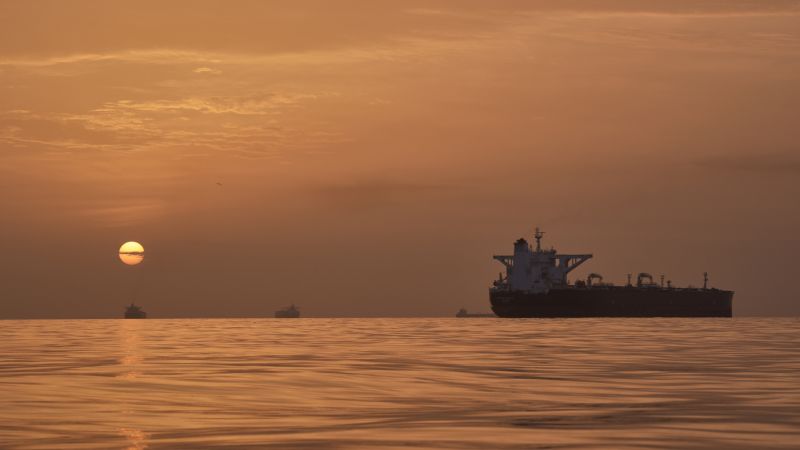
What a difference a day can make. This time yesterday, one might be wondering if more ships would start passing through the Strait of Hormuz as the deadline for the US-Iran ceasefire approaches.
On Friday, US President Donald Trump enthusiastically welcomed the Iranian government’s announcement that the Strait of Hormuz is “fully open and ready for full transit. Thank you!”
Iranian Foreign Minister Abbas Araghchi suggested on the X program that the strait would be fully open again, adding that Iran would adjust the shipping route. The post caused oil prices to drop by 10% within hours, but the deterioration was significant, with Iran’s semi-official news agency Tasnim criticizing Araghchi for creating “various ambiguities about transit conditions, details and mechanisms.”
President Trump then said the U.S. blockade of Iranian ports would continue “in its entirety” until a “deal” with Iran is completed.
Now, 24 hours later, the Islamic Revolutionary Guards Corps (IRGC) has announced that it has closed the strait again, citing the continued blockade of Iranian ports by the United States.
“Any approach to the Strait of Hormuz will be considered cooperation with the enemy, and violating vessels will be targeted,” the Revolutionary Guards said in a statement.
After fleeting hopes that one of the world’s busiest waterways might reopen, the United States and Iran appear to have agreed on little beyond perhaps preparing for a reunion.
Iran’s military reiterated on Saturday that commercial shipping will be severely restricted as long as the U.S. blockade remains in place. To emphasize this point, the tanker’s captain said two ships were shelled about 20 miles off the coast of Oman, with an Iranian gunboat responsible for the first attack.
And in a rare statement by Supreme Leader Mojtaba Khamenei, he said Iran’s “brave navy is ready to make the enemy taste the bitter taste of new defeat.” Khamenei has not been seen in the six weeks since he was chosen to succeed his father.
President Trump reiterated Saturday that negotiations with Iran are progressing very well, but that the United States will not bow to threats. Iran’s powerful National Security Council said the country is considering “new proposals” from the United States but has not yet responded.
In addition to strait navigation, the two countries remain wide apart over the delivery and removal of Iran’s highly enriched uranium and its ongoing enrichment program.
The ceasefire expires in just three days. President Trump said he did not know whether it would be extended.
“We probably won’t extend it. Then we’ll be locked down and unfortunately we’ll have to start dropping bombs again,” he said on Friday.
The Iranian regime appears unwilling to compromise. “If war starts again, we will use missiles with a production date of May 2026,” a senior military official, General Mohamed Naqdi, said on Saturday.
“We can stop oil production, but we didn’t want to cause chaos in the world, so we acted patiently,” he said.
Iranian sources told CNN they expect a second round of talks to be held next week, but the US has yet to publicly confirm its plans as the April 21 end of the ceasefire approaches.
However, there are signs that a heated debate is taking place behind the scenes. On Saturday afternoon in Washington, senior US officials were seen arriving at the White House, including Secretary of Defense Pete Hegseth, CIA Director John Ratcliffe and Chairman of the Joint Chiefs of Staff.
