

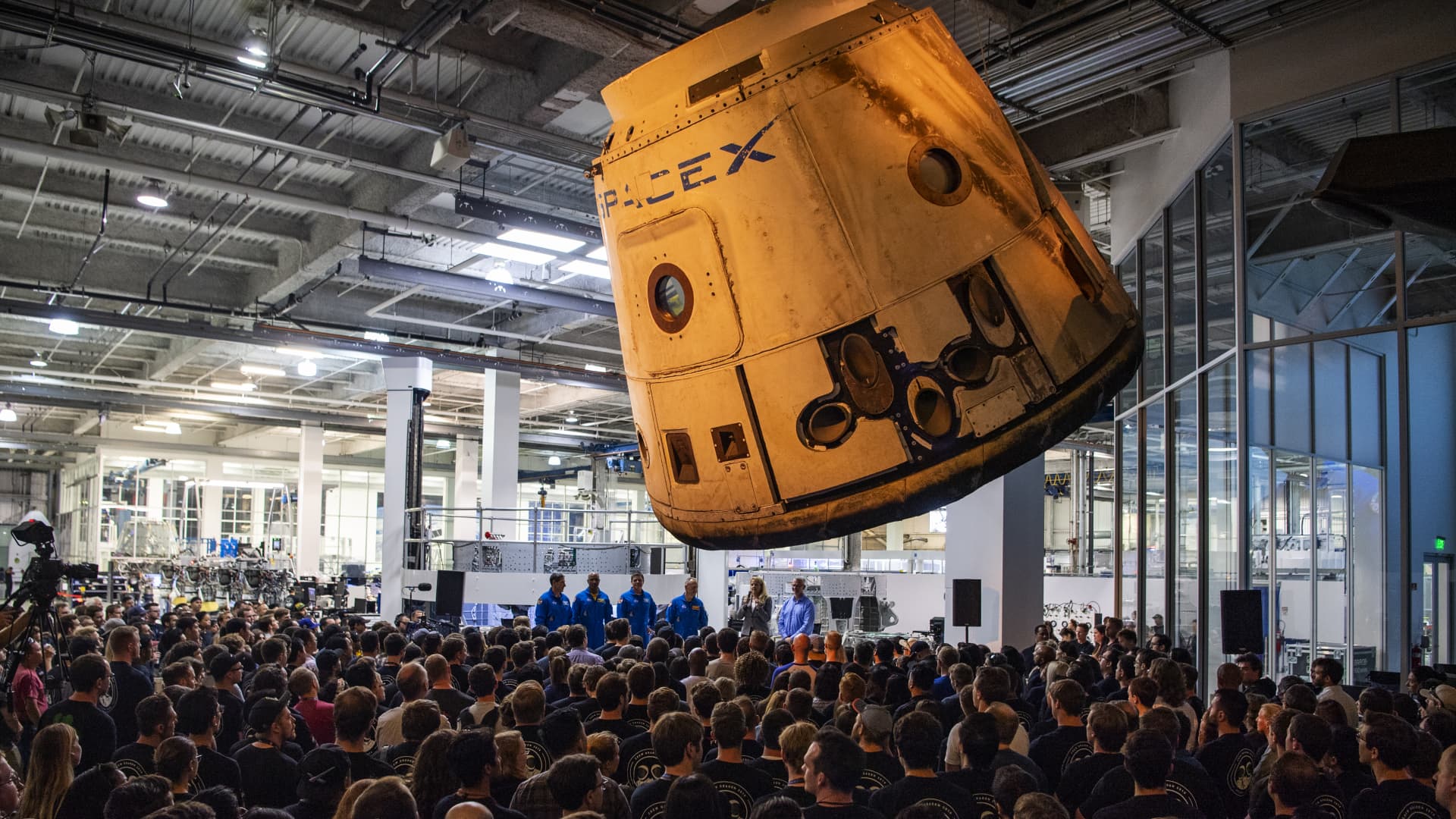

What goes up must come down, even when it comes to rockets, especially rocket maker stocks. However, the once-in-a-generation surge space x Stocks also change the price of options, allowing smart investors to protect their portfolios at no cost.
Space (SPCX) made history last Friday with its record-setting Nasdaq listing, surpassing the $2.5 trillion market cap. To no one’s surprise, Tuesday’s SPCX options launch also set a new record for first-day post-IPO options trading volume. About 1.8 million contracts were traded in the first session, revealing a psychological divide between ultra-bullish mania and some calculated systematic risk management.
Let’s analyze two notable large block trades from day one, see what they revealed about market sentiment, and how I would deal with volatility.
As befits a rocket company, there were several moonshot bets (bets to Mars?), including a $325 call in July. The high-profile trade of the session was a large, all-out purchase of 7,000 July $325 call contracts, executed at approximately $7.00 per contract.
Premium: $490,000 plus fees, nearly $500,000 spent. Trade: This trader is actively betting that SPCX will soar more than 50% from its current closing price of approximately $201 in just over a month.
Our view: We don’t like this deal. While buying OTM calls strictly limits your risk to the premium you pay, treating a $2.5 trillion mega-stock like a low-float meme stock immediately after its IPO will cause rapid theta decay. These calls face an incredibly uphill battle as the implied volatility inflates significantly during the first few trading days.
Smart Money: September 205/225 Collar
In stark contrast to the speculative call buyers, another institutional investor executed a beautifully structured hedge. So I traded 7,500 September 205/225 collars at $2.00 credit per contract (I bought a $205 put and sold a $225 call).
September 205/225 Color Performance: This trader is protected if the stock price falls below $205. There is no loss below the net floor of the short sale plus the premium collected, which is $207. The maximum profit is $225 plus the collected premiums, or $227, which is a profit of more than 10% over the next three months.

SpaceX, 5 days
Our take: We like this deal. By collecting the $2.00 credit, this position guarantees an absolute loss floor of $207 (put strike amount plus premium collected). Conversely, upside profits are structurally limited to $227 (short call strike and premium). The only problem is that this is a strategy for those who already own the stock (presumably at a low price) to effectively lock in profits while maintaining some cushion heading into the summer. Good if you have fixed profits, but of little use to those who don’t.
So for traders looking to earn income rather than protect existing stocks, the real advantage lies in taking on the downside. The only option is to sell the August $135 puts for about $8.10 per contract.
By selling this out-of-the-money put option, you can turn high implied volatility into a personal yield engine.
Worst-case scenario: If SPCX craters, you will be legally obligated to purchase the stock at a net cost basis of $126.90 per share ($135 strike price less $8.10 premium). This represents a significant discount of 33% from the current market price and is comfortably below the original IPO price of $135. Best-case scenario: If SpaceX holds its ground or continues to rise, the option expires worthless. Keep the $8.10 premium intact. Please try again.
Over a roughly two-month holding period, that premium immediately yields a risk return of 6%, which scales out to a massive 36% annualized yield.
Avoid gravity-defying July lottery tickets. You can take advantage of the structural benefits of high implied volatility by collaring your long-term exposure or comfortably collecting a premium well below the IPO floor. By the way, the IPO pattern is that the high option premium that exists early tends to fade, so if buying SPCX early is the key for stock buyers, it is advantageous for option sellers to start early.
