

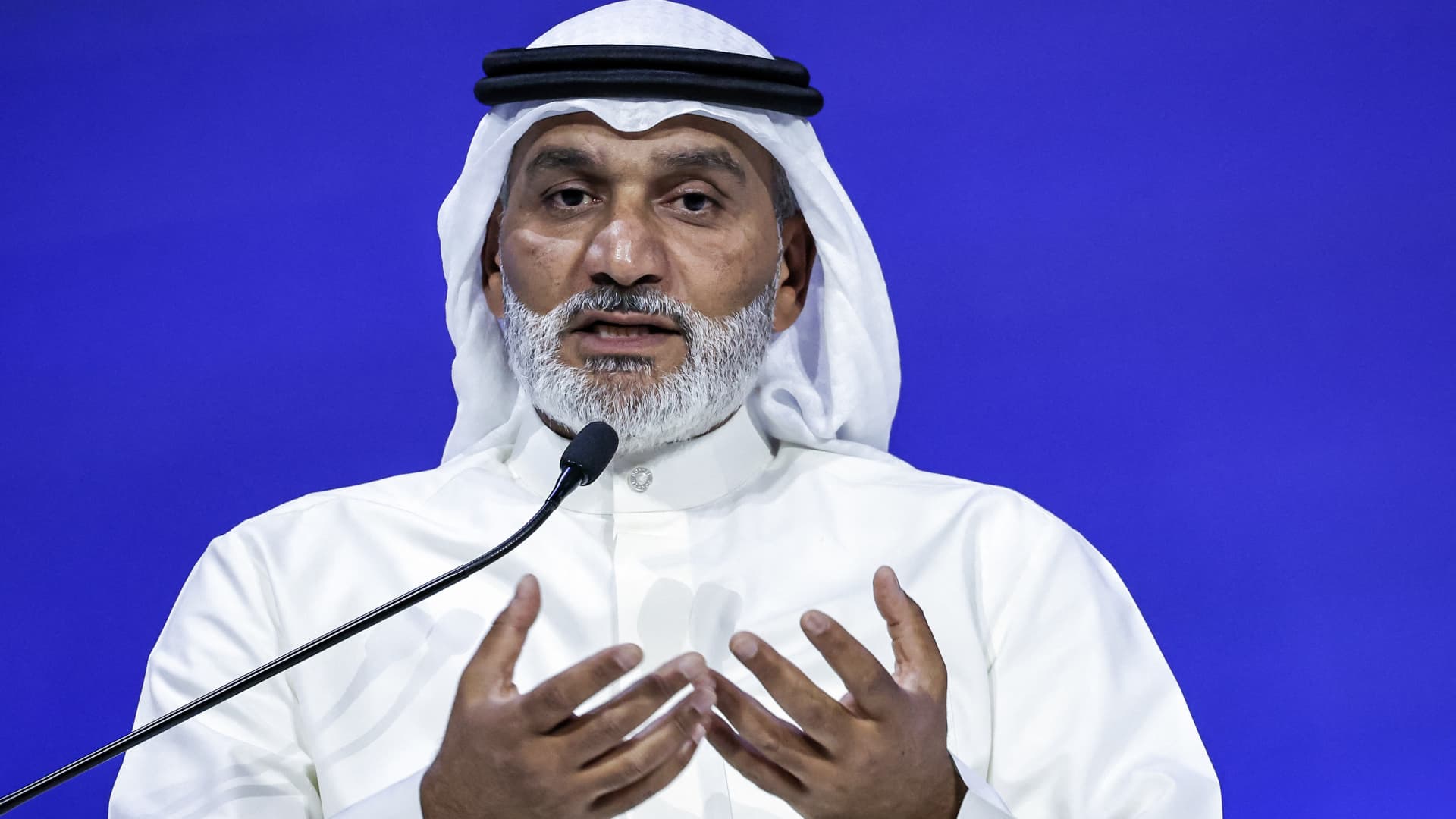
OPEC Secretary-General Haitham Al Ghaith speaks at a panel at the Abu Dhabi International Petroleum Exhibition and Conference (ADIPEC) in Abu Dhabi, November 4, 2024 (Photo by FADEL SENNA/AFP) (Photo by FADEL SENNA/AFP, Getty Images)
Fadel Senna | AFP | Getty Images
OPEC Secretary-General Haitham Al-Ghais on Thursday rejected the International Energy Agency’s prediction that there is a glut in the oil market.
The International Energy Agency said Wednesday that a permanent resolution to the conflict could prompt a surge in supplies and cause a significant oil overhang next year.
According to the report, demand is expected to increase by 2 million barrels per day in 2027, while supply is expected to increase by 8 million barrels per day.
But OPEC’s Argais denied this prediction in an exclusive interview with CNBC on Thursday.
“Sometimes it’s better not to make those assumptions when they’re not actually based on facts and figures,” he told CNBC’s Dan Murphy.
“What is the IEA thinking when OPEC and other countries aren’t looking?” he said. “(We) focus on the fundamentals and focus on the actual numbers rather than putting too many ifs and buts into our predictions. ”
“We’re not trying to make catchy flashy headlines. Sometimes it’s best not to make assumptions if they’re not based on actual facts and figures.”
“Ultimately, these headlines only add to the volatility.”
Markets focus on ‘critical’ Strait of Hormuz reopening
The Secretary-General’s comments come as investors consider how the US-Iran deal to end the Middle East conflict and the potential reopening of the Strait of Hormuz will affect energy markets.
The United States and Iran signed a 14-point memorandum of understanding on Wednesday.
The deal, in which the two sides commit to further talks to reach a final agreement in the next 60 days, includes a $300 billion plan to rebuild Iran and the lifting of “all types” of U.S. sanctions against the Islamic Republic.
Under the agreement, Iran will allow commercial ships safe passage free of tolls for 60 days. The country will then consult other Gulf states and Oman “to define future administrative and maritime services” in the Strait of Hormuz.
Algais said OPEC “welcomes and appreciates” the diplomatic efforts that led to the deal, but added that “there are a lot of moving parts” which meant it was “premature” to judge the outlook.
“I think what the last four months have really demonstrated is how important this waterway is, not just to OPEC producers, but to producers in the Middle East and to the global energy market,” he said.
