

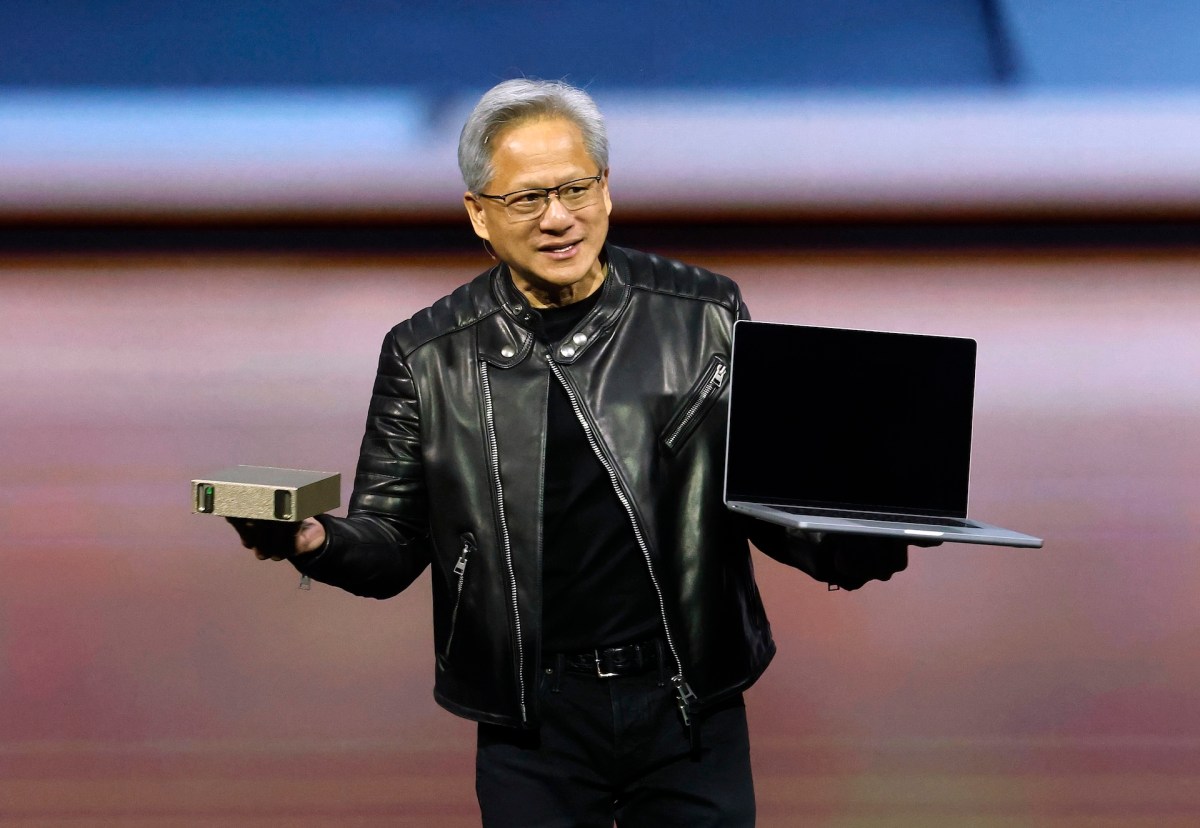
Nvidia opened Taipei’s giant Computex trade show with literal fanfare on Sunday. The chipmaker announced a new PC CPU called RTX Spark (which the company calls a “superchip”), adding to the growing roster of PC makers that will soon launch AI PCs powered by it.
Nvidia says the ultra-fast 1 petaflop chip is designed to securely run AI agents such as OpenClaw and Hermes Agent. RTX Spark Windows PCs like these will be available this fall from ASUS, Dell, HP, Lenovo, Microsoft Surface, and MSI, with models from Acer and Gigabyte to follow.
In addition to being equipped with a secure sandbox (co-developed with Microsoft) to safely run the agent, the PC also has enough CPU, GPU, RAM, and underlying Nvidia CUDA software to run local versions of large language models.
Nvidia said its RTX technology improves AI performance, improves image quality, and supports AI features in more than 1,000 games and applications.
The chipmaker is marketing it as an alternative for creators creating AI content, as well as offering a significant upgrade to the traditional gamer market. Nvidia said more than 100 Windows software makers have signed on to support the new chip, including Adobe, Blender, ComfyUI, Riot Games and Xbox.
But Nvidia founder and CEO Jensen Huang’s vision for these new PCs is much bigger. He wants to end the days of launching apps, pointing, clicking, and typing.
“With RTX Spark and Microsoft Windows, you ask and your PC does the work for you,” he said in a press release. “Frontier model. Creative workflow. RTX gaming. Everything on the laptop.”
Last month, after another record quarter, Huang assured investors that he had discovered a new $200 billion market for Nvidia in selling CPUs for AI, not just GPUs. He specifically mentioned a high-end server CPU called Vera that was released earlier this year. NVIDIA says it has already sold $20 billion worth of this CPU.
He also hinted at even bigger ambitions. “We’re going to have billions of agents, and those billions of agents are all going to use tools, and those tools are going to be like PCs, just like we humans use PCs today,” he said on an earnings call in May. “We’re going to need more CPU.”
Nvidia ARM-based Windows devices have been attempted previously, but failed. Microsoft famously had to write off $900 million on the Nvidia ARM-based Surface RT in 2013, and partners like Dell also bailed out the product.
But for now, it’s hard to bet on Huang chasing his PC dream again after setting record quarterly sales records.
And this chip is something completely different. It’s more powerful, not less. Microsoft positions its RTX Spark PC as extremely powerful, naming it the Surface Laptop Ultra and calling it “the most powerful Surface Laptop ever made.”
Still, PC makers haven’t revealed many details about each product, including price. These systems appear to be full-fledged Windows versions of the DGX Spark minicomputers that Nvidia already sells to developers for about $4,800.
We’ll have to see if these PCs compete price-wise with the affordable Mac Mini, which has become a popular choice for running OpenClaw. Or it could be at the higher end of the PC market, like a mini computer running Nvidia’s own agents.
Either way, if Nvidia can crack the code to bring AI agents to the masses easily, safely, and conveniently, it could and should be a huge accomplishment.
If you buy through links in our articles, we may earn a small commission. This does not affect editorial independence.
