

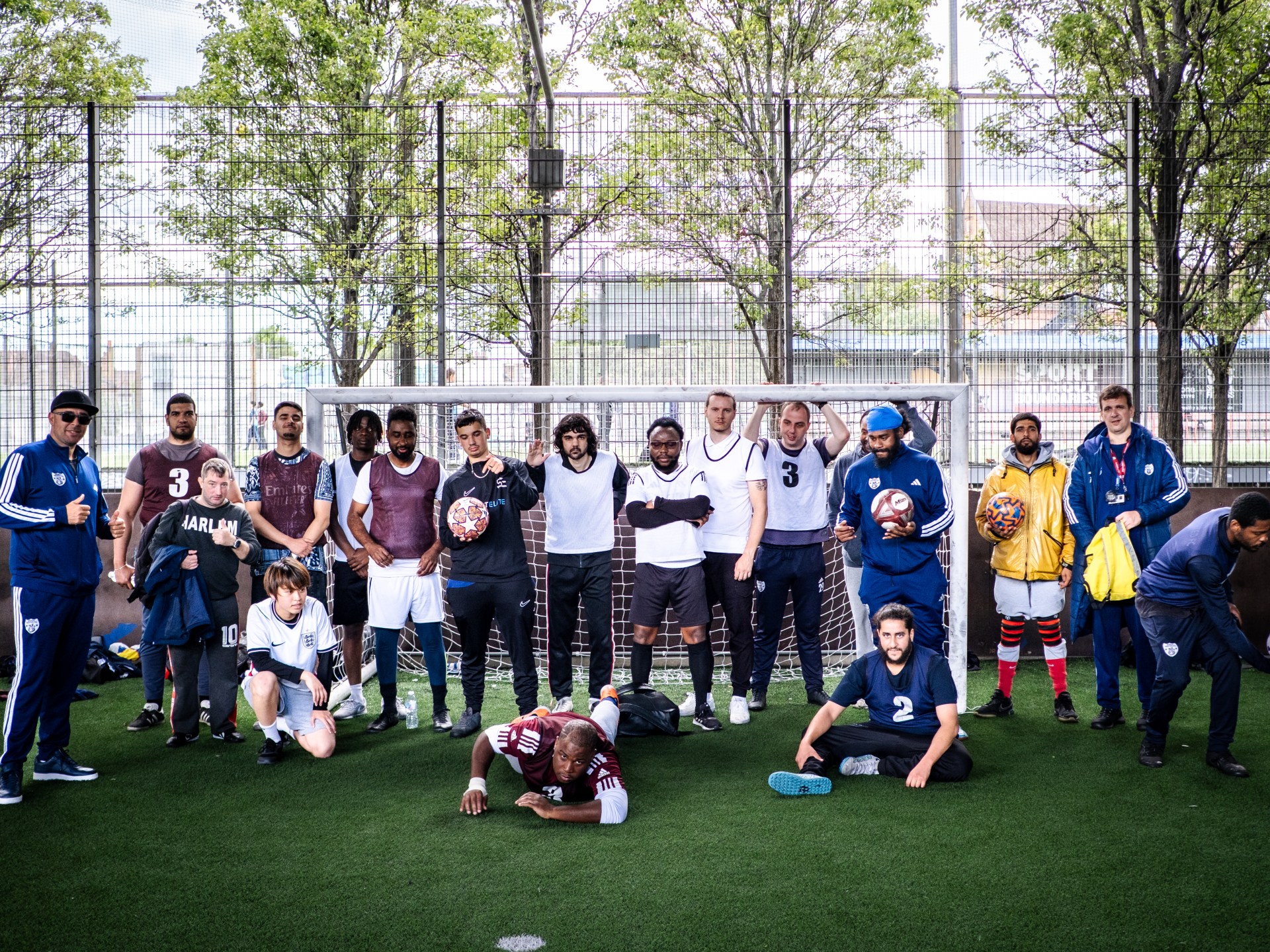
As his health improved, so did the energy drained by his diagnosis. Training sessions gave him a reason to get out of the house and matches gave him something to look forward to.
Kaidi’s anecdotes are increasingly supported by scientific research.
Scientists and medical professionals have long linked exercise to improved mental health.
A recent UCLA study found that people who exercise regularly have significantly fewer days with poor mental health.
A 2023 review published in the British Journal of Sports Medicine went further, based on more than 1,000 trials and 128,000 participants, and concluded that physical activity was 1.5 times more effective than counseling or major drug treatments at reducing symptoms of depression and anxiety.
Researchers believe part of the explanation lies in the brain itself. Aerobic exercise has been shown to stimulate the growth of new neurons in the hippocampus, which is responsible for regulating memory and mood.
Perhaps just as important, soccer gave Kaidi a community.
Among his teammates who understood what he was going through, Kaidi was accepted in a place where he had expected judgment.
He admitted that he had struggled with his diagnosis for months, having his own stereotypes about mental illness and worrying about how the world saw him. But at the football club, that label has been shed.
In his words, everyone was “on the same page,” and something like a true friendship grew out of that commonality.
Eventually, he ended up going all the way to Italy for a tournament. The tournament is one of a growing number of international competitions that use football as a tool for mental health recovery and social inclusion.
The Dream World Cup, which began in 2016, brings together players from around the world, including Argentina, Japan, Senegal and Spain, as well as participants selected from psychiatric services and recovery programs, competing in the belief that they can do what they can’t do in a clinic on the pitch.
The driving force behind these tournaments is the International Football Commission on Mental Health, chaired by Italian psychiatrist Santo Rulo.
The organization was founded in 2013 after psychiatrists and social workers from eight countries gathered in Tokyo and signed a declaration committing to sport as a tool for inclusion and recovery for people living with mental illness.
The cup has been held in Osaka and Rome, and organizers are currently preparing for the next Dream World Cup in Peru, although dates have not yet been confirmed. In September 2024, this concept was further expanded with the first ever Dream Euro Cup, bringing together teams from all over Europe.
Over the next few years, soccer became more than just a way for Kaidi to get back in shape. It became a calling.
After gaining his coaching qualification through the Fulham FC Foundation in 2016, he began thinking about how he could offer others the same sense of purpose and belonging he found on the pitch.
Founded Mines United in 2019.
What started with seven players and a bag of soccer balls has since grown into a community organization with over 400 members, providing soccer sessions, social activities and support networks for people experiencing mental illness, disability and social exclusion.
The club currently has multiple teams for players aged between 18 and 70, attracts referrals from mental health services, homeless charities and community groups across west London, and receives support from organizations such as the NHS and Kensington & Chelsea Council.
A women’s division was established in 2021, and the following year a women’s division was added to the North West London Mental Health League in partnership with Middlesex Football Association. The club said 95% of players reported improved mental health.
Across the UK, organizations such as Coping Through Football in east London, Kick Start FC in Wiltshire and Sport in Mind run football programs for people living with mental illness, addiction and social isolation.
This movement is becoming increasingly international. After meeting members of the Italian national mental health team at La Testa nel Palone, a futsal tournament held in Lecce in June 2024, Caidi set out to create Britain’s first national mental health football team.
He assembled the team in just three months. Organizers from the European Organization for Culture and Sport proposed calling the team ‘Team GB’, but Caidi resisted, saying he wanted to leave room for Scotland, Wales and Northern Ireland to eventually form their own national teams.
England have reached the quarter-finals of the 2024 Dream World Cup.
At the club’s West London Community Center, volunteers, coaches, people experiencing homelessness and people living with mental health conditions from a variety of backgrounds gather in a spacious room filled with a pool table and an art corner, overlooking a bleak, traffic-choked road and a vast supermarket, with a row of well-to-do homes in the background. A small but vibrant snapshot of the complexities of modern London.
That same sense of belonging extends to the pitch.
