

LOS ANGELES, USA — Hours before the United States and Iran agreed to a “peace deal” after months of war, Iran’s soccer team arrived in Los Angeles for its first goal of the 2026 FIFA World Cup.
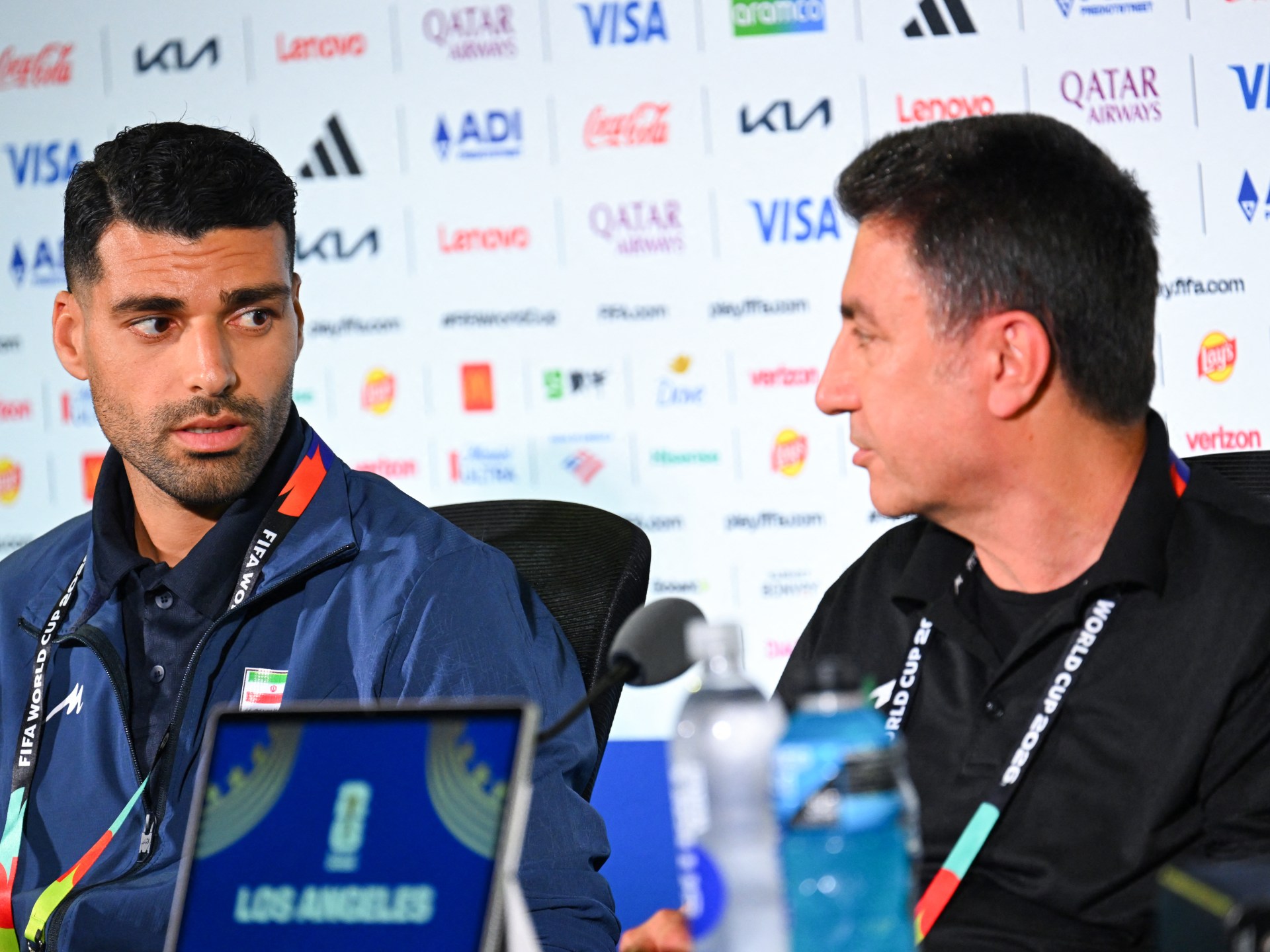
Iran coach Amir Galenoei wanted to talk about football, not politics, when he arrived at the World Cup venue on Sunday.
Before the team’s first press conference, FIFA officials warned reporters to be true to the sport when speaking to players, and Galenoi nodded in agreement.
But there was no escaping the political elephant in the room, from U.S. visa denials to expected protests.
Several logistical hurdles were put in place for the team to reach the country hosting the World Cup matches. All the while, their hosts were basing them across the border in Mexico.
So head coach Amir Galenoei didn’t hold back.
He said the US hosting the tournament was a challenge for Iran, including refusing to host the team’s base camp.
“This kind of behavior will have a negative impact on the spirit of football,” Galenoei told reporters. “Whether we win or lose, it’s a difficult feeling.”
Striker Mehdi Taremi echoed that assessment. The former Inter Milan striker highlighted that Iran is not the only country facing problems with the host country, referring to Somali referee Omar Altan’s refusal to enter the country.
“We don’t always have these beautiful experiences that we talk about – peace and joy,” Taremi says.
“I think the sense that people look forward to the World Cup, they might not have had the same experience this time…This kind of tension undermines that joy. It undermines FIFA’s message.”
Team Melli, known as the Iranian soccer team, was one of the first teams to qualify for the World Cup by finishing top of their group, with just one loss and two draws in 10 matches in the Asian qualifiers.
They carried that momentum into the tournament, picking up some wins in recent friendlies.
Despite Team Melli’s strong performance, Iranian participation was suspected after the US and Israel attacked the country on February 28, and Tehran responded by launching attacks on Israel and US military bases in the Gulf.
Iran’s group stage matches against New Zealand, Belgium and Egypt will be held on the West Coast of the United States.
In March, US President Donald Trump suggested that Team Meri would be under threat if it came to the US.
“While I welcome the Iranian national soccer team to the World Cup, I truly do not think it is appropriate for them to participate in the World Cup, given their own lives and safety,” Trump said in a post on Truth Social.
Iranian officials had already cast doubt on the team’s participation.
In the end, it was agreed that Iran would participate in the tournament, but would practice and be based in Mexico and would only come to the United States to play.
Coach Galenoei confirmed the itinerary and said Team Melli will return to Mexico after Monday’s game.
The team also faces the issue of organized protests by Iranian opposition activists in Los Angeles.
Both Ghalenoei and Taremi stressed that they are representing all Iranians at home and abroad at the World Cup.
“I want to say that we respect all Iranians, whether they are Iranians inside the country or Iranians abroad. We are here to play football. Football can always unite all factions,” Taremi said.
Galenoei also emphasized the ability of football to bring unity.
“I am very happy to be able to represent Iran, a strong and proud country,” he said.
“I hope that football brings joy and fun and brings cultures and countries closer together. Despite the travel issues, I hope the World Cup goes well.”
Tactics were hardly discussed at the long-awaited press conference, which began with a warning to only talk about football.
“Nobody asked any football-related questions,” Taremi quipped in his closing remarks. “We have a lot of respect for New Zealand and we hope it will be a good match.”
