

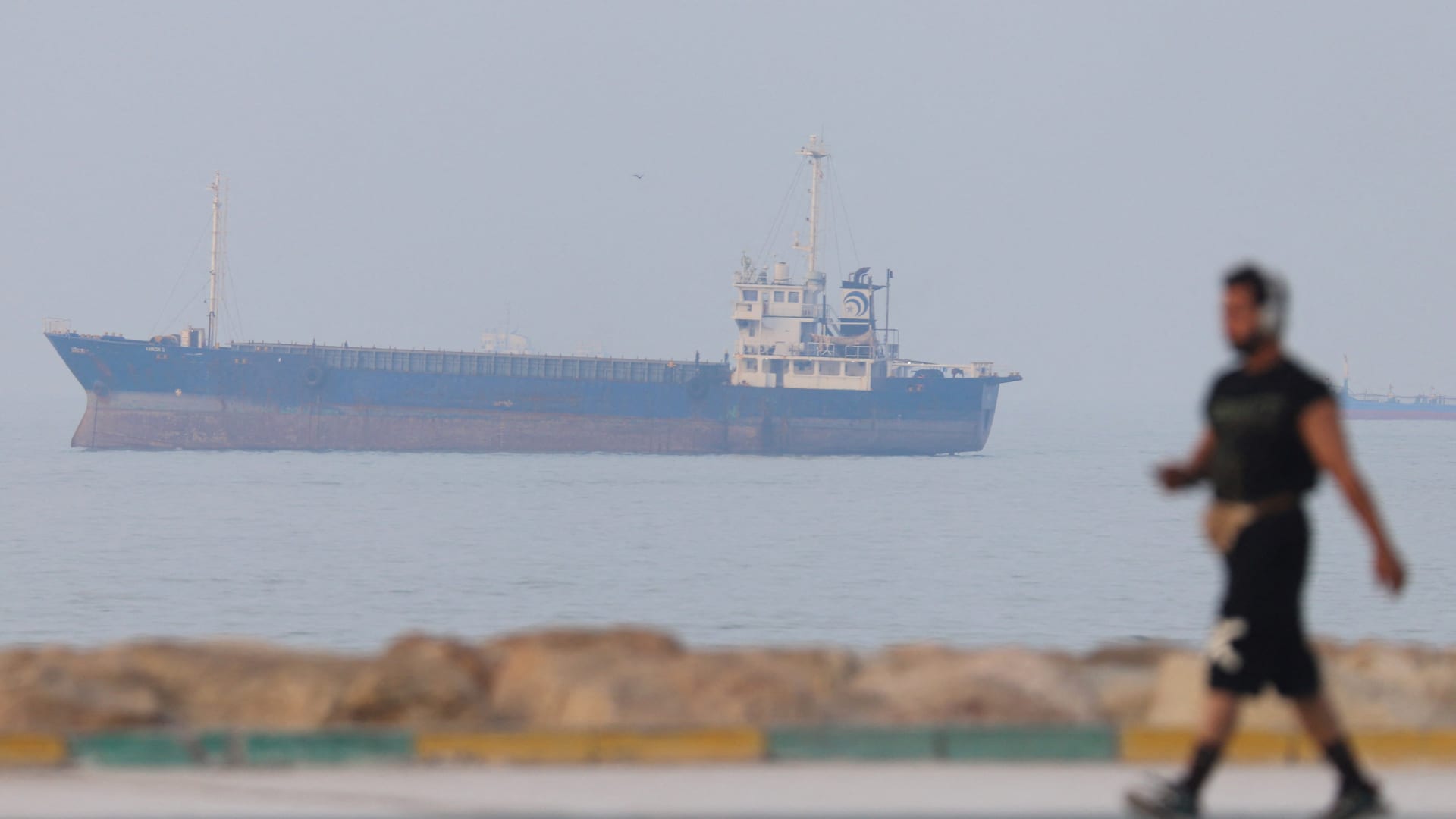

Oil tanker traffic through the Strait of Hormuz has slowed after Iran’s attacks on three commercial ships this week brought the Persian Gulf to the brink of a new war.
Thirteen tankers passed through Hormuz on Wednesday, compared with an average of 33 a day in the previous week, said Matt Smith, director of commodity research at trade information firm Kupler. Smith said the ships either followed Iranian-controlled routes or switched off their transponders to avoid being tracked.
Only five commercial ships passed through Hormuz between Wednesday and Thursday, according to data from maritime information firm Windward. According to the company, no outgoing tankers crossed the strait during the same period.
Oil prices rose more than 6% this week as investors worried that oil exports through Hormuz could fall again as the United States and Iran vie for control of strategic sea lanes.
President Donald Trump said Wednesday that he believes the ceasefire with Iran is over after Iran attacked three oil tankers sailing through Hormuz earlier this week. The United States launched two airstrikes against Iran in retaliation for the tanker attack and reimposed oil sanctions.
“The collapse of the ceasefire framework, the reimposition of Iranian oil sanctions, and the scale of US campaign actions inside Iran represent the most significant escalation since the early stages of the conflict,” Windward analysts told clients in a note Wednesday.
Windward analysts said in a post Thursday that Holmes is once again operating under full conflict conditions.
But Andy Lipow, president of Lipow Oil Associates, said in a note to clients Thursday that oil markets are not pricing in a complete closure of the Strait.
“We seem to be pricing in a new normal where periods of conflict (you might even call it missile skirmishes) occur during periods of relative calm (or unrest) when tankers are allowed to sail,” Lipow said.
Oil exports through Hormuz had picked up after the United States and Iran signed a memorandum of understanding on June 17 to reopen the strait. Tehran has promised safe passage for ships and agreed not to charge tolls for 60 days under a tentative agreement with the US.
But Iran’s government insists that ships use the Northern Passage, which is under its control, to ensure safe passage. They attacked ships using the southern route along the U.S. Navy-protected coast of Oman.
“This is part of a sporadic targeted campaign by Iran to destabilize the Southern Corridor and send a message to Gulf producers that they will not send oil through the Northern Corridor,” said Michel Wiese Bockmann, senior maritime intelligence analyst at Windward.
Iran essentially shut down Hormuz by threatening commercial shipping after the United States and Israel launched a massive airstrike on February 28 that killed head of state Ayatollah Khamenei. The strait closure lasted for months, causing the largest supply disruption in history.
