

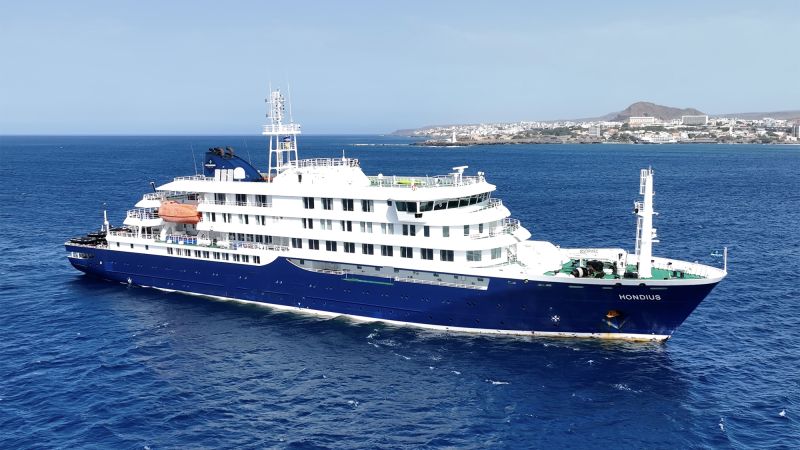
The World Health Organization (WHO) said on Tuesday that human-to-human transmission may have occurred on a cruise ship hit by a hantavirus outbreak, resulting in three deaths and several others becoming ill.
“We know that some of the cases were in very close contact with each other, and we certainly cannot rule out human-to-human transmission, so we envisage this as a precautionary measure,” Dr. Maria van Kerkhove, WHO director of epidemics, pandemic preparedness and prevention, told reporters.
Approximately 150 people, including 17 Americans, remain stranded on the MV Hondius off the coast of West Africa.
The ship, operated by travel company Oceanwide Expeditions, left Ushuaia, Argentina, last month and sailed across the Atlantic Ocean, stopping at some of the world’s most remote islands. However, along the way, several passengers fell ill with a rapidly progressing respiratory illness, the company said.
Hantavirus is a rare disease typically caused by contact with the urine, feces, or saliva of infected rodents, and seven cases have been confirmed so far. The WHO announced on Monday that two of the cases are confirmed and five are suspected.
Three people, a Dutch couple and a German, died, and a Briton remained in intensive care in South Africa, but van Kerkhof said his condition was improving.
Van Kerkhove said two other people suffering from hantavirus symptoms remained on board, but medical evacuations were currently underway.
“The risk to the general public is low,” Van Kerkhove stressed. “This is not a virus that spreads like the flu or COVID-19. It’s very different.”
This is a developing story and will be updated.
