

Published June 22, 2026
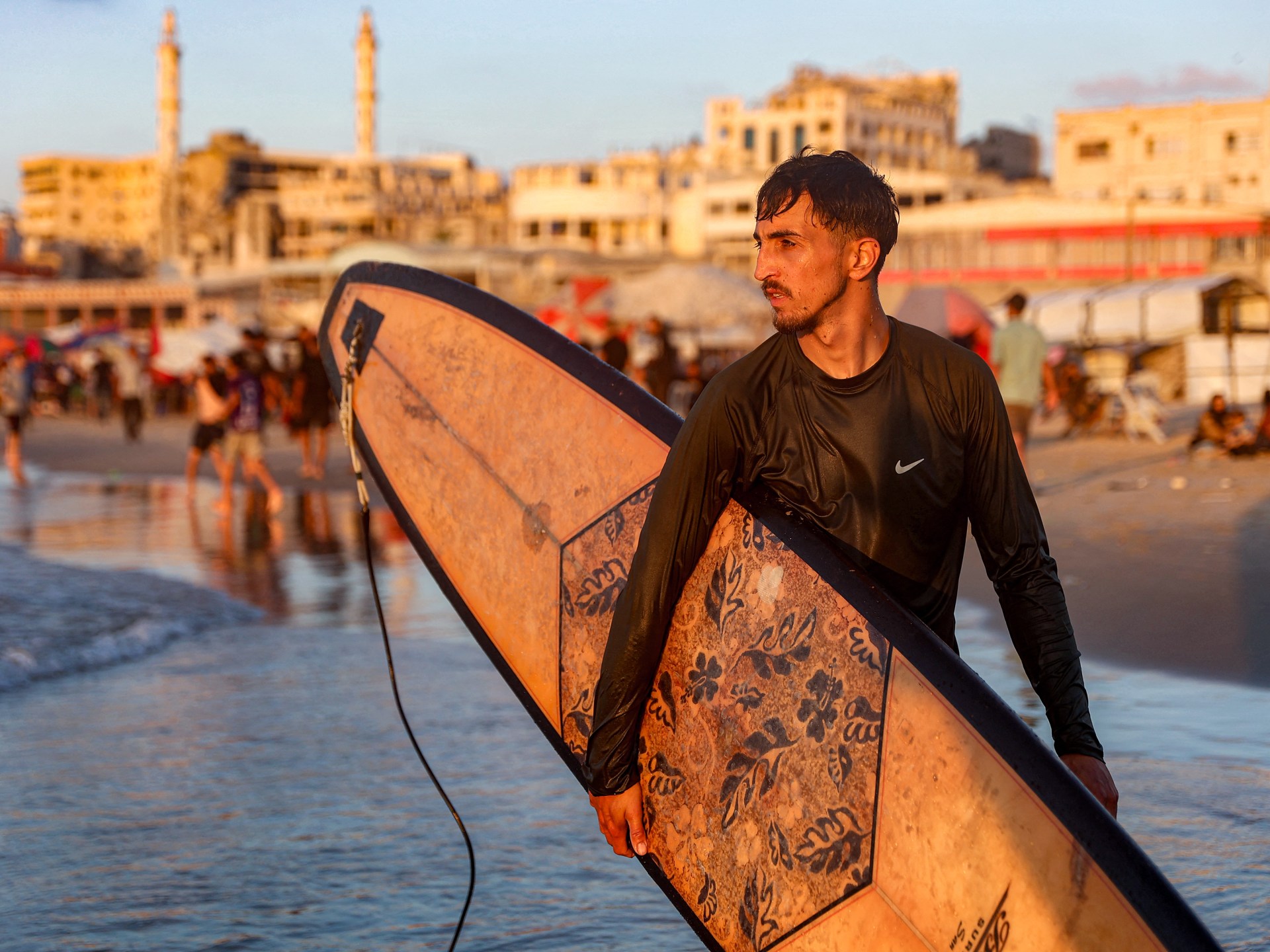
Ignoring the risk of Israeli attack, a group of Gazan surfers carried their boards past tents and bombed-out buildings and headed out to sea to seek solace in the waves.
On a beach in Gaza City, the trio spread out their boards in the sand, warmed up their hands and feet, and readied their gear.
Recommended stories
list of 4 itemsend of list
A few children splashed in the shallows as surfers battled the waves as they paddled out to sea.
“This sport is indescribable. The feeling of riding a wave, riding a wave, sliding along a wave is indescribable,” said Tahseen Abu Assi, 23, who learned surfing from his father.
“I used to watch him practice it on the beach with his father, and I watched them and learned from them,” he told AFP news agency.
“We learned little by little. Even with war, shelling and destruction, we still continue this sport because it allows us to breathe and makes us feel safe.”
A ceasefire between Israel and the Palestinian Islamist movement Hamas went into effect in Gaza in October after Israel’s devastating two-year war against the enclave.
But bloodshed continues to occur in this small coastal region, with each side accusing the other of violations on an almost daily basis.
Violence continues at sea.
In mid-May, Nasser Hospital in Khan Younis reported receiving two fishermen injured by Israeli naval gunfire near the coast in the southern Gaza Strip.
Days later, Gaza security sources reported that three fishermen were wounded by Israeli shelling near the coast off Gaza City.
“The situation remains unstable,” Abu Assi explained.
“At any time, shells or explosives could fall near you.”

candle wax
Surfers take to the water to glide effortlessly over the crests of waves, temporarily free from the hardships of daily life in Gaza.
However, the sport is hampered by severe war-related shortages and ongoing Israeli import restrictions.
“One of the biggest challenges and difficulties we face as surfers in the Gaza Strip is the lack of tools and equipment specific to the sport,” Abdel Rahim Ustad, 19, told AFP.
“Surf wax to apply to the boards is not available at all in Gaza, so we rely on candle wax to continue the sport,” he added.
Preserving old equipment is also essential, Ustad said, clutching a beat-up red and blue surfboard from nearly 20 years ago.
“As surfers, we treat these boards like great treasures, because if they are lost or confiscated, our ability to continue in this sport is threatened,” he said.
The genocidal war in Gaza has flattened large swaths of the territory, displaced large parts of the population at least once, and left hundreds of thousands living in tents and temporary shelters.
Khalil Abu Ziyab, 18, said that before the war there was a team of 17 surfers in Gaza.
Now, he pointed out the shortage and the lack of a board and said there were only three of them.
“I’ve been surfing for 13 years and most of my hopes have been dashed,” Abu Ziyab told AFP, adding that he still dreams of one day being able to surf in competitions outside the Gaza Strip.
“There is nothing to look forward to in Gaza other than the sea,” he added.
“Gaza’s only exit is the sea. Without the sea, life would have disappeared long ago.”

