

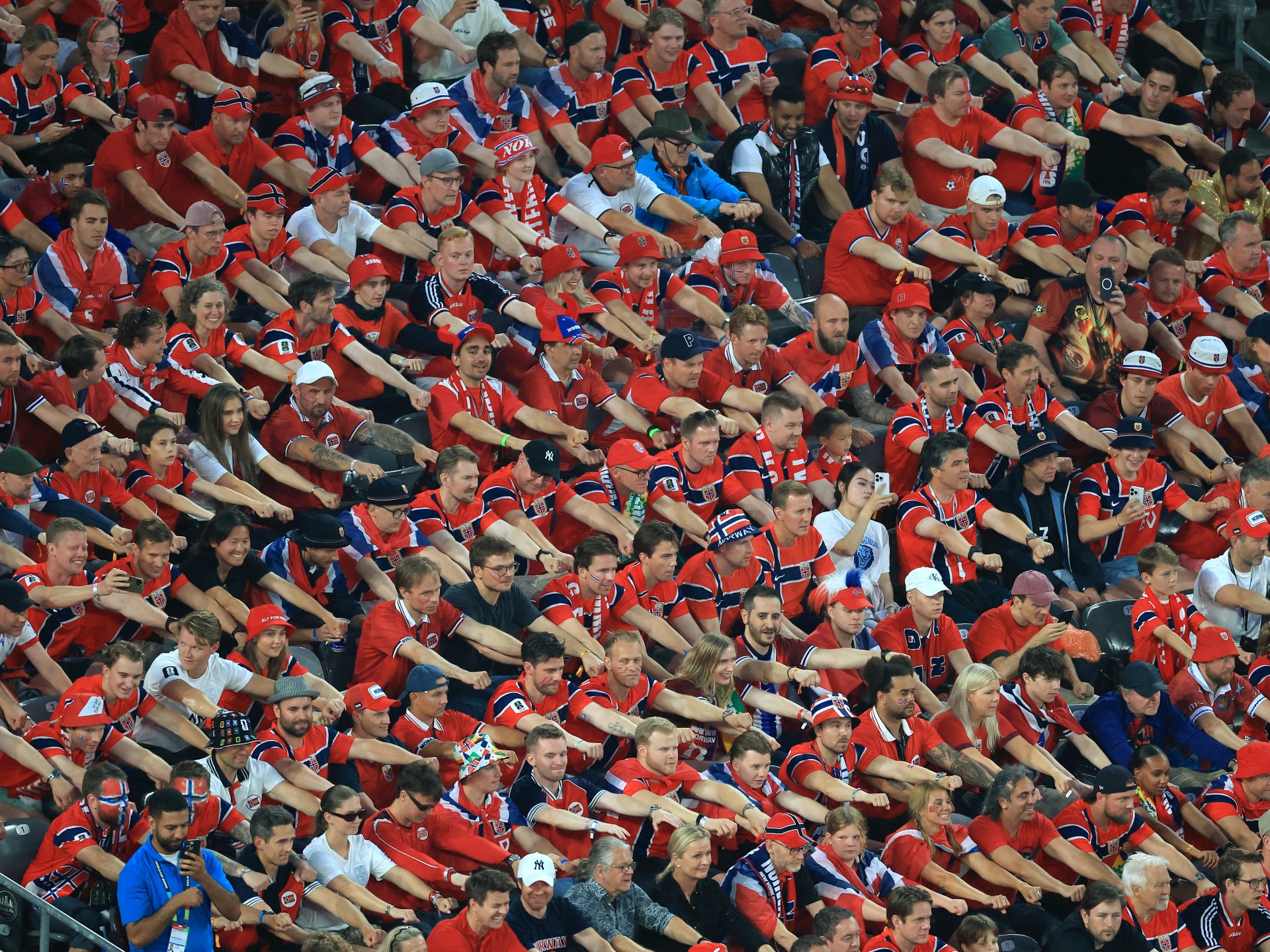
With the final matches of Groups G, H and I taking place on Friday, the race for a spot in the World Cup finals gets even more intense, with qualification, first place and a few spots in the Round of 32 still remaining.
France and Norway are battling it out for the top spot in Group I, with Spain aiming to secure first place in Group H, while Egypt, Iran, Belgium, Cape Verde and Saudi Arabia are all vying to extend the tournament.
Apart from the action on the pitch, heartwarming fan moments continue to capture the spirit of the tournament as Mexico finished a perfect group stage, Dutch fans turned Kansas City into a sea of orange, and African teams chased down a historic knockout show.
Introducing the latest match schedule, predictions, standings, and talking points for the 2026 FIFA World Cup.
What is the schedule for Friday?
Norway vs. France, 3:00 p.m. (19:00 EDT) at Boston Stadium, USA Senegal vs. Iraq, 3:00 p.m. (19:00 EDT) at Toronto Stadium, Canada; Cape Verde vs. Saudi Arabia, 7:00 p.m. (ET) at Houston Stadium, United States (Saturday 00:00 GMT) Uruguay vs. Spain, 6:00 p.m. (CST) at Estadio Guadalajara, Mexico (Saturday 00:00 GMT) Egypt vs. Iran at Seattle Stadium, USA at 8pm PDT (03:00 GMT on Saturday) New Zealand vs. Belgium at BC Place in Vancouver, Canada at 8pm PDT (03:00 GMT on Saturday)
What are your predictions for Norway vs France?
Norway and France will meet for the first time since France won a 4-0 friendly in 2014, and it will be the 16th meeting between the two countries.
Norway had won only two previous meetings against France, the last coming in the 1987 European Championship qualification. They are also still searching for their first World Cup win against a European opponent, having drawn two and lost three of their past five matches.
France, on the other hand, has won their last five matches against European teams at the World Cup.
Opta’s supercomputer has calculated France as favorites, estimating Les Bleus’ chance of victory at 59.4%.
According to Opta, the probability of a draw is 20.6 per cent, which is enough for France to go through Group I first, while Norway is given a 20 per cent chance to take the three points.

What are your predictions for Senegal vs Iraq?
This will be the first match between Senegal and Iraq in the World Cup. Senegal is undefeated against AFC opponents in this competition, drawing with Japan in 2018 and defeating Qatar in 2022. Iraq has never faced an African team in a World Cup.
Opta’s supercomputer has made Senegal the clear favorites to win, with a 77.2 percent chance of victory and a 14.2 percent chance of a draw compared to Iraq’s 8.6 percent.
Although Senegal will no longer be able to make it through Group I, they still have a 72.2% chance of making it to the last 32. Iraq’s hopes are slim, with Opta giving them just a 1.1% chance of advancing.

What are your predictions for Cape Verde vs. Saudi Arabia?
This will be the first World Cup match between Cape Verde and Saudi Arabia. Saudi Arabia has lost only one of the past five matches they have played against African opponents at the World Cup, with two wins and two draws.
Opta’s supercomputer gives Cape Verde a slight advantage, with a 40.8 percent chance of victory compared to Saudi Arabia’s 33.9 percent. The draw rate is estimated at 25.3%.
Cape Verde have a 66.7 percent chance of making it to the last 32, while Saudi Arabia’s hope is 33.3 percent.

What are your predictions for Uruguay vs. Spain?
Former champions Uruguay and Spain will clash for the third time at the World Cup, but for the first time in more than 30 years.
The last two World Cup matches ended in draws. In the final round of the 1950 tournament, the result was 2-2, and in the 1990 tournament in Italy, there was a scoreless stalemate in the group stage.
Opta’s supercomputer makes Spain the clear favorite to win. Of the 25,000 pre-match simulations, the reigning European champions won 62.4% of the matches, while Uruguay won 15.7%. A tie occurred in 21.9% of the simulations.

What are your predictions for Egypt vs. Iran?
Egypt and Iran will face each other for the first time in the World Cup. The only previous meeting between the two sides was at the 2000 LG Cup in Tehran, which ended 1-1 before Egypt won 8-7 on penalties. Current Egyptian coach Hossam Hassan scored, while Iranian legend Ali Daei scored the equalizer.
Iran is undefeated against African opponents in the World Cup, defeating Morocco in 2018 and drawing with Angola (2006) and Nigeria (2014).
Opta’s supercomputer gives Egypt a slight advantage, giving them a 42.9 percent chance of victory. The probability of a draw is 32.2%, and the probability of Iran winning is 24.9%.

What are your predictions for New Zealand vs. Belgium?
This is the first meeting between New Zealand and Belgium. New Zealand remain unbeaten in their last two World Cup matches against European opponents, drawing with Slovakia and Italy in the 2010 tournament.
Belgium could become the first European team since 1998 to draw all three of their World Cup group stage matches.
Prediction: Opta’s supercomputer makes Belgium the overwhelming favorites, with an 80.3% chance of victory. The probability of a draw is 11.8%, but New Zealand only wins 7.9% of the time in the simulation.

What do we know about the World Cup standings?
As of Friday, June 26th, six groups have completed their matches, but Group GL is still determining the remaining standings for the Round of 32.
Some important points:
Perfect Group Winner: Mexico (9 points) is the only team with a perfect record. Already advanced: Mexico, South Africa, Switzerland, Canada, Bosnia and Herzegovina, Brazil, Morocco, USA, Australia, Germany, Ivory Coast, Ecuador, Netherlands, Japan, Sweden, France and Norway have all secured spots in the final round. Groups still to be decided today: Group G: Egypt leads with 4 points, Iran and Belgium with 2 points and New Zealand with 1 point. Group H: Spain leads with 4 points, followed by Uruguay and Cape Verde with 2 points each. Group I: France and Norway have already qualified, but first place is still in contention. Groups J, K and L conclude on Saturday. There is still the final game of the group stage remaining, with 13 spots remaining for the round of 32.
For more information, please visit this page.
What else is shaping the World Cup?
Tolkier surprises USA with winning goal in 98th minute
Tolkier secured a dramatic 3-2 victory over the USA thanks to a 98th-minute winning goal in an entertaining but ultimately unimportant final Group D game at SoFi Stadium.
Neither team had any impact on the result, as the United States had already secured first place and Tolkier was eliminated before kickoff. However, both teams played an open and high-tempo game in front of approximately 70,000 fans.
U.S. manager Mauricio Pochettino made nine changes to his starting lineup, with seven players making their first World Cup starts.
Six African teams aim to advance to the World Cup finals tournament
Ten African teams have qualified for the 2026 World Cup, which has been expanded to 48 teams, with up to eight teams potentially making it to the finals.
Morocco and South Africa have already advanced, while Ivory Coast have also qualified for the round of 32. Egypt, Algeria, Democratic Republic of the Congo, Ghana and Cape Verde remain eligible for the final group match.
Colombian fans’ touching gesture wins hearts at World Cup
One of the most heartwarming moments of the 2026 FIFA World Cup occurred before the Group K match between Colombia and the Democratic Republic of the Congo.
As the team lined up for the national anthem, thousands of Colombian fans fell silent, allowing just one Democratic Republic of the Congo supporter to sing the anthem unhindered. When he scored, Colombian supporters applauded, cheered and embraced him in a moving show of respect and sportsmanship.
The moment quickly spread on social media and became one of the most memorable off-field moments of the tournament. Colombia won 1-0 and advanced to the round of 32.
Fans confused as Gianni Infantino plays in two World Cup matches at the same time
One of the strangest moments of the 2026 World Cup happened off the pitch.
FIFA President Gianni Infantino appeared on the big screen for the final Group E matches, Ecuador vs. Germany and Curaçao vs. Ivory Coast, both of which were played in different cities at the same time.
Video of the moment quickly went viral on social media, with fans joking that Infantino had found a way to be in two places at once. World Cup stadiums are spread across the United States, Canada, and Mexico, and many wondered how that was possible.
The extraordinary moment came on a dramatic night when Ecuador defeated Germany 2-1 and Ivory Coast beat Curaçao 2-0 to advance to the round of 32.
Mexican fans celebrate third straight World Cup group stage win
Mexico completed a perfect Group A season with a comfortable 3-0 victory over the Czech Republic, taking them to the 2026 World Cup with three wins from three games.
The co-hosts, already confident of being in first place before kick-off, finished the group stage in style at the Azteca Stadium. After a quiet first half, Mexico took control after the break, with Mateo Chavez breaking the deadlock, Julian Quiñones doubling their lead with his second goal of the tournament, and substitute Alvaro Fidalgo clinching the win.
This result ended the Czech Republic’s hopes of advancing to the round of 32, but Mexico advanced with the maximum number of points and will face one of the tournament’s strongest third-place teams in the final tournament.
More than 35,000 Dutch fans turned Kansas City orange
Downtown Kansas City turned into a sea of orange on Thursday as more than 35,000 Dutch supporters took part in the famous Oranje Fan Walk ahead of the World Cup game against Tunisia, local media reported.
Fans gathered in the Power & Light District and marched through the city aboard the iconic orange bus, filling the streets with songs, flags and chants as they headed to FIFA Fan Fest.
The celebrations attracted not only Dutch supporters but also locals and fans from all over the world, making it one of the largest fan marches at the tournament to date.
The 2026 FIFA World Cup produced dramatic matches and unforgettable moments for fans, but one of the tournament’s biggest stories unfolded off the pitch.
Journalist Boima Tucker told The Take that the tournament exposed the tension between soccer’s message of global unity and increasingly restrictive border policies. As he traveled through host cities, he visited immigrant communities celebrating the World Cup, from Moroccan and Senegalese fans in New York to Cape Verde supporters in Massachusetts and the thousands of Ghanaians who packed a watching party in Toronto.
“It’s great to learn more about how the World Cup affected people at home,” Tucker said. “People are excited to talk about their team and their country.”
At the same time, he highlighted the difficulties many people face in entering the United States. The Iranian national team is based in Tijuana, Mexico, and has only entered the United States for matches as soccer officials and players’ relatives struggle to obtain visas.
Tucker said it was inevitable that these challenges would impact the tournament. “When you’re an athlete, you want to focus on yourself. You want to focus on the field and the results,” he said. “If you have to jump over hurdles, it’s definitely going to affect the playing field.”
He also argued that the World Cup reflects broader global inequality. “We live in a global system that restricts the movement of people,” he said, adding that while high-profile cases may garner attention, “their reunion will not lead to system change.”
Despite the political background, Tucker believes soccer still has the unique power to bring people together. He saw immigrant communities celebrating side by side and said the World Cup allows people from different cultures and backgrounds to connect in a way that is rarely possible elsewhere.
“I want people to remember this World Cup as a tournament where people across ethnicities, nationalities and classes were able to interact for a short period of time and learn something about each other,” he said. “More than anything, the boundaries that exist in our daily lives were transcended in an instant.”
