

Meru County, Kenya – Every Monday, Wednesday and Saturday, Wanjiru Kamau runs 5 kilometers (3.2 miles) from his home in Mikumbune village in South Imenti constituency.
She is 82 years old.
The red dirt roads of Meru County in Kenya’s Central Highlands, about 314 kilometers from Nairobi, have become something of a second home since a friend introduced her to a local track and field organization in 2017.
“At first, people laughed at me and thought what I was doing was stupid,” Wanjiru said. “Since I started exercising and drinking water, my blood pressure has returned to normal and I no longer have muscle cramps.”
The group’s chairman, Stephen Michub Lingya, personally welcomed her. She never looked back after that, but she had to fight the laughter that followed her out the door.
Wanjiru is not alone.
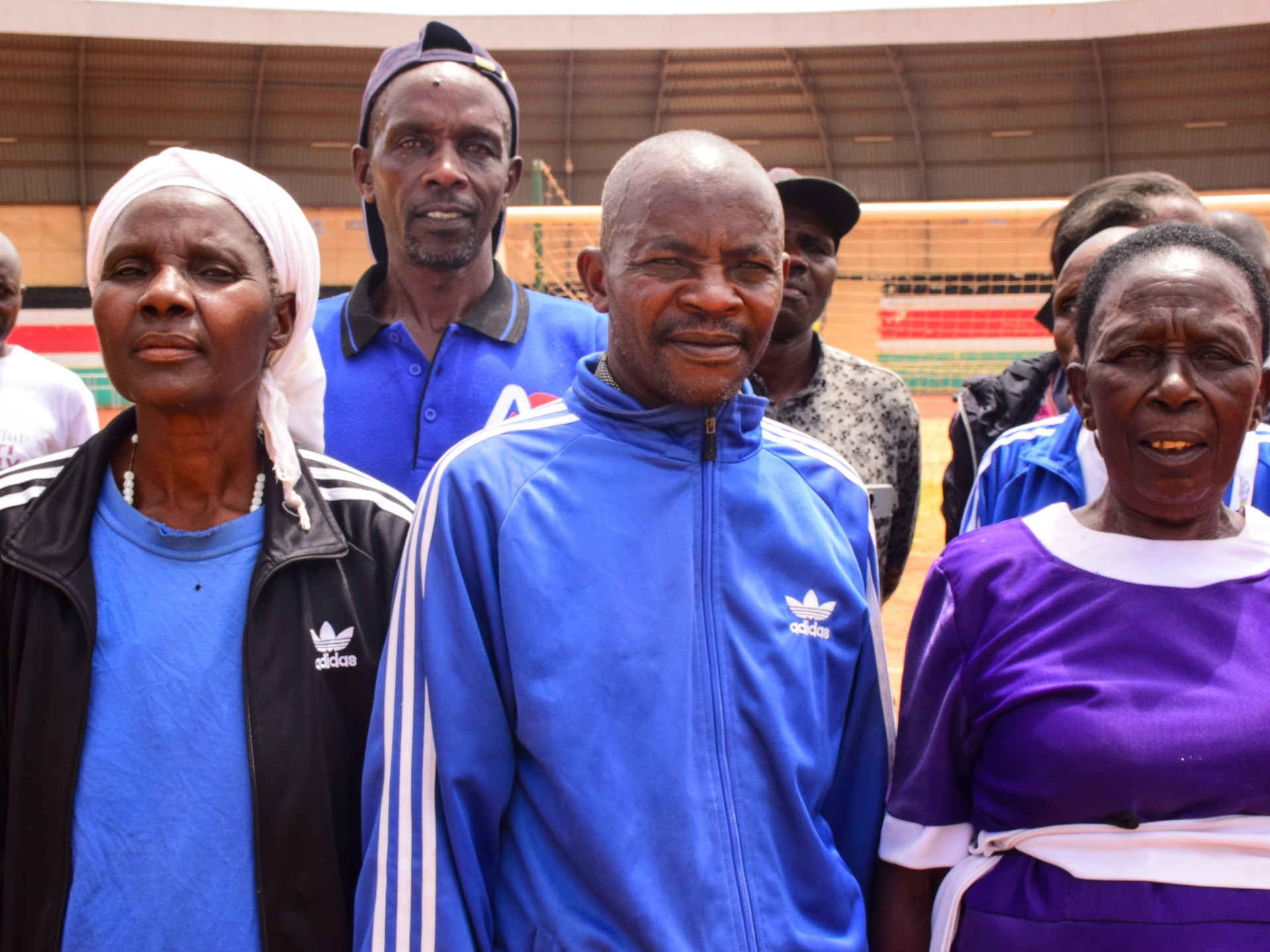
She is one of 80 members of the Meru branch of Masters Athletics Kenya, a national network of athletes between the ages of 60 and 100. She trains with people younger than her, without complaint or fanfare, in a prefecture with a growing image of world-class athletic performance.
Kenya’s Eliud Kipchoge and Faith Kipyegon are two of the greatest distance runners in history, representing the pinnacle of the country’s athletics world and making Kenya synonymous with running excellence. In Meru, a group of older men and women, none of whom are employed or subsidized for transportation, argue that running is not just for young people.
Build a movement with Meru
The Meru branch was founded in 2015 by Stephen Michub Lingya, a married father of two from Muriri in the Tigania East constituency. He saw his neighbors aging badly, chronic diseases taking hold in their immobile bodies, and alcohol becoming the solace for too many.
The illnesses he saw were often the predictable consequences of a subsequent sedentary lifestyle: high blood pressure, diabetes, and the slow accumulation of conditions that medical science has names for but that are often not cheaply or easily treatable.
He started looking for older people who used to love running.
“When we formed this group, we looked for older people who loved running even before age became too difficult, so that children and younger generations can follow in their footsteps and change their lives,” Michub says.

The group trains three days a week. Members travel to practice ranges 10 to 50 kilometers (6.2 to 9.3 miles) from their homes, paying for their own transportation. Teams use center field when possible and walk to training when walking is the only affordable option.
There is no sponsorship, no organizational support, and no salary.
According to the members, what’s there is each other.
Running against age and distance
James Mworia (73) is from Uruku, South Imenti constituency. He is married and has four children. In 2019, he went to Tunisia to compete in the Africa Masters Athletics Championships and returned home with two silver medals.
The journey itself was an accomplishment for the man, who was trained at his own expense from the village of Meru.
“Three times a week during the training days, we use our own means to get to the training range. The distance varies between 10 km and 50 km, and we pay for the fare ourselves. In 2019 I went to Tunisia and brought the medal with me,” Mworia says. “I encourage seniors to join this group for health and fitness.”
He points out that his health has visibly changed since joining the company. He does not visit the hospital as often as he used to, now only occasionally, rather than the regularity that once characterized his life.
Not all in-group barriers are age-related.
Protacio Mutuma Richoro, 52, is visually impaired. He is from Kigchuwa in Tigania East constituency and is training with the help of his son, who serves as a truck guide.
Until he found Meru’s chapter, Protasio struggled to run at all, not because of his disability, but because there was no infrastructure around him. Finding guides was a never-ending and demoralizing problem.
“Since joining this group, I have gained a lot. Before, I could not find a guide when I needed one. Now, by training with so many people, I am also able to help train others to become guides,” says Protacio.
“You can’t run alone. You always need the help of a sighted guide.”
Runners who kept running
Meru County executive committee member for youth, sports, gender and social development, Elias Mulega, sees something in the group that goes beyond individual health issues. He frames their efforts as generational, a tangible argument that older bodies can still compete, model discipline, and demonstrate what a sustained physical life looks like.
That argument is especially strong in a county that has produced some international-level runners.
“In Meru County, we have seen many successful athletes who have made it to the international level,” Mulega said. “Sports are the best bet. We have seen that many of these so-called lifestyle diseases, and others, are linked to lack of exercise.”
He added that the county government is ready to support the groups by creating a platform for them to publicly demonstrate their activities. For athletes who have until now been largely invisible to official sports organizations, even their modest efforts are recorded as recognition.

Back in Mikumbune, Wanjiru Kamau’s morning is different than it was before 2017. The neighbors’ laughter hasn’t completely stopped, but she has long since stopped evaluating her daily routine against the approval of those around her.
No matter what anyone says, her blood pressure is under control, her muscle spasms are gone, and she drinks more water. She runs 5km three times a week in a county with many champions. He is one of 80 people who decided to continue running, even though most athletes were expected to quit.
“I encourage all older adults to do regular exercise to stay healthy,” she says.
