

Coralogix, a Boston-based, Israeli-founded software monitoring startup, has raised $200 million in a new funding round, betting that the rise of AI agents will drive demand for a new generation of tools to monitor, troubleshoot and manage increasingly autonomous software systems.
The Series F funding comes just 11 months after Coralogix raised $115 million in a Series E round, a pace that reflects how quickly investor appetite for AI infrastructure companies has accelerated. The new round values the startup at $1.6 billion post-money and was led by Advent and Canada Pension Plan Investment Board (CPPIB), with participation from Greenfield Partners and Brighton Park Capital. The company has raised a total of $550 million to date.
The investment comes as software companies race to adapt to the rise of AI agents, software systems that can autonomously write code, investigate problems, and complete tasks that previously required human engineers. Coralogix is one of the infrastructure companies that believes that as AI systems move into production, there will be a growing demand for tools that can monitor their behavior, troubleshoot failures, and provide the operational data needed to ensure they continue to run. (The more autonomous software we deploy, the more we need to know when something goes wrong and why.)
Founded in 2014, Coralogix helps businesses monitor the health and performance of their software systems by collecting and analyzing operational data such as logs, metrics, and traces (essentially a continuous record of what a software system is doing and how it is behaving). The platform is used by more than 5,000 customers worldwide, including IBM, Tradeweb, and JFrog, to detect outages, investigate incidents, and optimize applications.
The rise of AI is reshaping the observability industry, where Coralogix competes with the likes of Datadog, New Relic, and Splunk. As enterprises deploy AI-powered applications and agents, vendors are increasingly incorporating AI into monitoring and incident response workflows.
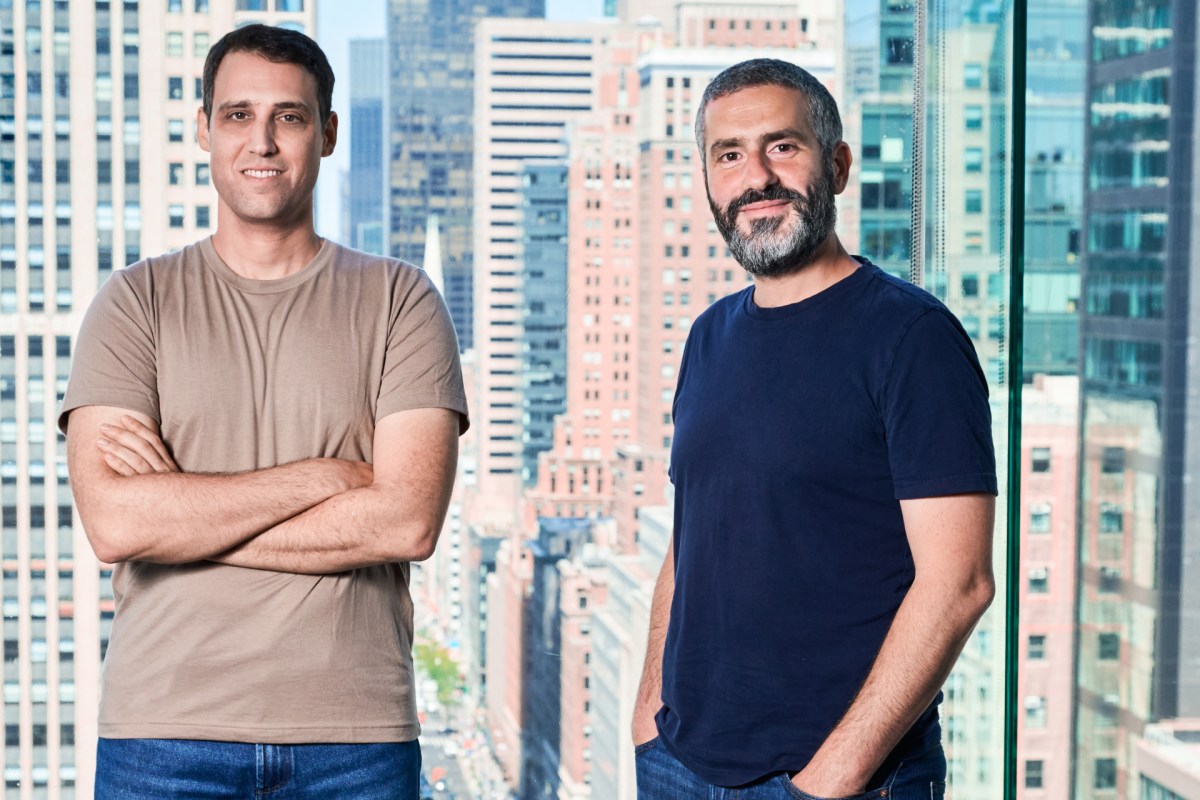
This shift is already changing the way customers interact with the Coralogix platform, co-founder and CEO Ariel Assaraf (pictured above, right) said in an interview. He said more than half of the company’s enterprise customers now investigate incidents and query operational data using Olly, the company’s AI agent, or their own AI models via command line or agent interfaces.
“The interface layer is slowly being eroded,” Asaraf told TechCrunch, observing that engineers increasingly interact with software through AI assistants and command-line tools rather than traditional dashboards. “Most usage will be, ‘How do I connect LLM to this? How do I interact with this through the CLI?'” Simply put, his customers are less interested in logging into a dashboard and more interested in asking an AI assistant what’s wrong.
This change coincided with Coralogix’s strong growth. As the startup expands further into the enterprise market, Asaraf said its revenue has increased by more than 60% in the past year and now counts about 30 customers spending more than $1 million annually. Asaraf added that the company surpassed $100 million in annual sales more than a year ago, although he declined to disclose current numbers.
The startup has more than 600 employees around the world, of which around 100 are based in India, where it has its third-largest office after the US and Israel. Asaraf said the India operation has evolved into a regional hub supporting customers across Asia, while also helping Coralogix expand into large enterprises in the country, including financial institutions.
Ashraf said Coralogix did not raise because it needed additional runway, adding that the funding will be used to accelerate investments in AI-focused products, security products, and global expansion.
“In the AI era, execution and speed are more important than point-in-time evaluation,” he said. “We wanted to accelerate, expand, and take this AI game a step further, where we believe we are leading in this space.”
Ashraf said Coralogix has no plans to raise additional capital at this time and is working toward becoming profitable over the next few years. He said the company is also preparing to operate with the financial discipline of a public company, but stopped short of committing to a timeline for an initial public offering.
If you buy through links in our articles, we may earn a small commission. This does not affect editorial independence.
