

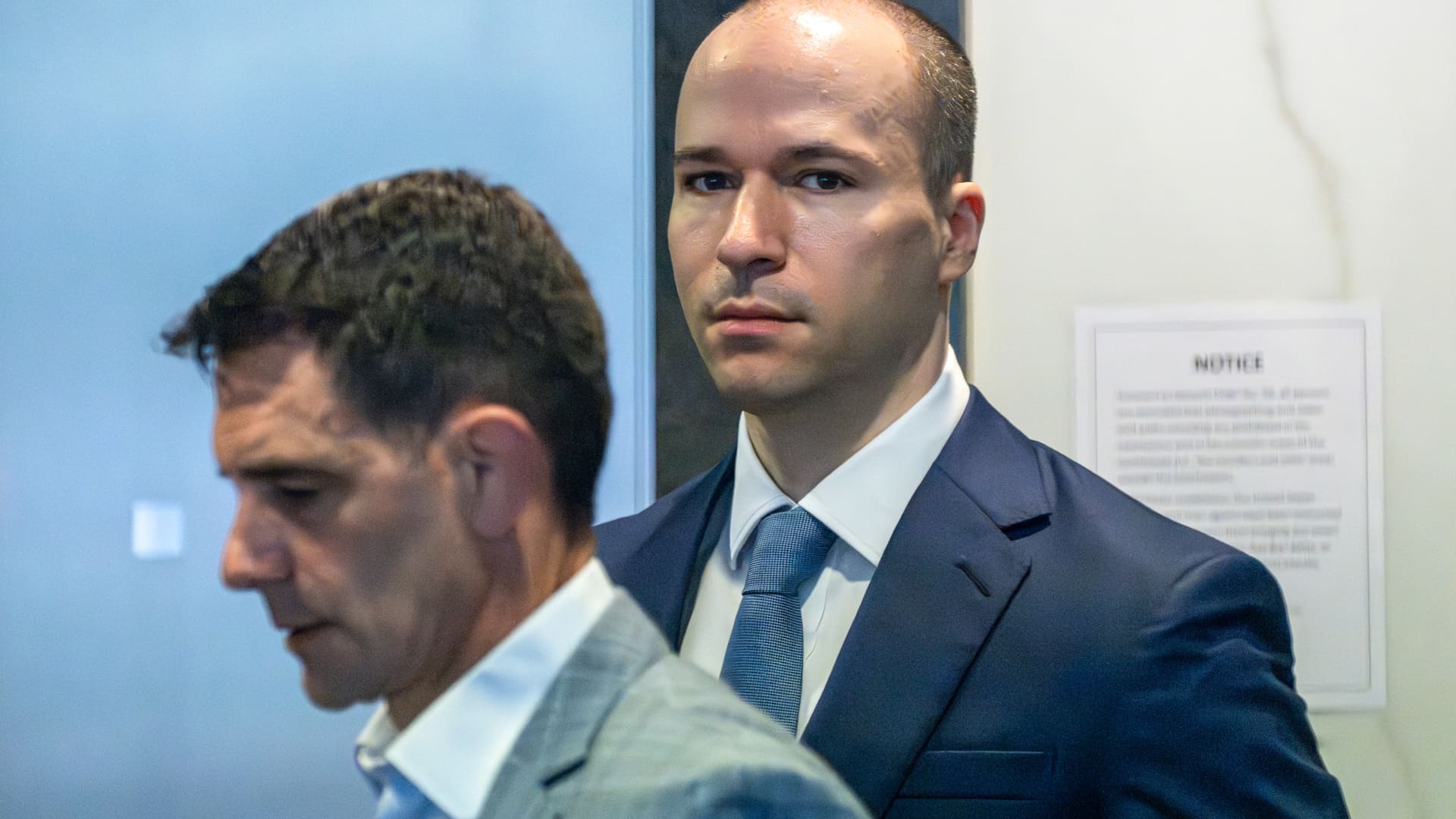

OpenAI President Greg Brockman concluded his testimony on Tuesday, mainly rebutting Elon Musk’s account of the startup’s early days and negotiations at the company.
Mr. Brockman testified that he never made any promises to Mr. Musk about the company’s corporate structure, nor did he hear anyone else make them. He emphasized that OpenAI is still run by a nonprofit organization.
“This organization will remain nonprofit,” Brockman said, referring to the OpenAI Foundation. “It is the most resourceful nonprofit organization in the world.”
The second week of trial in Musk’s lawsuit against an artificial intelligence company began on Monday.
Musk sued OpenAI, Brockman, CEO Sam Altman and others two years ago, accusing them of violating their obligation to keep the company nonprofit. Musk testified during the first week of the trial, repeatedly accusing Altman and Brockman of trying to “steal their charity.”
During two days of testimony from the witness stand in federal court in Oakland, California, Brockman also revealed that Musk enlisted several OpenAI employees to work for him for free for months. teslaMusk’s electric car company.
That effort primarily included overhauling the company’s approach to developing self-driving technology as part of the Autopilot team in 2017.
Over two days on stage, Brockman answered questions about his personal financial ambitions, his understanding of OpenAI’s structure and Musk’s involvement in the company, which he co-founded with other executives in 2015.
In Musk’s testimony last week, the Tesla and SpaceX CEOs said the time, money and resources Musk poured into OpenAI were critical to the company’s success. He reiterated that he was instrumental in recruiting top talent for the company.
Brockman said Tuesday that while Musk was instrumental in convincing some employees to join OpenAI, he was a polarizing figure for others.
“Elon had a reputation for being a very hard driver,” Brockman said. He added that Musk’s involvement in OpenAI was “very appealing to some candidates” and “very repulsive to some candidates.”
Musk testified last week that Andrei Karpathy, a former OpenAI researcher, had joined Tesla but was already planning to leave the company.
Brockman said that after Musk hired Karpathy, he offered him an “apology and confession” about the hire, and that neither Musk nor Karpathy had previously informed him that the researcher was planning to leave OpenAI.
Brockman said Musk was typically unavailable for meetings and conversations, so he relied on employees such as Sam Teller and former OpenAI director Siobhan Gillis to represent him.
Brockman also testified that Musk never expressed an interest in open sourcing OpenAI’s technology, nor did he formally request that the nonprofit do so.
On stage, Musk repeatedly suggested that open sourcing OpenAI’s models should become a core part of the organization.
“Honestly, it wasn’t talked about,” Brockman said.
Around 2017, Musk, Altman and Brockman participated in discussions about the direction of OpenAI and considered forming a for-profit subsidiary in which Musk would own an equity stake. Musk stepped down from the company’s board in 2018, and OpenAI created a for-profit division following his departure.
Mr. Brockman testified Tuesday about Mr. Musk’s impatient reaction to him and his other co-founders as they tried to negotiate who would own how much stock in OpenAI’s commercial affiliate.
When the conversation turned to stocks, Brockman said “something really changed” in Musk.
“Something changed in him, and you could feel it. He was angry and upset,” Brockman said.
He said that after Musk rejected the proposal during a face-to-face meeting, he tore down a picture of a Tesla Model 3 from the wall and began running out of the room.
Before he left, Brockman said, Musk turned around and asked when he and his co-founders were leaving the company. At the time, he said he was afraid Musk would hit him.
OpenAI’s lawyers also asked Brockman if Musk had ever told him why he wanted to control OpenAI.
Brockman said that during their conversation, Musk said, “I experienced what it felt like to not have control over myself, and I didn’t like it.”
For example, Brockman said Musk said that his lack of control “caused problems” in Zip 2, and that “his cousins were out of control” in Solar City, so “he had to bail them out.” Musk’s car business, Tesla, acquired his cousin’s struggling solar power business in a $2.6 billion deal in 2016.
Brockman also said that around the time of the negotiations, Musk told SpaceX that he wanted a controlling stake in OpenAI as part of the funding for the $80 billion Mars city he had said would be needed.
SpaceX, which owns and operates OpenAI competitor xAI, is currently targeting an IPO in 2026, where it reportedly aims to raise $75 billion.
blockman finances
On Monday, Mr. Musk’s lawyer, Stephen Moro, pressed Mr. Brockman about his ownership stake in OpenAI’s commercial subsidiary, which is worth about $30 billion. Moro repeatedly pointed out that Brockman never followed through on his offer to donate $100,000 or cash to the nonprofit.
“I ended up not donating, that’s true,” Brockman said from the stand.
Brockman kept a diary to document personal and professional events in his life, and Moro pointed to several entries during his cross-examination, including an excerpt from 2017 in which he wrote, “Financially, what makes me a billion dollars?”
Moro wondered if Brockman was interested in funding nonprofit organizations or in becoming a billionaire and lining his own pockets. Brockman said OpenAI’s mission “has always been my main motivation,” and fair compensation for his work as a founder is a secondary consideration, though.
Mr. Brockman testified that he thought he would have been “okay” with $1 billion worth of stock, but Mr. Moro repeatedly nagged him about his choice of words.
Mr. Moro asked Mr. Brockman why he didn’t donate the remaining $29 billion worth of stock to a nonprofit organization now known as the OpenAI Foundation. Brockman didn’t have a clear answer.
The trial resumes Wednesday at 8:30 a.m. Pacific Time. Former OpenAI board member Siobhan Gillis, the mother of Musk’s four children, is expected to testify.

