

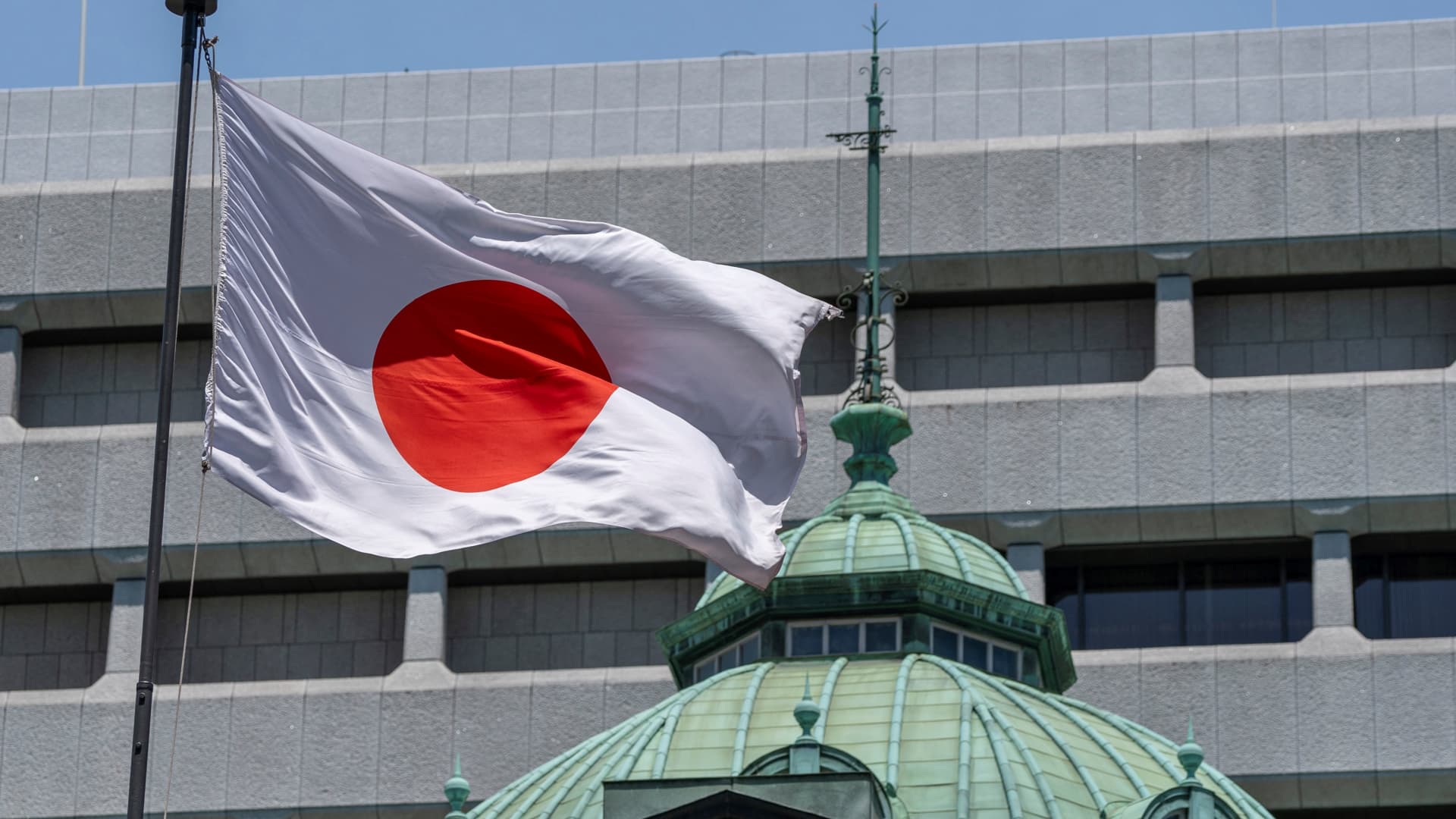
May 30, 2024, Bank of Japan Head Office in Tokyo.
Kazuhiro Nogi | AFP | Getty Images
Japan’s central bank on Tuesday raised its policy interest rate to 1%, the highest in more than 30 years, in line with expectations of economists polled by Reuters, accelerating policy normalization starting in 2024.
This is the first interest rate hike by the Bank of Japan since it raised interest rates to 0.75% last December, and the first time since 1995 that interest rates have been raised to 1%.
The Bank of Japan announced that the decision to raise interest rates by 25 basis points (bp) was split 7-1, with board member Toichiro Asada voting against it and insisting on leaving it unchanged.
This policy tightening came at a time when Japan was suffering from a weak yen and slowly rising inflation, partly due to the impact of the Iran war.
benchmark Nikkei Stock Average After the decision, the price rose 0.46%. circle Against the dollar, it rose slightly to 160.22. yield 10 year government bond The index rose 3 basis points to 2.615%.
After continuing to reduce government bond purchases by 200 billion yen per calendar quarter, the central bank announced it would halt tapering and maintain monthly bond purchases of 2 trillion yen starting in April 2027.

The Bank of Japan said Japan’s consumer inflation rate has remained below 2% due to government policies to ease the burden on household budgets due to soaring energy prices.
The central bank stated, “However, in business-to-business transactions, the rise in crude oil prices is being passed on to prices at a relatively fast pace, and this may have a ripple effect on the rise in consumer prices for a wide range of items.”
That’s evidenced by Japan’s producer price index, which rose 6.3% in May, the fastest pace in more than three years, driven largely by rising energy costs.
Tai Hui, chief market strategist for Asia-Pacific at JPMorgan Asset Management, said that although the rate hike was expected, the overwhelming support from BOJ members shows the board is more concerned about inflation concerns than growth.
He added that rising expectations for the reopening of the Strait of Hormuz and lower uncertainty about supply shocks to Japan also gave the Bank of Japan more confidence in resuming policy normalization.
weak yen
The weaker Japanese yen was also a basis for raising interest rates. After reportedly shelling out 11.7 trillion yen ($73.5 billion) in intervention operations in May, the yen depreciated again, approaching the 160 yen level against the dollar, and languished there for much of June.
“Intervening without changing domestic monetary policy would be like pressing the brake with your right foot firmly on the gas pedal. At best, passengers will have a little fun, but at worst, you’ll burn out your brake pads,” Jesper Coll, an expert director at Tokyo-based financial services firm Monex Group, told CNBC.
weak circleDespite increasing Japan’s export competitiveness, the government is attempting to soften the effects of rising prices by calming them down, which will increase import inflation and put pressure on government finances.
A few months after enacting the annual budget, Prime Minister Sanae Takaichi’s administration passed a supplementary budget of 3 trillion yen to protect household finances from soaring energy costs.
Japan’s core inflation rate slowed more than expected in April to 1.4%, the lowest level since March 2022, while headline inflation also fell to 1.4%, below the central bank’s 2% target for the fourth straight month.
However, analysts told CNBC that the main reason for the low inflation rate is the result of various policy measures that have kept inflation in check, such as eliminating Japan’s gasoline tax and making high school free for all students.
