


Anthropic has returned after years of seeking regulation.
The artificial intelligence company, currently valued at nearly $1 trillion, has spent years touting its commitment to safety. But Anthropic has been targeted by the Trump administration for the second time this year, this time over concerns about the safety of its latest model.
Late Friday night, a few hours later space x After the first day of trading following a record IPO, Anthropic announced that it has been served with an export control order ordering the company to stop access to its latest Claude models, the Fable 5 and Mythos 5, “by any foreign person, whether in the United States or abroad, including Anthropic’s foreign employees.”
Anthropic said the administration cited “national security officials” but did not specify its concerns. The directive comes days after Anthropic CEO Dario Amodei published an essay advocating for more “serious and binding AI regulation,” including the ability to block models deemed unsafe.
“Like airplanes, Frontier AI models should be required to undergo technical testing and auditing, and if they do not meet high safety standards, their release should be blocked or canceled as a threat to public safety,” Amodei wrote.
This was Anthropic’s latest public statement encouraging increased government oversight of the rapidly evolving AI industry. Since launching Anthropic from OpenAI in 2021, Amodei and his executives have strongly advocated for AI regulation and supported legislation at both the state and federal level.
The company praised the AI executive order signed by President Donald Trump earlier this month as an “important step.”

But Friday’s action wasn’t the kind of oversight Anthropic had in mind. In response, the company said it disagreed that the Trump administration’s findings were the cause of the recall and characterized the confusion as a “misunderstanding.”
“As we have said publicly, we believe governments should have the ability to deter unsafe deployments as part of a statutory process that is transparent, fair, clear and based on technical facts,” Anthropic said in a blog post. “This action does not comply with those principles.”
Senior Anthropic employees flew to Washington, D.C., on Monday to meet with members of the Trump administration. “Both sides are working quickly to resolve this issue,” the company told CNBC.
Anthropic has not said when it expects its models to come back online.
“This is definitely mandatory.”
President Trump’s executive order was issued 10 days before his order to Anthropic and contained few specific details.
It asked companies to voluntarily provide the federal government with a model to assess their capabilities prior to full release. The order also gave government officials 60 days to develop and maintain a relevant review framework for AI companies to consider.
There is no indication that the forced suspension of Anthropic’s latest models was related to the executive order. Rather, according to the Wall Street Journal, the move was sparked by conversations such as: Amazon CEO Andy Jassy met with U.S. officials, including Treasury Secretary Scott Bessent. Citing people familiar with the matter, the magazine reported that Jassy told the government that Amazon researchers used a series of prompts to get Fable 5 to provide information that could support a cyber attack.
Daniel Remler, a senior fellow at the Center for a New American Security, said the president’s executive order called for voluntary compliance, but Friday’s order had a very different tone.
“If there are consequences for disobeying what the government says, then this certainly appears to be an obligation,” Lemler said in an interview with CNBC.
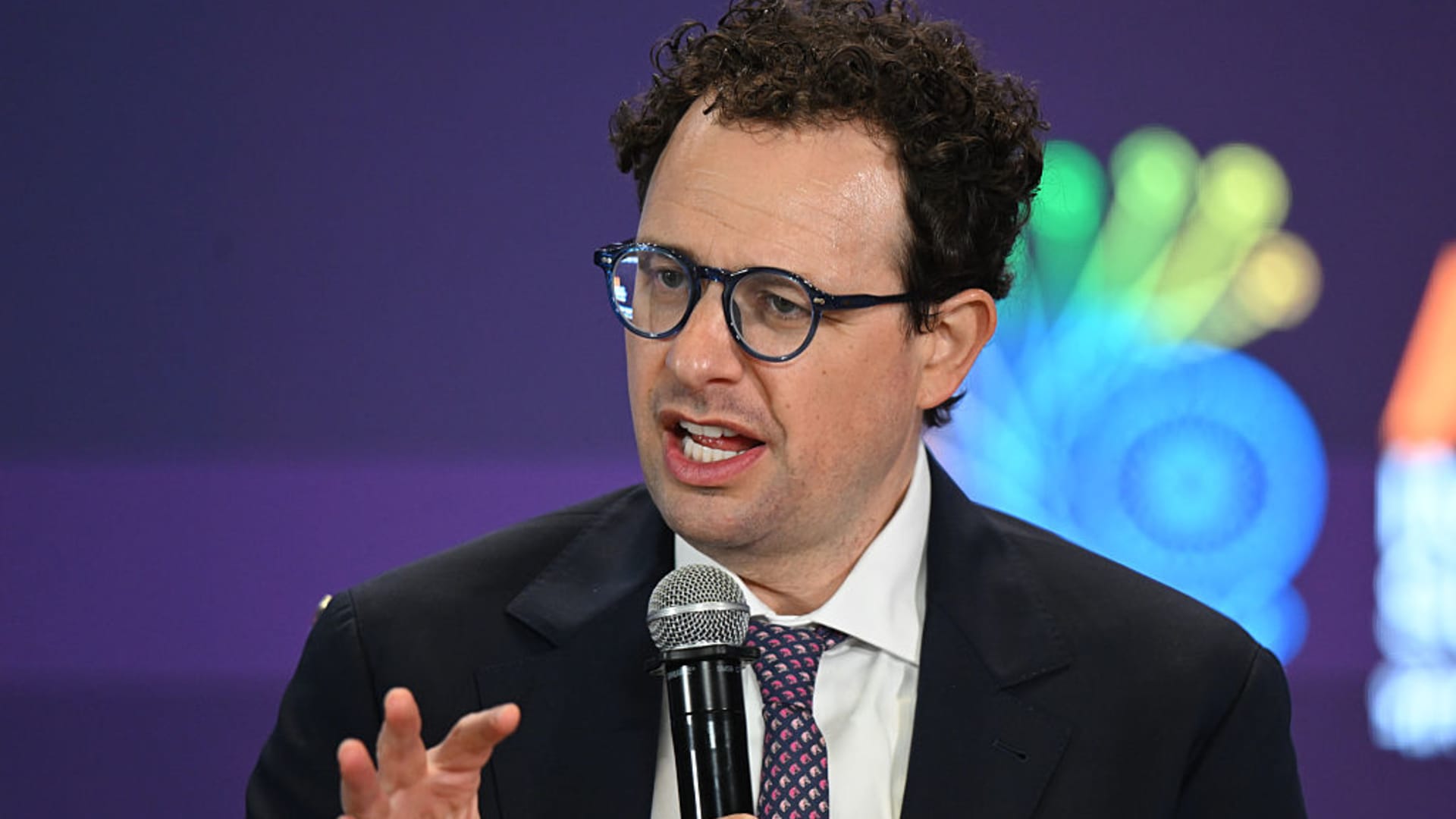
Anthropic co-founder and CEO Dario Amodei speaks at the Inbound 2025 Powered by HubSpot artificial intelligence panel at Moscone Center in San Francisco on September 4, 2025.
Chance Ye | Getty Images Entertainment | Getty Images
Fable 5 and Mythos 5 build on the April release of Claude Mythos Preview, a powerful product that excels in identifying security vulnerabilities in software. Anthropic limited the rollout to a select group of companies as part of a cybersecurity initiative called Project Glasswing.
While Mythos 5 was still limited to a limited number of users, Anthropic made Fable 5 available to enterprise customers and paid subscribers. The company said the wide release was possible thanks to new safeguards that prevent responses in certain high-risk areas, such as cybersecurity and biology.
Anthropic worked with government agencies to test the model in advance of its release and receive approval for its introduction, said a person familiar with the discussions, who requested anonymity to discuss confidential matters. The official said there had been no communication from the government about any national security threats.
“It’s pretty amazing that we went from an environment where we had no control over access to models to being able to basically use this tool to bring down one company’s models within hours,” Lemler said.
He added that this was probably the kind of “reactive regulation” the company had expected, given the volatile policy environment.
“It’s difficult to manage risk with technology that is constantly changing rapidly,” he said.
“The ball is in humanity’s court.”
It’s all happening at a pivotal moment for Anthropic.
The company and its biggest rival, OpenAI, recently both secretly filed IPO prospectuses, setting up potentially historic stock sales for investors eager to get into AI. SpaceX’s three-day post-IPO rally is seen by many as evidence that Wall Street is excited about new and big opportunities.
Amodei has some big voices on his side.
Alex Stamos, chief product officer at Corridor and former head of security at Facebook, penned an open letter to Secretary of Commerce Howard Lutnick and National Cyber Director Sean Cairncross about “Transparent AI Cyber Protection.” The letter, signed by more than 150 executives and technical leaders, calls for the export control directive to be lifted.
Stamos said in an interview with CNBC that the rules need to be “based on science.”
“These rules need to be written and transparent, and that’s not happening,” Stamos said. “There’s nothing Anthropic or anyone else can do to determine what I can and can’t do.”
He added that for all U.S. businesses, “there is a fear that if you rebel against the regime, you could be shut down at any time, on a completely arbitrary and whimsical decision.”
For Anthropic, conflicts with governments are a big part of the company’s history. Earlier this year, it had a high-profile dispute with the Pentagon. In March, the Department of Defense designated Anthropic as a supply chain risk, requiring defense contractors to certify that they do not use the Claude model in their work with the military.
In a post on Saturday’s X, Defense Secretary Pete Hegseth cited the government’s latest directive, writing that “every day that passes” proves why blacklisting Anthropic was the “right thing to do.”
Anthropic sued the Trump administration to remove its supply chain risk designation. That lawsuit is ongoing.
Stamos said the administration clearly has a problem with Anthropic, one of the few prominent companies it’s pushing back on.
“If they were enforcing these rules fairly, OpenAI and google Similarly,” he said.
One of Anthropic’s vocal critics is David Sachs, a venture capitalist who previously served as President Trump’s AI and cryptocurrency czar. After company executives published an essay on the risks of AI in October, Sachs accused Anthropic of “pursuing a sophisticated regulatory acquisition strategy based on fear-mongering” in a post on X.
After Anthropic received the export control order, Sachs spoke out, writing to X that the “disparaging language” in the company’s blog post contradicted the company’s branding as an “AI safe company.”
“Managers highly value Anthropic’s technical capabilities and believe that this problem, while serious, should be easily resolved,” Sachs wrote. “The ball is in Antropic’s court.”
—CNBC’s Kate Rooney contributed to this report
WATCH: Humanity responds to government directive banning foreigners from using AI models

