

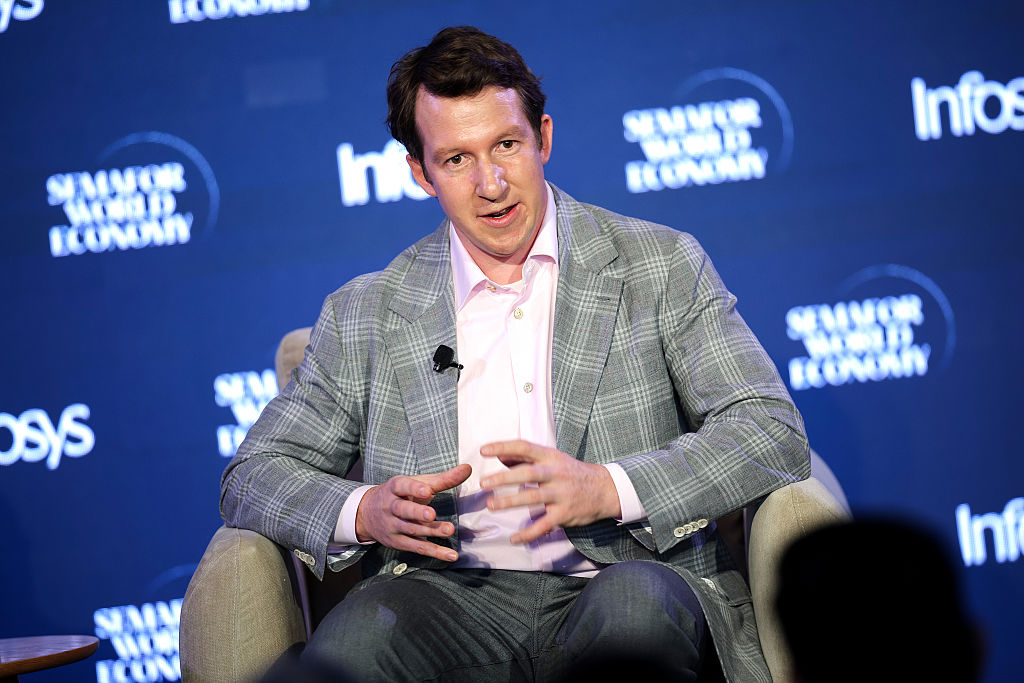
Jack Clark, one of Anthropic’s co-founders and director of public interest at Anthropic PBC, confirmed that the AI company briefed the Trump administration on its new Mythos model.
The model, announced last week, is so dangerous that it has not been released to the public, mainly because of its suspected strong cybersecurity features.
In an interview at this week’s Semaphore Global Economic Summit, Clark explained why his company is engaging with the U.S. government and filing lawsuits at the same time.
Anthropic filed a lawsuit against the Trump administration’s Department of Defense in March after the agency designated the company a supply chain risk. Anthropic has been at loggerheads with the Department of Defense over whether the military should have unrestricted access to Anthropic’s AI systems for use cases including mass surveillance of American citizens and fully autonomous weapons. (OpenAI won the contract instead.)
At the meeting, Clark downplayed the administration’s classification of the company’s operations as supply chain risk, saying it was just a “narrow contractual dispute” and that Anthropic didn’t want to get in the way of the fact that it values national security.
“Our position is that the government needs to know about this, and we have to find new ways for the government to partner with the private sector that is producing things that are truly revolutionizing the economy, but there are aspects of those products that are hurting national security, hurting stocks, etc.,” Clark said. “So, definitely, we’ll be talking to them about Mythos and talking about the next model as well.”
His approval followed reports last week that Trump officials were encouraging banks including JPMorgan Chase & Co., Goldman Sachs, Citigroup, Bank of America and Morgan Stanley to test Mythos.
During the interview, Clark also mentioned other aspects of AI’s impact on society, such as unemployment and higher education.
Anthropic CEO Dario Amodei has previously warned that advances in AI could lead to unemployment rates reaching Great Depression-era numbers, but Clark somewhat disagrees. He explained in an interview that he believes AI will become more powerful faster than people expected, and that he uses that as the basis for his estimates.
Clark, who heads Anthropic’s team of economists, said the company has so far only identified “potential weaknesses in early graduate hiring” in certain industries. However, he said Anthropic is ready in case there is a major change in employment.
Faced with the question of which majors today’s college students should pursue or avoid in the wake of AI, Clark only loosely suggested that the most important majors are those that “include the synthesis of all disciplines and analytical thinking about them.”
“That’s because AI gives you access to any number of subject matter experts from different fields,” Clark says. “But what’s really important is knowing the right questions to ask and having an intuition about what’s interesting when you collide different insights from many different disciplines.”
