

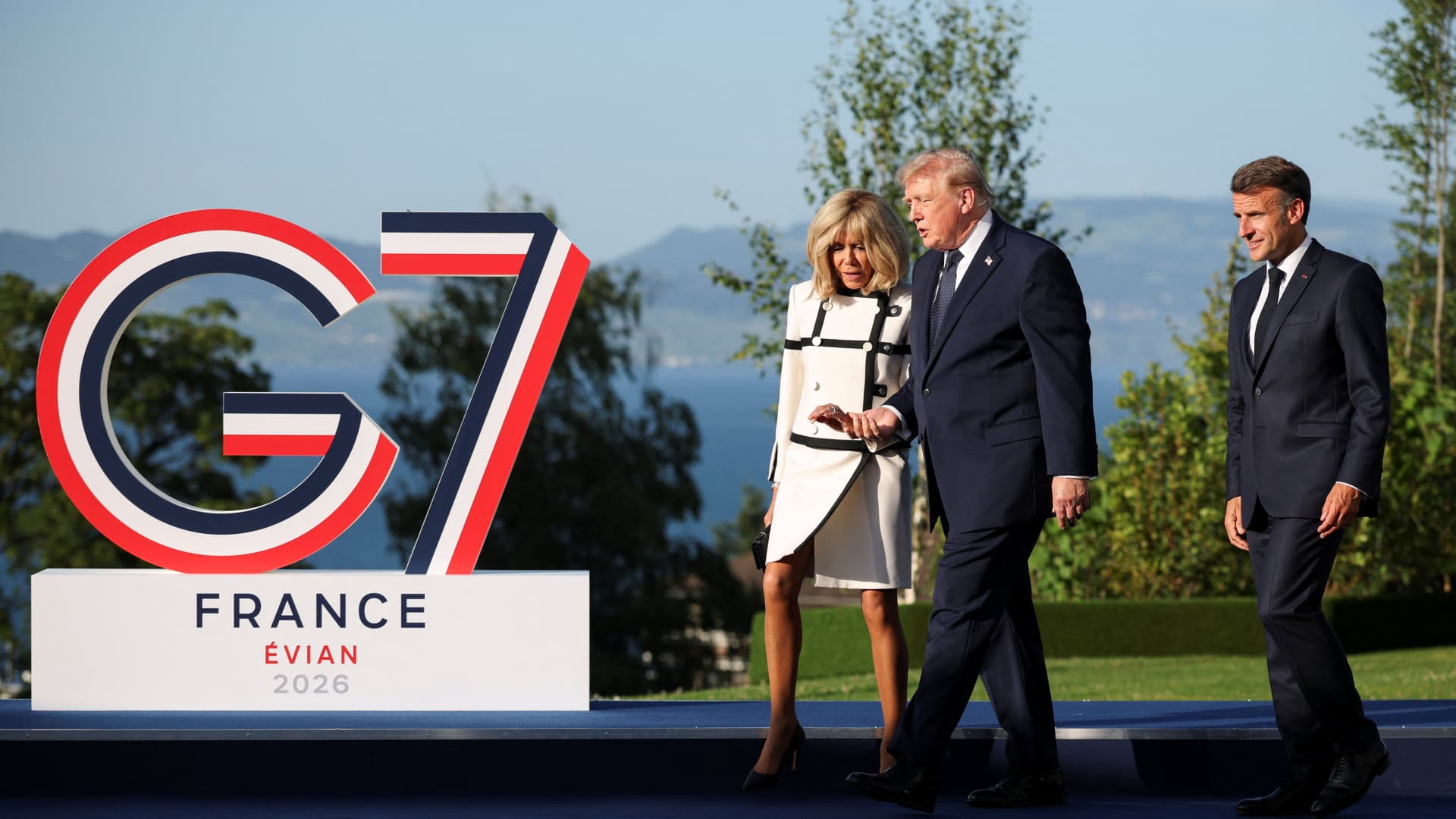
French President Emmanuel Macron and First Lady Brigitte Macron walk with US President Donald Trump during the G7 Summit held at Hotel Royal Evian in Evian-les-Bains, France, June 15, 2026.
Isabel Infantes | Getty Images
Hello, my name is Leonie Kidd and I’m from London. Welcome to today’s Daily Open Newsletter.
The relief rally did not last long.
Uncertainty surrounding the status and content of the peace framework between the US and Iran has entered market sentiment.
Ahead of Friday’s formal signing, the White House had to confirm over the past 24 hours that the framework of the peace deal had been signed, but also deny that the US was paying Iran $300 million, which US President Donald Trump has claimed is “fake news”.
Investors are taking a cautious path today, with stock prices around the world retreating from their all-time highs.
What you need to know today
US President Donald Trump will meet with G7 leaders today to review the Memorandum of Understanding with Iran with other world leaders.
Although the international community quickly welcomed the end to hostilities, questions have been raised about the terms and details of the agreement, and the framework has been met with both relief and concern.
According to Kpler analysts, early signs suggest that traffic through the Strait of Hormuz could increase to nearly 50% of pre-war levels within a month.
But other aspects of the deal are more controversial, with the president disputing reports on Truth Social that the administration would pay Tehran $300 million, calling it “fake news from the Democrats!!!”
While futures markets in the US and Europe are mostly in the red, the Asia-Pacific region is trading mixed. This marks a reversal from Monday’s surge that sent stock markets around the world to record highs.
Also affecting trade today is that the Bank of Japan has raised its policy interest rate to 1%, the highest level since 1995. The policy tightening comes at a time when Japan is struggling with a weak yen and inflation that is slowly starting to rise, partly due to the impact of the Iran war.
Meanwhile, the Reserve Bank of Australia warned that a rate hike was not off the table as policymakers opted to keep interest rates unchanged at 4.35%.
There are also some economic warning signs coming from China, as retail sales recorded their first decline in three years and other indicators also contracted in May.
In corporate news, space x Shares rose in the first full day of trading following Friday’s record-breaking IPO. But across online investment forums, retail investors appear to be divided on whether to hold or sell the stock, complaining about low allocations.
AI darling Nvidia is planning the first debt sale of the AI boom, with sources familiar with the matter suggesting the company could aim to raise at least $20 billion.
CNBC also revealed that Anthropic plans to meet with Trump administration officials to resolve an export control directive that halted access to “foreign nationals” to its AI models Fable 5 and Mythos 5.
— Leonie Kidd
And finally…
World Cup spending boom also presents an opportunity for income investors
Millions of soccer fans flock to stadiums to cheer on their teams at the World Cup in the United States, but few think about what reforms host cities have made to deal with the crowds. Most of it was financed by local bonds.
The U.S. season kicks off on Friday and will feature 78 games in 11 cities through mid-July. While federal funding has helped cities prepare for big events, much of the capital investment needed will be funded by cities and states — and that’s where municipal bonds come in, Dan Close, Nuveen’s local government director, said in a recent report.
But while events like the Olympics saw municipalities used to fund projects that were not used for anything other than specific games, the World Cup investment will have a more long-term impact, Close said in an interview with CNBC.
— Michelle Fox
