

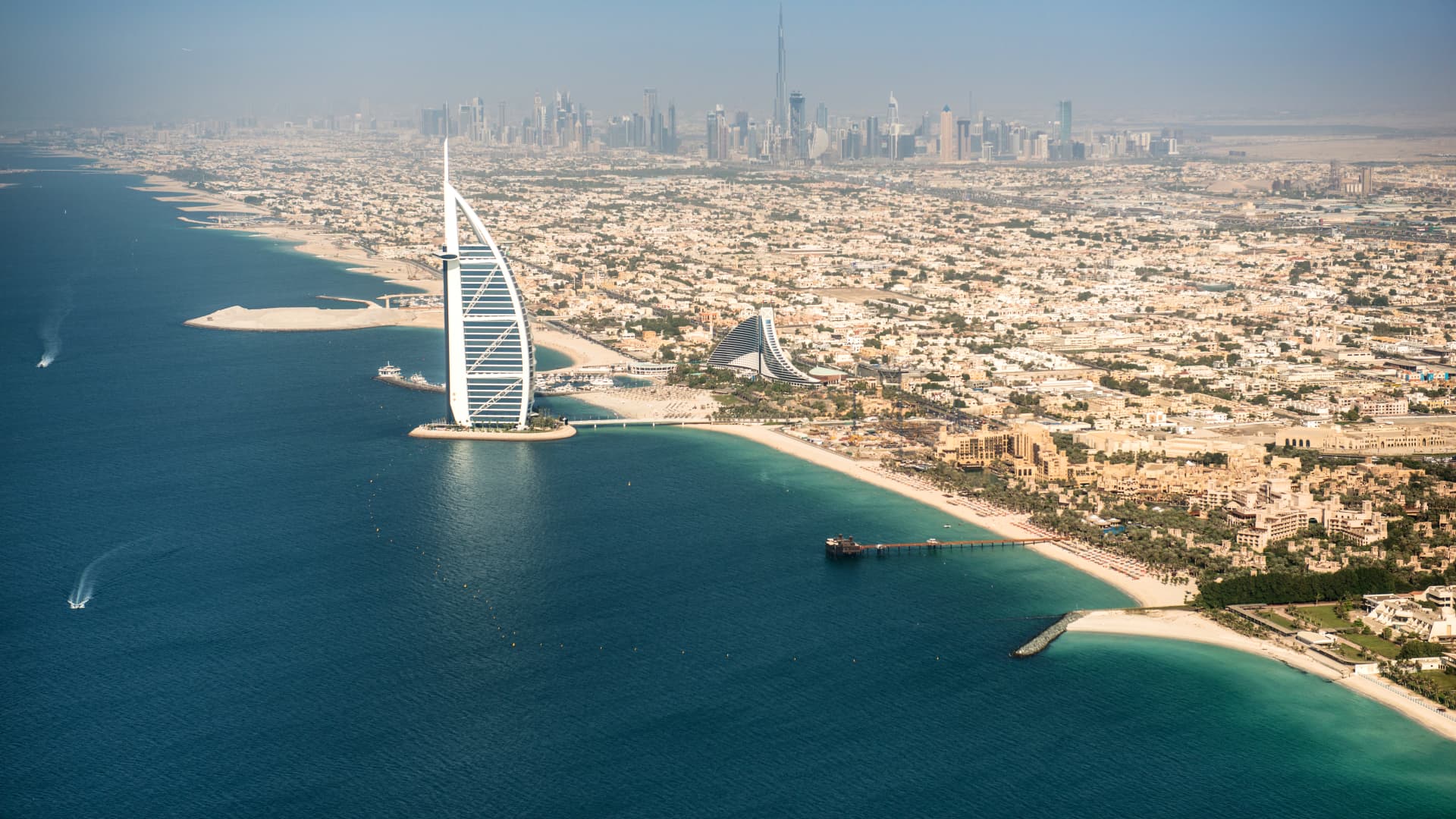
DUBAI, UAE – NOVEMBER 2, 2014: Aerial view of Dubai coastline with Burj Al Arab hotel in front of the coastline. In the background you can see the skyline of downtown Dubai with the Burj Khalifa.
Frank Reporter | Istock Unreleased | Getty Images
The United Arab Emirates said on Saturday that media reports that it had agreed to release billions of dollars in frozen funds to Iran were false.
“The Ministry of Foreign Affairs confirms that these claims are completely false and baseless and stresses that no frozen Iranian funds have been released, transferred or facilitated through the UAE,” the government told CNBC in a statement.
Earlier, Reuters reported, citing four unnamed sources, that the UAE had agreed to unlock the funds in a change of tactics following hundreds of attacks on military targets and infrastructure in the UAE since the start of the US-led war on February 28.
But last week, the UAE escaped attack by Iranian projectiles, while Kuwait and Bahrain were hit.
Reuters, citing two regional sources, said the UAE had agreed to release a total of $10 billion, of which more than $3 billion had already been provided.
The news agency cited two other sources familiar with the deal, saying the total amount of funds involved was $20 billion, adding that the move was agreed in exchange for Iran to stop attacking the UAE.
A source familiar with the deal was quoted as saying that the first tranche of $3 billion had already been set aside.
Reuters could not say whether the funds earmarked for the transfer were from the UAE or from Iranian accounts long blocked in the UAE’s banking system or elsewhere.
According to the Atlantic Council, a US-based think tank, Dubai has become a key financial corridor for Iranian companies and individuals seeking to circumvent Western sanctions, sell oil abroad and channel the proceeds to military programs and regional proxies.
Shell companies registered throughout Dubai’s vast free zone have hidden the origin of Iranian oil and goods for years. Informal exchange companies also move funds across borders beyond the reach of traditional banking supervision.
The United States is pressuring Gulf states to dismantle these networks. The U.S. Treasury Department has sanctioned companies based in the UAE in recent years, and officials have repeatedly said enforcement within the UAE has fallen short of the country’s commitments.
– CNBC’s Emma Graham and Reuters contributed to this article.
