

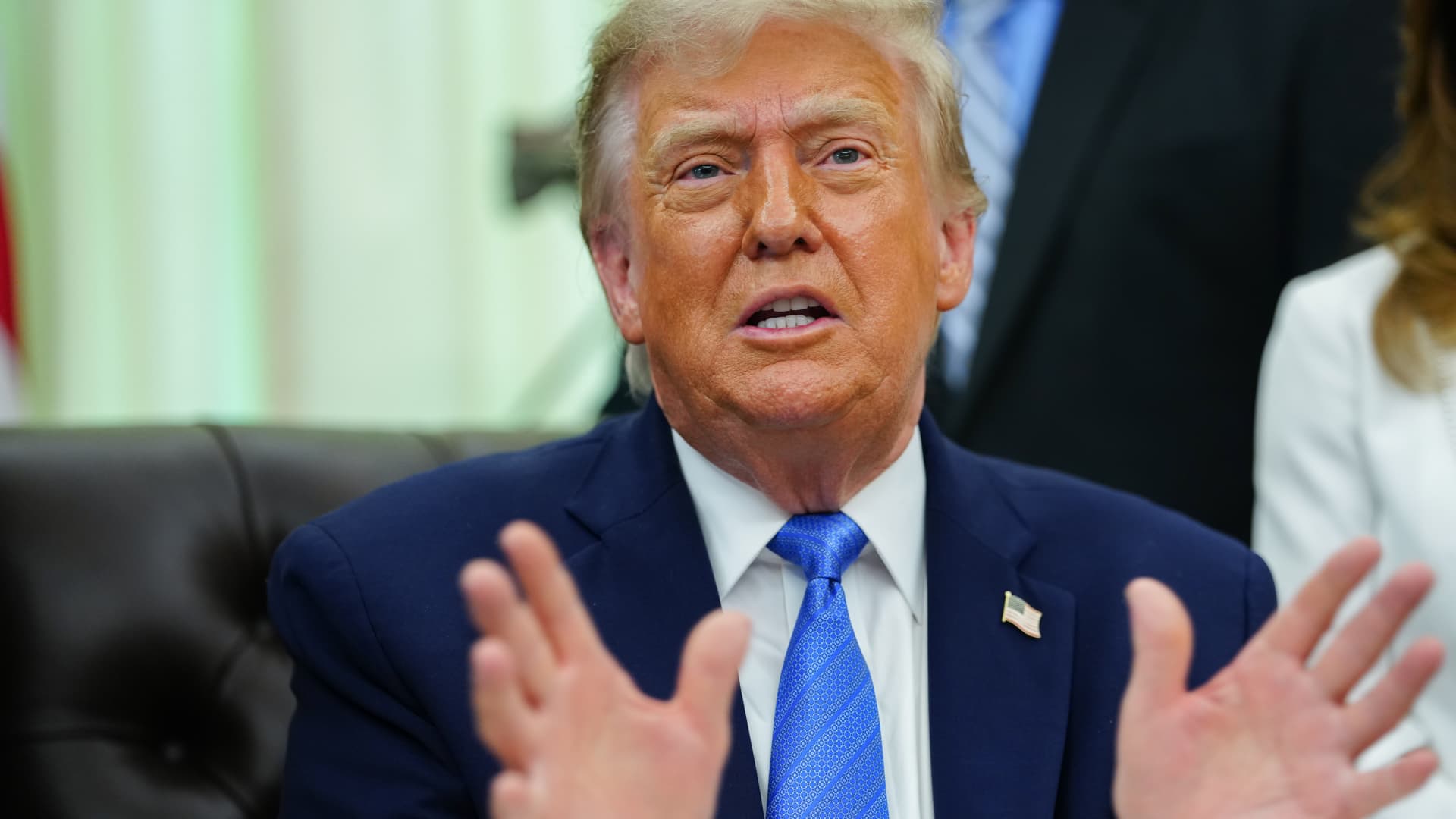

“You know what I really love? I love inflation,” President Donald Trump said Wednesday after soaring energy prices from the Iran war pushed the consumer price index above 4% for the first time in three years.
President Trump told reporters in the Oval Office that the CPI data released by the Bureau of Labor Statistics was “a great number.”
U.S. households feel less enthusiastic about the impact of the Middle East conflict on the prices of everyday goods. The New York Fed’s monthly survey of consumer expectations showed that the percentage of respondents who believe current conditions are “much worse” than a year ago has reached the highest level in nearly four years.
The oil crisis created upward pressure on prices at a time when many consumers were already struggling.
The U.S. Congressional Joint Economic Committee Minority estimates that tariffs and the war with Iran will cost each household more than $3,100 from 2025 to May 2026.
Asked for comment, the White House press secretary sent CNBC a link to a New York Post article in which President Trump said he liked the fact that inflation was not rising. “The numbers are much lower than expected,” he told the New York Post on Wednesday.
Experts say soaring prices for essentials like food and gasoline are limiting the extent to which workers can extend their paychecks.
“Most U.S. households are experiencing negative real income growth. No matter how you look at it, it’s hard to turn this into positive territory,” said Stephen Kates, a certified financial planner and financial analyst at Bankrate. “Most of the profit gains were wiped out by this latest spike in inflation.”
Wage growth has not kept pace with inflation, with average hourly wages up 3.4% from a year ago, according to the Bureau of Labor Statistics.
Wayne Winegarden, an economist at the conservative think tank Pacific Research Institute, said an annual inflation rate of 4.2% “means we’re devaluing the assets and incomes of U.S. residents, which is a big problem.” “It’s tricky to minimize that impact.”
Inflation is outpacing wages, and Americans’ personal savings rate recently hit its lowest level since 2022, according to data from the U.S. Bureau of Economic Analysis.
long-term inflation expectations
President Trump reiterated this week that a deal with Iran could be reached within days, after which the vital Strait of Hormuz would be reopened “immediately.”
President Trump said Wednesday that even as tensions rise in the Middle East, inflation “will drop like a rock” once the war is over. “Once that’s over, you’ll see oil drop back to where it was before,” he said.
The comments came after President Trump said the United States would again attack Iran “very hard.”
The president has made a number of similar comments in recent months about a peace deal almost on the horizon. The war passed the 100-day mark on Sunday.
But even if the U.S. and Iran reach a peace deal, experts say it could take weeks or months for the inflationary effects of the war to subside.
“The speed of reopening the Channel will be critical to future cost pressures and the resulting pass-through to consumers,” Rick Rieder, BlackRock’s head of fixed income, said in a statement Wednesday, referring to the critical waterway used to transport about a fifth of the world’s oil.
Gasoline prices, which have been a particular problem since the outbreak of the Iran war, may not ease up too soon, Bankrate’s Cates said.
“We’re still seeing significant year-over-year increases,” Cates said. As of Thursday, the national average consumers paid was $4.13 per gallon, up from about $3.12 a year ago, according to AAA.
“What people care about is price levels, and even if there is no inflation for the next few years, there is no way price levels will go back to 2025. That’s impossible,” Cates said.
Some Fed policymakers have also expressed concern that longer-term inflation expectations could rise as the conflict drags on.
Subscribe to CNBC on YouTube.
