

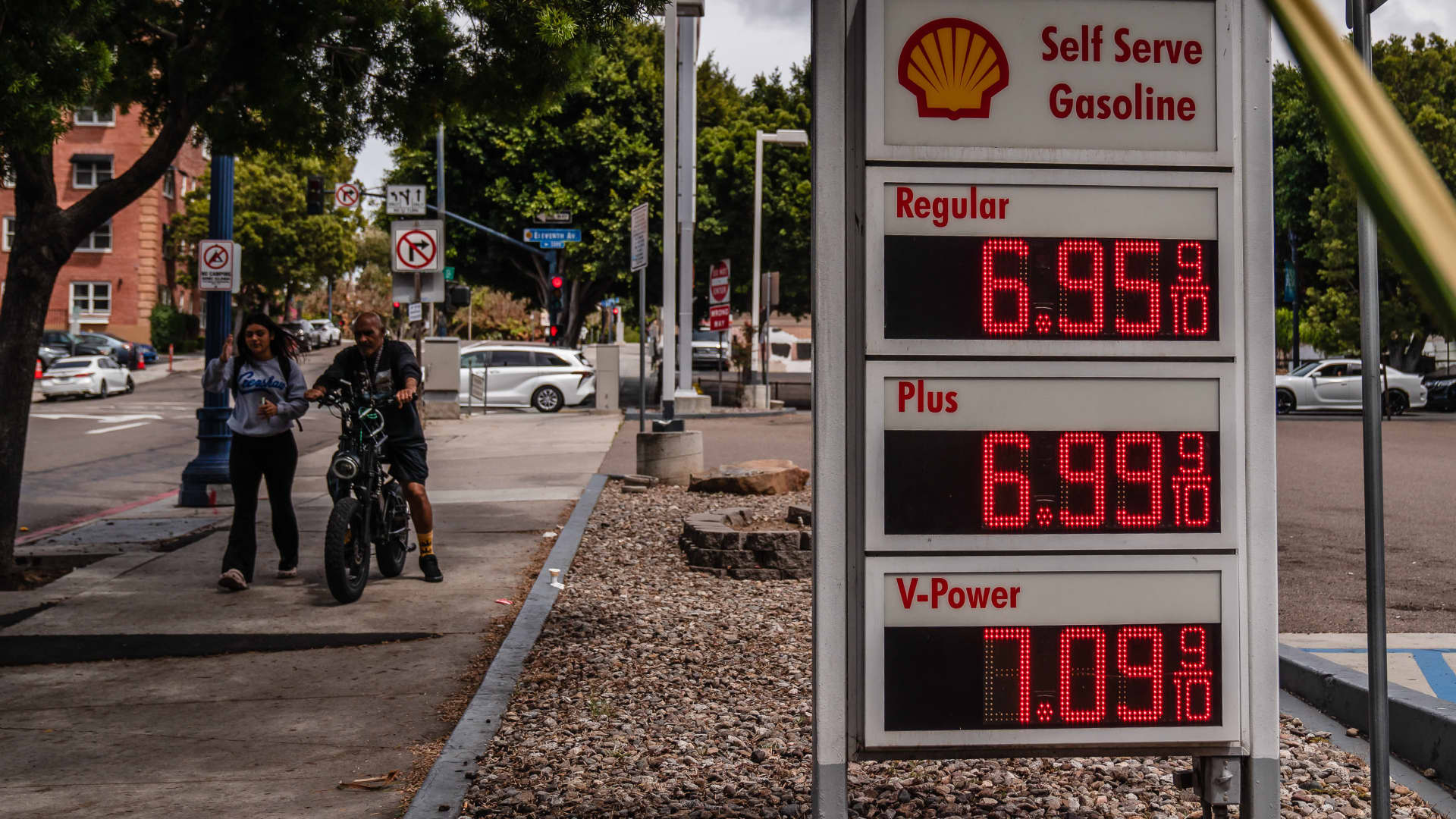

Consumer sentiment hit an all-time low in early May due to soaring gasoline prices due to the Iran war, according to a University of Michigan survey on Friday.
The school’s most notable consumer survey recorded a preliminary score of 48.2, which was a 3.2% decrease from April’s all-time high and a 7.7% decrease from the previous year. Economists surveyed by Dow Jones expected a reading of 49.7.
The main driver of the continued downward trend in consumer attitudes was inflation concerns.
This trend continued with a 9% decline in the Current Conditions Index, “due to heightened concerns about high prices, both in personal finances and purchasing conditions for large purchases,” said research director Joan Hsu.
One-third of respondents cited gas prices as their biggest concern. But an additional third also mentioned tariffs, both related to President Donald Trump, who launched an attack on Iran in late February and announced aggressive tariffs in April 2025.
“Overall, consumers continue to experience cost pressure from rising prices,” Su said. “Until supply disruptions are fully resolved and energy prices fall, the situation in the Middle East is unlikely to provide much upside.”
There were some small bright spots in this study.
The expectation index was 48.5, up 0.8% from April and 1.3% year-on-year. Furthermore, although the outlook for inflation remains at a high level, it has actually eased slightly, with the one-year outlook at 4.5% and the five-year outlook at 3.4%, down 0.2 percentage points and 0.1 percentage points from the preliminary survey values, respectively.
The stock index remained positive even after the announcement.
The survey was released shortly after the Bureau of Labor Statistics reported better-than-expected job creation in April, with nonfarm payrolls increasing by 115,000 and the unemployment rate remaining at 4.3%.
However, soaring energy prices continued to be a problem. The national average price for a gallon of regular gasoline on Friday was $4.54, up nearly 40 cents from last month and nearly $1.40 more than the same time last year, according to AAA.
