

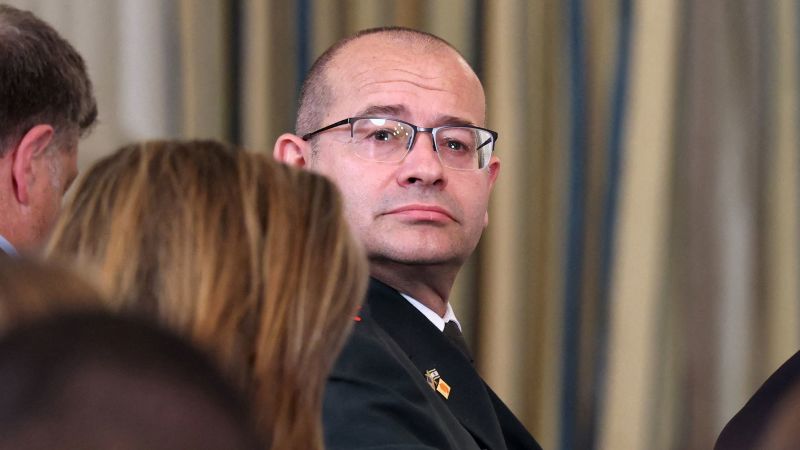
The next head of the Israeli intelligence agency Mossad believed a war with Iran could trigger a swift collapse of the regime, according to three Israeli officials familiar with internal discussions, but that assessment did not materialize after more than 40 days of fighting.
Roman Goffman, who currently serves as Prime Minister Benjamin Netanyahu’s military chief, told Israeli leaders during planning talks that the Iranian regime could be overthrown, a view echoed by the agency he will lead, which proved to be too optimistic.
Goffman is scheduled to take office in June for a five-year term, replacing David Balnea, who also believed war could cause the Islamic Republic to collapse.
Barnea, who has headed Mossad since 2021, played a key advisory role in the lead-up to the U.S.-Israel attack on Iran on February 28, which started the war, according to two Israeli security officials. The New York Times reported that Mr. Barnea pitched to Mr. Netanyahu and US President Donald Trump the idea that the assassination of the Iranian leader and the subsequent series of intelligence-led operations would mobilize the country’s opposition, spark protests, riots and acts of rebellion, and could lead to the collapse of the regime.
“Mossad’s position was that regime change was a possible outcome and that they could make it happen,” one Israeli security official told CNN.
The Israel Defense Forces (IDF) had reservations and argued that its goals were more nuanced and instead aimed to weaken the regime and create conditions for a popular uprising, the source added. “Mossad made a series of promises but failed to deliver,” the source said.
The first wave of attacks that killed Supreme Leader Ayatollah Khamenei and the subsequent destruction of Iran’s military and government infrastructure by the United States and Israel have so far failed to bring about meaningful changes in the positions of Iran’s leadership or hardliners. The new supreme leader, the son of the slain ruler, is believed to be more hard-line than his father and closer to Iran’s Islamic Revolutionary Guard Corps.

In his first public statement since the start of the war, Barnea said Israel’s mission in Iran is incomplete. Speaking on Israel’s Holocaust Remembrance Day on Tuesday, he said: “We certainly planned to continue our campaign and make it clear in the period after the attack in Tehran.” “Our promises will only be fulfilled if the extremist regime is replaced.”
Mr. Goffman, 49, was born in Belarus and moved to Israel at the age of 14. He spent more than 30 years in the Israel Defense Forces’ armored forces, holding numerous frontline and command positions.
Severely wounded in combat when Hamas-led militants attacked Israel on October 7, 2023, he recovered and served as Prime Minister Netanyahu’s top military aide, where he was involved in all major strategic and operational decisions around the region, including Iran, Lebanon, Gaza and Syria, over the past two years. He speaks Russian and is Netanyahu’s main point of contact with the Kremlin.

The prime minister announced in December his intention to appoint Mr. Goffman to the Mossad over other candidates within the spy agency. It is unusual, but not unheard of, for Israel to choose a spymaster from the military rather than from within.
When Prime Minister Benjamin Netanyahu appointed Goffman, he described him as “an outstanding, bold and creative officer who demonstrated outside-the-box thinking and impressive resourcefulness during the war.”
Veteran defense analyst Amir Oren told CNN that Goffman has little experience in the specialized skills needed by Mossad, such as intelligence gathering, special operations and liaison with other spy agencies. Oren described these as skills that “you have to spend years, perhaps decades, mastering before you can command others to do it.”
Instead, Mr. Oren said Mr. Goffman, who is not known to speak English, was chosen because of his loyalty to Mr. Netanyahu.
“Soldiers and veteran military and security experts agree that these appointments are not intended to benefit Israel’s security, but rather to provide personal and political support to Prime Minister Netanyahu,” Oren said.

However, Goffman’s appointment process was delayed for several months due to controversy stemming from a 2022 incident in which Goffman, then commander of a regional division in the Israel Defense Forces, allegedly used a teenager to release classified information as part of an online influence operation. The boy was subsequently detained for a long time by security services and accused of publishing classified material, but the charges were dropped when it became clear that he had been authorized to do so.
The Times of Israel reported that Goffman said he did not know the person’s age at the time and only ordered him to give unclassified information.
The teenager, now 21, has become one of Goffman’s most vocal critics and has appealed his appointment to the Supreme Court.
CNN has reached out to Goffman for comment through the Israeli Prime Minister’s Office and the IDF.
Goffman’s appointment reflects Netanyahu’s broader efforts to reorganize Israel’s security architecture in the wake of the October 7 attack, widely considered Israel’s most serious security failure. Since then, nearly all members of the country’s security leadership have resigned, been replaced, or had their terms expired, including the Minister of Defense, the Chief of Staff of the IDF, the Director of Military Intelligence, and the Shin Bet.
Mr. Barnea’s anticipated resignation and Mr. Goffman’s appointment effectively make Mr. Netanyahu the last senior Israeli official to remain in office since October 7, 2023, when Israel suffered its deadliest attack in history.
