

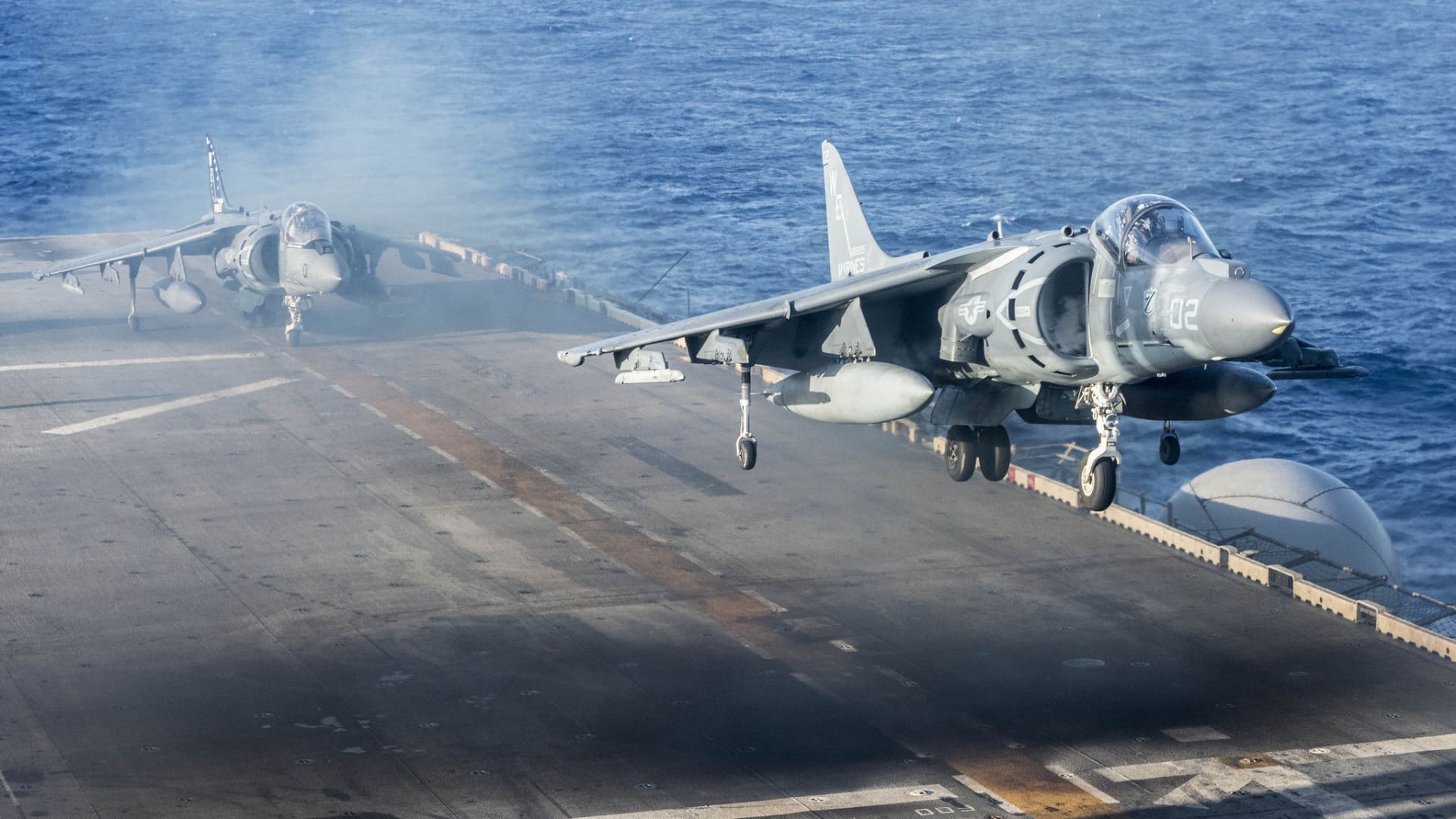
Source: US Navy | Flickr
A war with Iran could ultimately cost U.S. taxpayers far more than official statistics suggest, according to an analysis by a Harvard University scholar.
The first six days of the joint U.S.-Israel operation against the Islamic Republic, which began on February 28, cost $11.3 billion, according to a Pentagon briefing to Congress.
A fragile ceasefire remains in place, but efforts at a lasting settlement have so far proven elusive, with US forces beginning a blockade of Iranian ports starting Monday after peace talks broke down over the weekend.
“I believe the cost of the Iran war will reach $1 trillion,” Linda Bilmes, a public policy expert at Harvard University’s Kennedy School, said in an internal interview.
Her study, released two days before the April 8 announcement of the temporary ceasefire, identified several reasons why this military operation could have devastating consequences for the U.S. national debt well into the future.
She estimated that short-term initial costs would total about $2 billion per day during the 40-day actual dispute. This includes the cost of munitions and troops, as well as damage to military assets, such as the downing of three F-15 jets in a mutual attack from Kuwait.
Bilmes believes short-term costs are higher than they appear on paper because the Pentagon reports numbers based on the historical value of the inventory, rather than the actual price of replacing assets today, which is typically much higher.
“These gaps are one reason why the reported $11.3 billion is closer to $16 billion and reflect the persistent gap between what the Pentagon is reporting in real time and the actual cost of war,” she said.
Bilmes added that a large multi-year contract with Lockheed Martin and Boeing for interceptors and missiles would put the cost of resupplying the United States at $4 million per interceptor, much higher than the cost of drones launched from Iran, which can be produced for just $30,000 each.
it’s down the road
In the long run, the cost of war will increase as the rebuilding of damaged facilities and inventories includes not only U.S. military assets in the region but also the infrastructure of allies in the Gulf.
Birmes said adding the cost of potential lifetime disability benefits for the roughly 55,000 soldiers deployed to the region and exposed to toxins and environmental hazards would place an additional burden on taxpayers.
Meanwhile, the White House is asking Congress to increase the U.S. defense budget to $1.5 trillion, representing the largest expansion in military spending since World War II.
And that figure doesn’t include the $200 billion the Pentagon wants set aside for the Iran war.
“Even if Congress does not agree to approve the full increase, it will likely add at least $100 billion a year to the base defense budget that would not have been approved without this war,” Bilmes added.
Such spending will add significant weight to the growing US budget deficit.
Compared to the Iraq war, which cost a total of $2 trillion, the nation had less than $4 trillion in debt during this period. That amount now exceeds $31 trillion, Birmes said, with much of it coming from the past wars in Iraq and Afghanistan.
“We are borrowing at higher interest rates on top of a much larger debt base to fund this war,” she added.
“As a result, interest alone will increase the total cost of this war by billions of dollars. And unlike the initial costs, these are costs that we are clearly passing on to the next generation.”
