

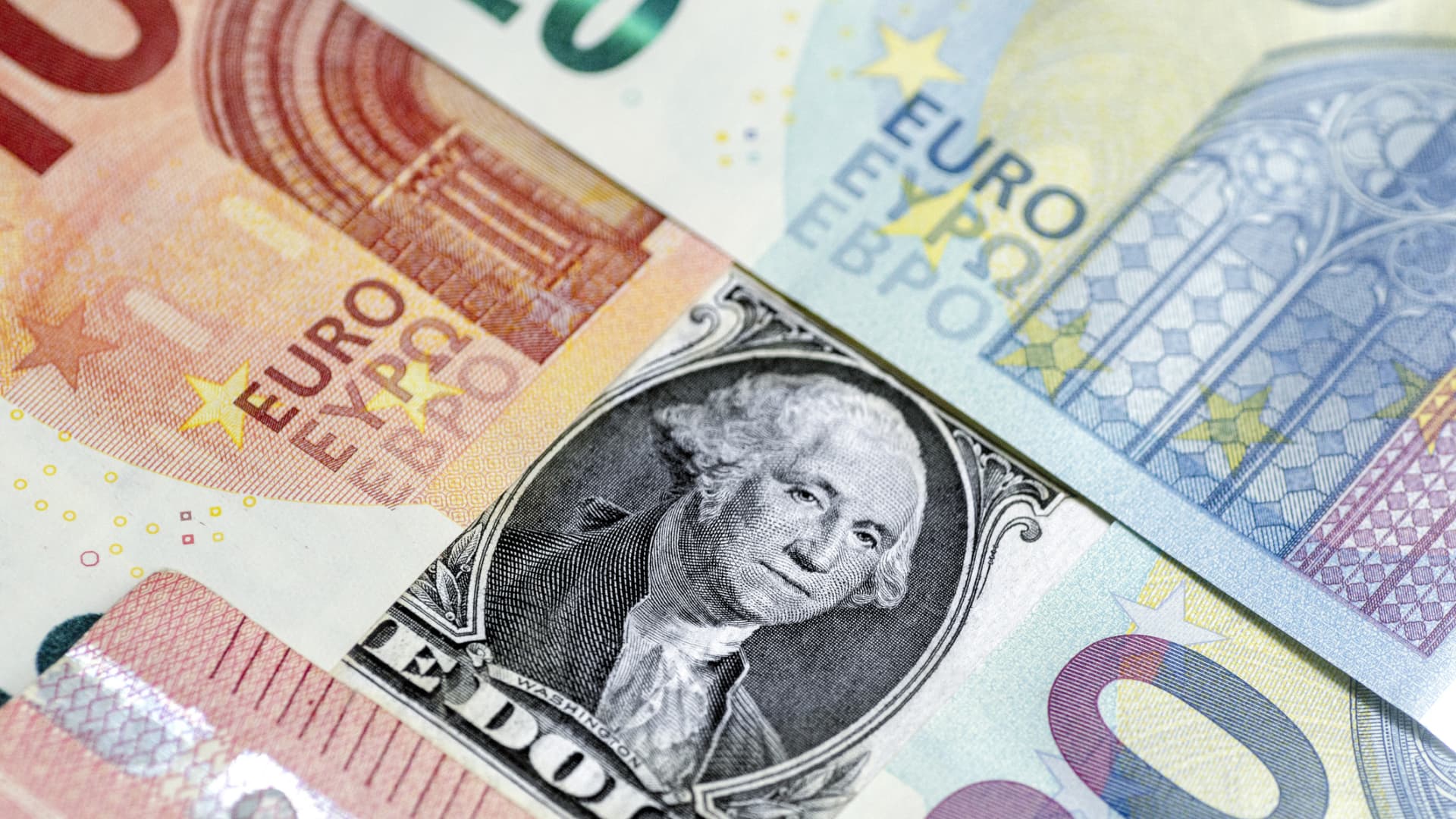
The US dollar strengthened on Monday after talks between the US and Iranian governments over the weekend failed to reach an agreement to end the war. The dollar rose 0.3% against the euro to $1.169 and 0.25% against the pound to $1.342 after peace talks broke down and President Trump announced that the U.S. military would begin a blockade of all maritime traffic in and out of Iranian ports. Investors have not flocked to the dollar since the outbreak of the Iran conflict, but the currency appreciated about 2% against a basket of major peers in March. Three trends are creating headwinds for other currencies: higher oil prices, a stronger dollar, and tighter U.S. fiscal conditions. Analysts at HSBC said in a note on Friday that while it was “tempting to incorporate a stronger US dollar into our forecasts,” they were “reluctant” to do so and instead expected the dollar to weaken. There are two main reasons for this. First, HSBC cited a recent speech by Federal Reserve Chairman Jerome Powell, writing, “When the outlook is uncertain, it is wise to slow down rather than completely reverse course.” “Second, the Fed is neither in a rate hike cycle nor fully hawkish, so there are fundamental constraints that work against the US dollar overall,” the analysts added. The strength of the US dollar relative to other currencies seen during the war was primarily due to the country’s self-sufficiency in energy production. The UK and euro area economies are particularly sensitive to rising oil and gas prices as they are highly dependent on imports. Meanwhile, other traditional assets such as gold have held up less well, falling about 10% from their record highs since the US and Israel launched attacks on Iran on February 28th. Analysts at HSBC believe that the yellow metal’s bull run will return, but only when hostilities cease, the Strait of Hormuz fully reopens, and oil prices fall to more reasonable and stable levels.
