

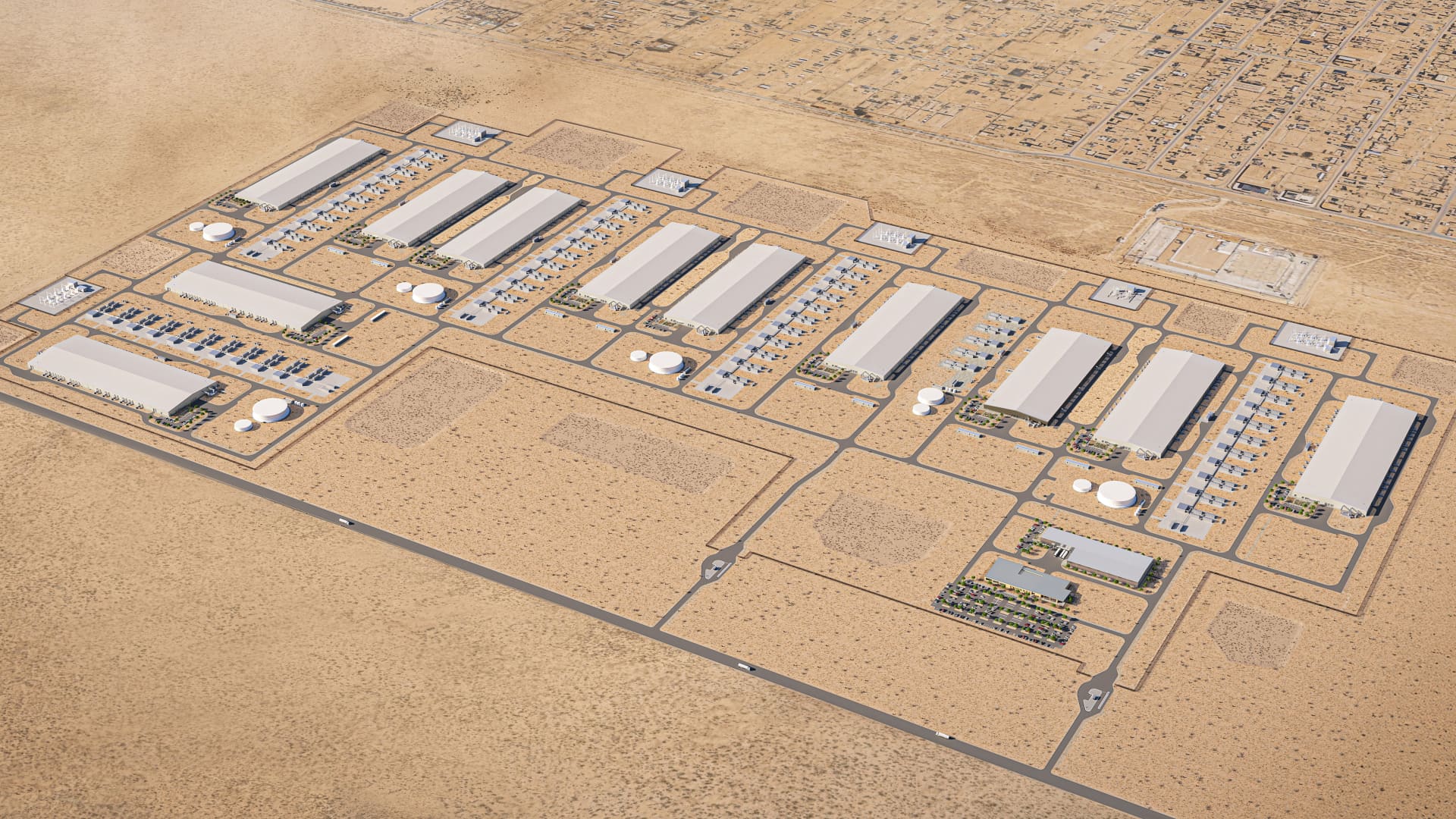
Amkor Technology isn’t a household name, but it’s poised to be a big winner as artificial intelligence becomes more popular. The semiconductor packaging and testing company’s stock has risen 47% since the beginning of the year and has nearly quadrupled in the past 12 months. The S&P 500 index was little changed, rising 29% over the same period. AMKR YTD Mountains Amkor Technology stock rises 47% in 2026 alone Amkor’s strong performance comes as data center spending is projected to reach $7 trillion globally by 2030, according to consultant McKinsey & Company. At the same time, products from smartphones to electric cars are also using semiconductor technology to enhance their AI-enabled capabilities. Amid the boom, tech giants are turning to Amkor to assemble and test chips. The company serves customers in the United States, China, and Europe. “What looks like a pocket of strength typically propagates throughout the industry,” Needham analyst Charles See told CNBC. “AMKR…is well-positioned to capture AI-related packaging demand.” Needham rates Amkor a buy with a price target of $65, 12% above Friday’s closing price. Amkor specializes in taking multiple semiconductor components and packaging them into a single large chip, such as a graphics processing unit (GPU). This assembly allows components to run faster and cooler, reducing power consumption and increasing efficiency in AI applications. Amkor also tests its AI chips using validation checks to ensure the semiconductors meet performance specifications and are durable. High-profile deals Amkor has secured several high-profile deals to serve semiconductor manufacturers and other companies. In 2023, Amkor struck a deal with Apple to make the iPhone maker its first and largest customer for its packaging factory outside Phoenix. Last year, Amkor was one of at least nine companies to join an Apple-sponsored coalition called the American Manufacturing Program. In 2024, Amkor signed an agreement with Taiwan Semiconductor Manufacturing Co., Ltd. Also located in Arizona, the chip manufacturing facility offers advanced turnkey packaging and testing services. Amkor deals are likely to accelerate further in the near future as data center funding increases, UBS said. Hyperscalers have already allocated nearly $700 billion in 2026 to ramp up their AI push, more than their 2025 budget. “Amkor’s focus on advanced technologies has helped it achieve strong sales in the first half of 2023 and the first wave of AI in 2024,” UBS analyst Randy Abrams said in a February report. “We are seeing good qualification activity for the second wave of projects,” he wrote, supported by spending from cloud providers and deals with integrated circuit suppliers to build multi-gigawatt scale application-specific integrated circuit and GPU capacity. Tailwinds Tailwinds from smartphones and auto production are also likely to boost Amkor’s sales, Melius Research said, noting that semiconductor technology underpins memory and camera functions in both mobile phones and advanced driver assistance systems. “Amkor has increased exposure to Apple, which is launching a series of market-leading products next year, including foldables and the iPhone 20,” Melius analyst Ben Reitzes said in a note to clients this week. “If Apple wants to manufacture chips in the U.S., they need them.” Melius rates Amkor a buy with a price target of $60. Morgan Stanley analyst Joseph Moore said Amkor’s partnership with Apple could help Apple outperform some of the Street’s conservative growth forecasts, especially as Apple prepares to launch several high-end phones incorporating advanced semiconductors in late 2026. “AMKR’s smartphone portfolio is skewed towards the high end, which means it should outperform our more conservative standalone forecast of a 10-15% decline,” Moore said in a February report. Decrease in shipments Indeed, changes in Apple’s new product schedule could cause iPhone shipments to fall by about 2% year-over-year, which could impact Amkor’s communications division, Moore said. Other risks will arise if the data center boom does not fully materialize. For example, power constraints or laws restricting where facilities can be built may force technology providers to curtail construction plans. Nevertheless, Melius Research expects the stock price to become less volatile as Amkor expands some form of AI-related business in the U.S. and abroad. Amkor currently has a beta of 1.74, making it nearly twice as volatile as the S&P 500, according to FactSet data. “Amkor is increasingly decyclical due to the need for advanced packaging in the U.S. and Western countries,” Wrights wrote. “The company sits at the intersection of Nvidia’s next-generation platforms, chiplet-driven architectural changes, and U.S. supply chain realignment, creating a multi-year demand backdrop that extends well beyond traditional smartphone and consumer cycles.”
