

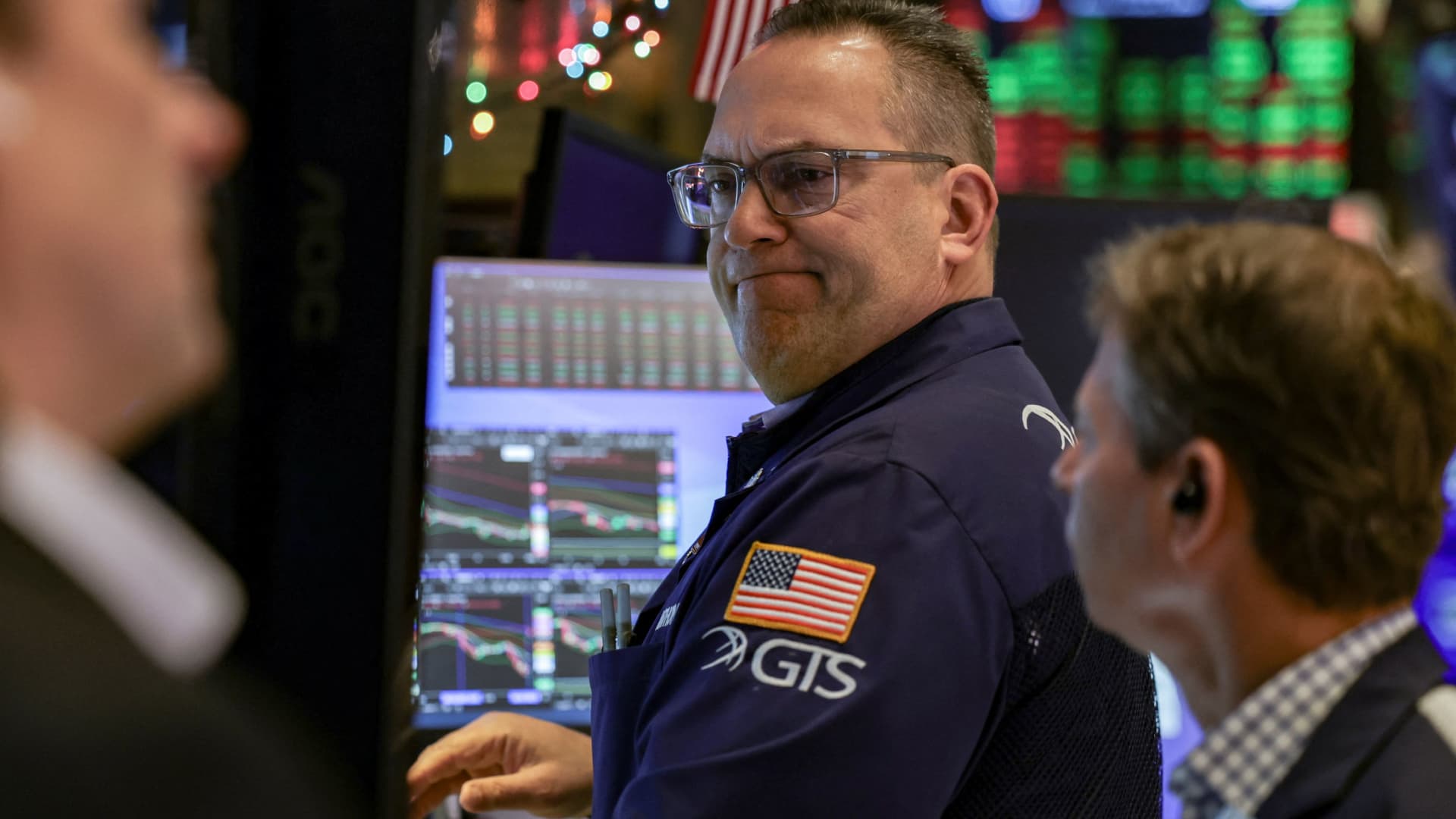
Stock markets showed little reaction to President Donald Trump’s unusual actions in Venezuela, as investors bet that the attack and the detention of leader Nicolás Maduro would not lead to a larger geopolitical conflict.
The Dow Jones Industrial Average rose 343 points, or 0.7%. The S&P 500 and Nasdaq Composite rose 0.6% and 0.8%, respectively, on Monday.
Oil markets rose only modestly, with energy stocks helping to lift prices as traders bet oil and gas companies would benefit from a takeover of Venezuela, which has the world’s largest proven oil reserves. chevronhas already established a presence in the country, rising more than 7%. shares of exxon mobil It rose more than 4%.
Historically, geopolitical shocks rarely have a lasting impact on stock markets. According to UBS, a review of the past 11 major geopolitical events showed that the S&P 500 index, on average, fell just 0.3% one week after the event and rose 7.7% 12 months later. In fact, the company notes that the market has historically overlooked even major developments like the US bombing of Iran.
“Volatility is to be expected as Venezuela news dominates the headlines, but the overall market seems relatively unfazed by what has happened so far,” said Jay Woods, chief market strategist at Freedom Capital Markets. “The swift resolution with little threat of escalation has so far calmed investors.”
The incident put other countries on high alert. One analyst said Denmark was in “full crisis mode” after President Trump set his sights on Greenland after the attack. Russia’s reaction to President Maduro’s ouster has been cautious.
But the lackluster response to major geopolitical developments, due in part to President Trump’s previous criticism of the ongoing conflicts in Iraq and Afghanistan, suggests investors do not expect attacks to escalate any further.
In fact, Evercore ISI’s Matthew Ax believes President Trump’s threat to take over the country is more of a negotiation tactic, and agreed that this event is unlikely to move the market significantly. He added that Venezuela’s current oil exports are low and that efforts to develop the country’s infrastructure will be a long-term story.
“President Trump’s comments regarding the United States’ management of Venezuela have received a lot of attention, but we do not expect the United States to take immediate large-scale military action,” Aksu said. “Rather, we interpret this as a colorful metaphor and negotiation tactic aimed at maintaining pressure on the remnants of the Maduro regime to voluntarily cede power.”
Instead, investors continue to focus on stock market fundamentals. Many believe that artificial intelligence, profit growth, and easy monetary policy are reasons to be optimistic about the start of the new year. UBS said investors with insufficient exposure should put excess cash or bonds into equities, but the firm also said it should maintain its gold allocation.
“While developments in Venezuela could cause volatility, particularly in the oil market, we expect investors’ focus to remain on fundamentals. We expect MSCI All Country World’s earnings to grow by nearly 10% in both 2026 and 2027, contributing to further share price gains this year,” said Ulrike Hoffman Burchardi, Global Head of Equities at UBS Financial Services.
“Given this backdrop, we rate global equities as attractive,” she continued. “If investors are currently underallocated, we believe they should reallocate excess cash, fixed income, or high-yield credit holdings to equities.”
