

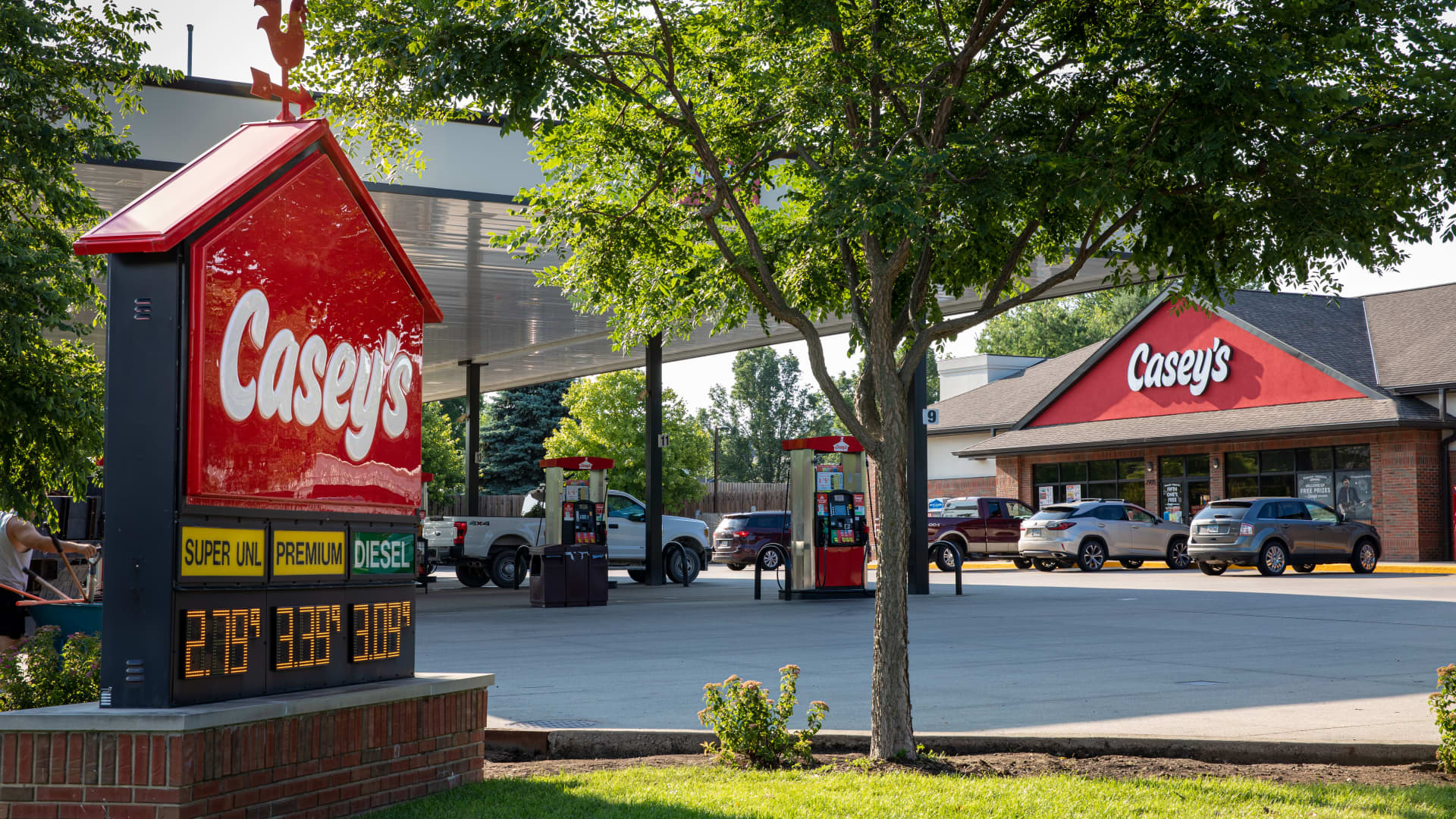
Casey’s General Stores (CASY) is not widely followed, but it should be, especially for investors looking for actionable opportunities that are off the radar. CASY is a food retail company in the consumer staples space, which isn’t typically exciting. In fact, the S&P 500 Consumer Staples ETF is the worst sector year-to-date, currently at -1.4% vs. +17% for the S&P 500. CASY is not a member of the S&P 500 Consumer Staples sector, but it would certainly help if it was. CASY is up about 44% year-to-date and just hit a new high this week. As we’ll discuss in more detail below, new highs are nothing new for this stock, which has been in a long-term uptrend for decades. Along the way, CASY has consistently demonstrated the ability to digest gains through a multi-week integration phase. CASY is currently attempting to take advantage of a very clear bullish formation on the daily chart, an inverted head and shoulders pattern. If the current consolidation resolves higher, the measured upside target would rise to around 647, which would be well above current levels. This is not a short-term deal and this pattern could continue into the first quarter. For this bullish setup to remain intact, CASY will need to rise above and sustain above the currently testing 570-75 zone. From a trading perspective, a stop near 530 makes sense as it matches the right shoulder of the inverted head and shoulders pattern. Let’s take a closer look at the weekly chart shown here on a logarithmic scale. This is not the first time that CASY has attempted to hit new all-time highs. In fact, we have done this several times since early 2023, maintaining a clear long-term upward trend. Each previous breakout of a new high has been followed by clear upside follow-through, reinforcing the stock’s continued bullish movement. From this perspective, it is not surprising that the current breakout attempt resolves higher. Instead, it simply represents a continuation of the same price trend observed over the past three years. Consumer staples is one of the smallest sectors in the S&P 500 index, currently accounting for about 4.7% of the index. As a result, it is no surprise that many investors maintain limited exposure to the group. But looking ahead to 2026, if recent rotation themes continue, allocating capital to areas outside of traditional leadership, such as consumer staples, may prove logical. That said, the sector as a whole has a long history of underperformance, which is exactly what makes CASY stand out as a more attractive way to gain exposure. This has been clear since the stock first went public more than 20 years ago. CASY has consistently outperformed the consumer staples sector for over 25 years, and its relative strength has become even more pronounced since early 2022. In other words, we’re talking about stocks that are in a strong absolute uptrend and are outperforming their broad sectors. When a stock ticks all these boxes (bullish trend, relative strength, constructive consolidation pattern, repeating new highs), it represents one of the best technical scenarios investors can look for. For this theme to continue again, the next step is simple. It’s a decisive move through the 570-75 area. If this happens, further upside and ultimately the expected movement goal may be achieved. — Frank Cappelleri Founder: https://cappthesis.com Disclosure: None. All opinions expressed by CNBC Pro contributors are solely their own and do not reflect the opinions of CNBC, NBC UNIVERSAL, its parent or affiliate companies, and may have been previously disseminated on television, radio, the Internet, or another medium. The above is subject to our Terms of Use and Privacy Policy. This content is provided for informational purposes only and does not constitute financial, investment, tax, or legal advice or a recommendation to purchase any securities or other financial assets. The Content is general in nature and does not reflect any individual’s unique personal circumstances. The above may not be appropriate for your particular situation. Before making any financial decisions, you should strongly consider seeking the advice of your own financial or investment advisor. Click here for full disclaimer.
