

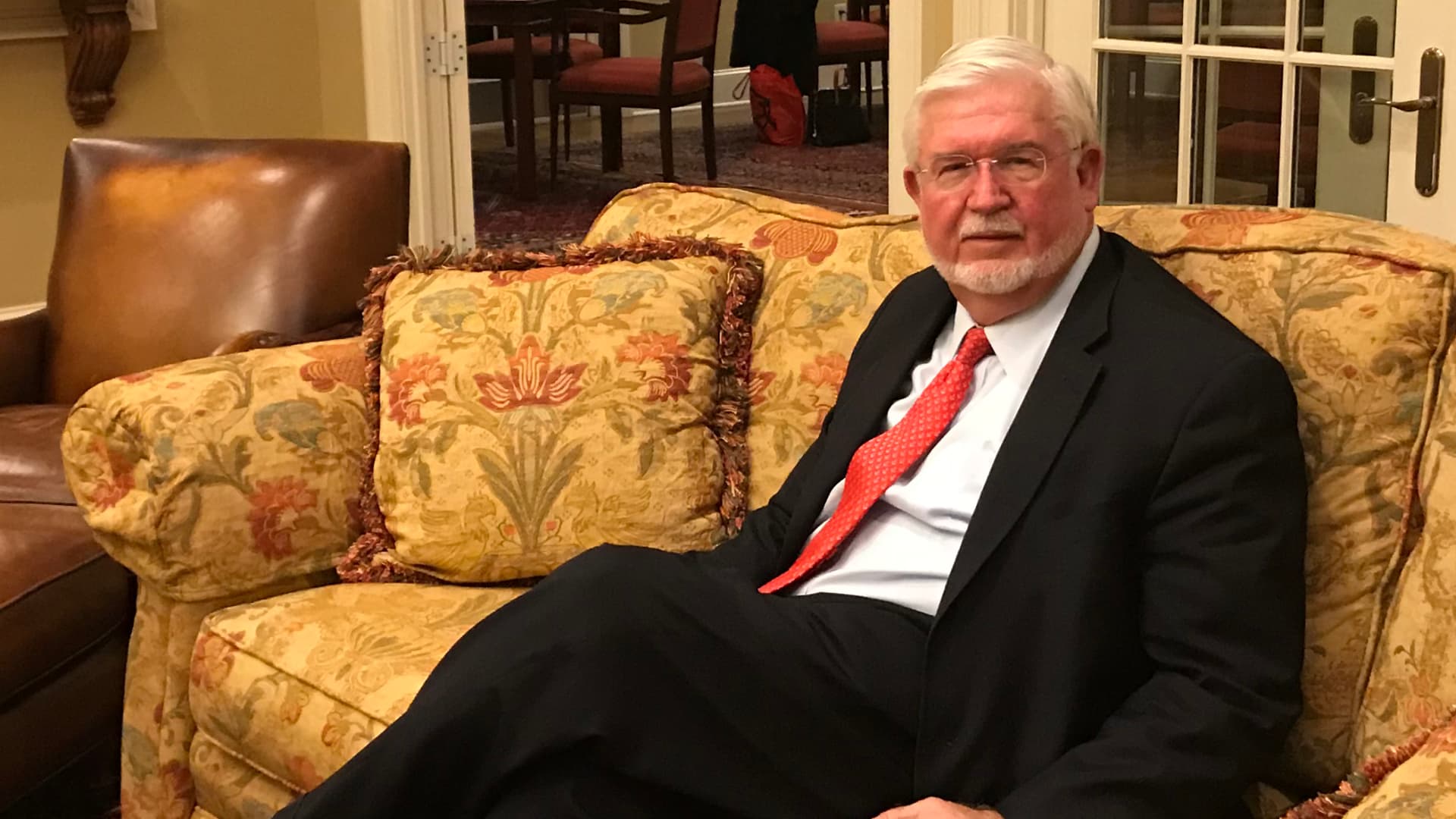
Wayne Johnson at Gables at Wolf Creek, his retirement community in Macon, Georgia.
Annie Nova | CNBC
The Republican, who oversaw the nation’s $1.6 trillion federal student loan portfolio during President Donald Trump’s first term, has funded a class-action lawsuit against the administration over its current borrowing policies.
A proposed class action lawsuit filed this week in federal court in Atlanta says Education Secretary Linda McMahon and the major credit rating companies are violating the Fair Credit Reporting Act, a federal law that requires, among other provisions, the accuracy of information on consumer credit reports.
The Trump administration failed to enroll federal student loan borrowers in repayment plans or provide adequate consumer support, and reported late bills to credit rating agencies, according to the complaint. it said equifax, Experian and trans union They did not check whether the reported data was correct, damaging the creditworthiness of the borrower.
Wayne Johnson, a 2024 Republican Congressional candidate in Georgia’s 2nd District and former chief operating officer of the Office of Federal Student Aid, is financially supporting the class action effort.
Johnson told CNBC that it’s not surprising that Republicans are involved in a lawsuit aimed at protecting borrowers from being unfairly reported to credit rating agencies.
“I want to stop hurting people and the economy,” Johnson said. “I don’t want to upset voters.”
More than 40 million Americans have student loans. The Trump administration announced in April that more than 5 million borrowers had defaulted on their loans, and many more were on the way.
“This is a story about millions of responsible student loan borrowers who want to repay their loans but can’t because of the agency’s lack of administrative capacity,” Johnson said.
A Department of Education spokesperson said in an email that the class action effort is “an outraged attempt by ideologues” to change the administration’s efforts to recover payments from defaulters.
An Equifax spokeswoman said the company does not comment on pending litigation.
Experian and TransUnion did not respond to requests for comment.
Collection efforts are affecting the creditworthiness of the borrower.
The Trump administration resumed collection efforts on defaulted student loans in May, a move that experts say puts millions of borrowers at risk of wage garnishment and lower credit scores.
A May analysis by TransUnion found that consumers who defaulted on their loans in recent months saw their credit scores drop by an average of 63 points. Superprime borrowers, or those with credit scores above 780, were so severely delinquent that their scores dropped by as much as 175 points. Credit scores typically range from 300 to 850.
Recovery activities have been suspended for about five years, and the remainder of the coronavirus-era policies were aimed at providing relief to borrowers.
Trump officials’ focus on repaying delinquent student loans from borrowers is a reversal of the Education Department’s strategy under former President Joe Biden, which focused on giving borrowers additional options to get their bills up to date.
The recovery efforts also began shortly after the Trump administration fired nearly half of the Department of Education’s employees, including many who assisted borrowers.
More than 1 million federal student loan borrowers are behind on repayment plans, according to court records from mid-September.
“The U.S. Department of Education has painted delinquents in exaggerated terms and threatened them with coercive collections, even though they are unable to pay,” said higher education expert Mark Kantrowitz.
