

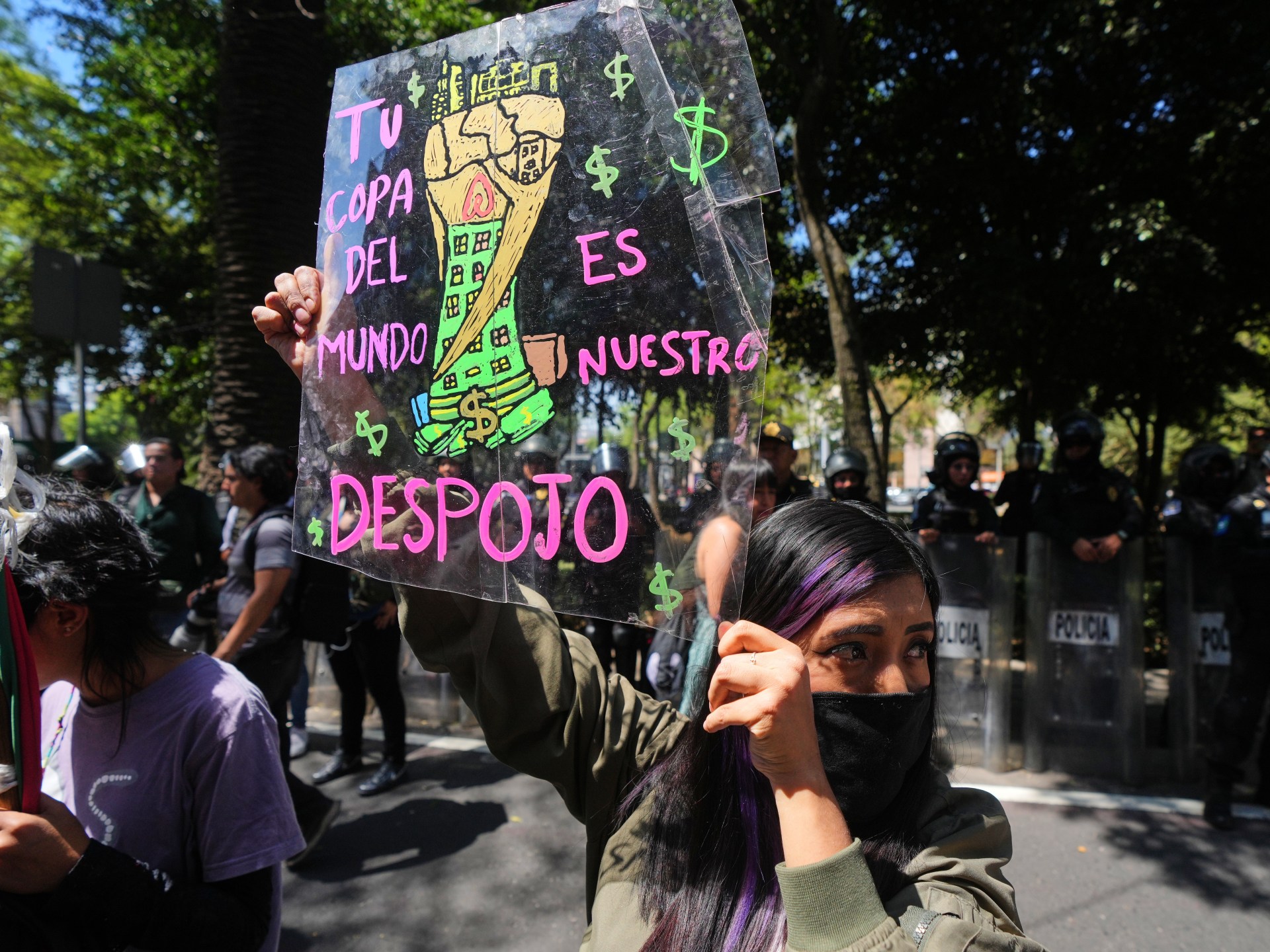
With 50 days until the start of the World Cup, FIFA and the tournament’s host countries are facing criticism over a wide range of social, political and logistical issues surrounding the global tournament.
Canada and Mexico will co-host the tournament with the United States, which launched a war against World Cup participant Iran on February 28, along with Israel. Although the war is currently under a fragile ceasefire, Iran’s participation in the games remains uncertain.
Recommended stories
list of 3 itemsend of list
Fans in the three host countries are in an uproar over exorbitant ticket prices, impacting sales and interest in the world’s most popular quadrennial sporting event.
Local politicians and the public have also expressed concern about rising transit fares on routes connecting U.S. match venues.
Al Jazeera Sports highlights growing concerns ahead of the tournament, which begins with Mexico vs. South Africa’s opening match on June 11.
What is the latest information on Iran’s participation in the World Cup?
Iran’s soccer team is preparing for the championship. But officials said the final decision on the team’s participation would be made by the government and the National Security Council after reviewing the safety of the players in the United States.
Last month, Iran said it would not take part in the tournament during a war, especially if the host country could not guarantee the safety of its athletes. This follows President Donald Trump’s social media posts suggesting that the safety and security of the Iranian team cannot be guaranteed in the United States, where Iranian players are scheduled to play in all games.
The Iranian Football Federation then asked FIFA to move the match venue from the United States to Mexico. FIFA rejected this request.
FIFA president Gianni Infantino said last week that Iran “must come” to the tournament.
Iran will play all group stage matches on the West Coast of the United States. If they advance to the final tournament, the remaining matches will also be held in the United States.
Exorbitant commute fares in US host cities
Fans can expect to pay nearly 12 times the regular price of $12.90 for a round-trip train ride from Manhattan’s Pennsylvania Station to MetLife Stadium in East Rutherford, New Jersey, the site of the World Cup final and seven other major games.
New Jersey Governor Mikie Sherrill and FIFA are blaming each other for the $150 fee for the approximately 15-minute, 14km (9-mile) ride. Sherrill argued that FIFA should cover the costs, but countered that international bodies are not obligated to do so.
The train commute to Gillette Stadium outside Boston costs about four times the regular fare ($20), and the round-trip bus fare to Foxboro costs $95.
Host cities Los Angeles and Philadelphia have promised to keep transit fares the same, while Kansas City has set round-trip fares to Arrowhead Stadium at $15. Houston has added buses and trains to serve fans, but said it intends to keep fares at current levels. Buses and light rail trains cost $1.25, and park-and-ride options range from $2 to $4.50.
Match ticket prices are high and demand is low
The soaring ticket prices have infuriated fans who say they are excluding supporters from tournaments. Delays in ticket sales for blockbuster games, including hosts USA vs. Paraguay, seem to be a sign of high prices.
FIFA went on sale in December with tickets ranging in price from $140 for the first round of Category 3 games to $8,680 for the final. Then, when sales resumed on April 1st, the price increased to $10,990.
Bidding in North America initially promised tickets would be available for as low as $21. However, the cheapest ticket price is $60. Most tickets to games involving top teams cost at least $200.
FIFA announced on Wednesday that tickets would be resold to coincide with the 50-day countdown. Tickets are available on a first-come, first-served basis for all 104 games in categories 1 to 3.
Backlash against immigration raids during World Cup matches
The Trump administration’s push for mass deportations and efforts to tighten legal immigration channels has heightened concerns that World Cup international spectators will be targeted by U.S. immigration authorities.
Infantino was approached last week to pressure Trump to avoid immigration raids during the convention. Reporters have suggested that Immigration and Customs Enforcement (ICE) and Customs and Border Protection (CBP) agents were present at last year’s FIFA Club World Cup games, but the Trump administration has denied conducting any enforcement.
The Athletic reports that FIFA executives believe the potential immigration moratorium could be a public relations boost for the Trump administration. Executives also indicated they expect Mr. Infantino to use his friendship with Mr. Trump to allay immigration-related concerns.
Violence in Mexico raises concerns about safety at tournament
World Cup co-host Mexico has also been in the spotlight over concerns for the safety of fans after a lone gunman opened fire on tourists near the capital on Monday.
The suspect opened fire on the top of the Teotihuacan Pyramid, a UNESCO World Heritage Site and one of Mexico’s most frequently visited tourist attractions, killing one Canadian tourist and injuring 13 others.
The incident raised questions about security protocols put in place by the government of Mexican President Claudia Sheinbaum in the lead-up to the global soccer tournament.
Sheinbaum said Mexico will beef up security for the World Cup.
“Our duty as a government is to take appropriate measures to ensure that a situation like this never happens again. But clearly we all know, and Mexicans know, that this has never happened before,” she said on Tuesday.
