

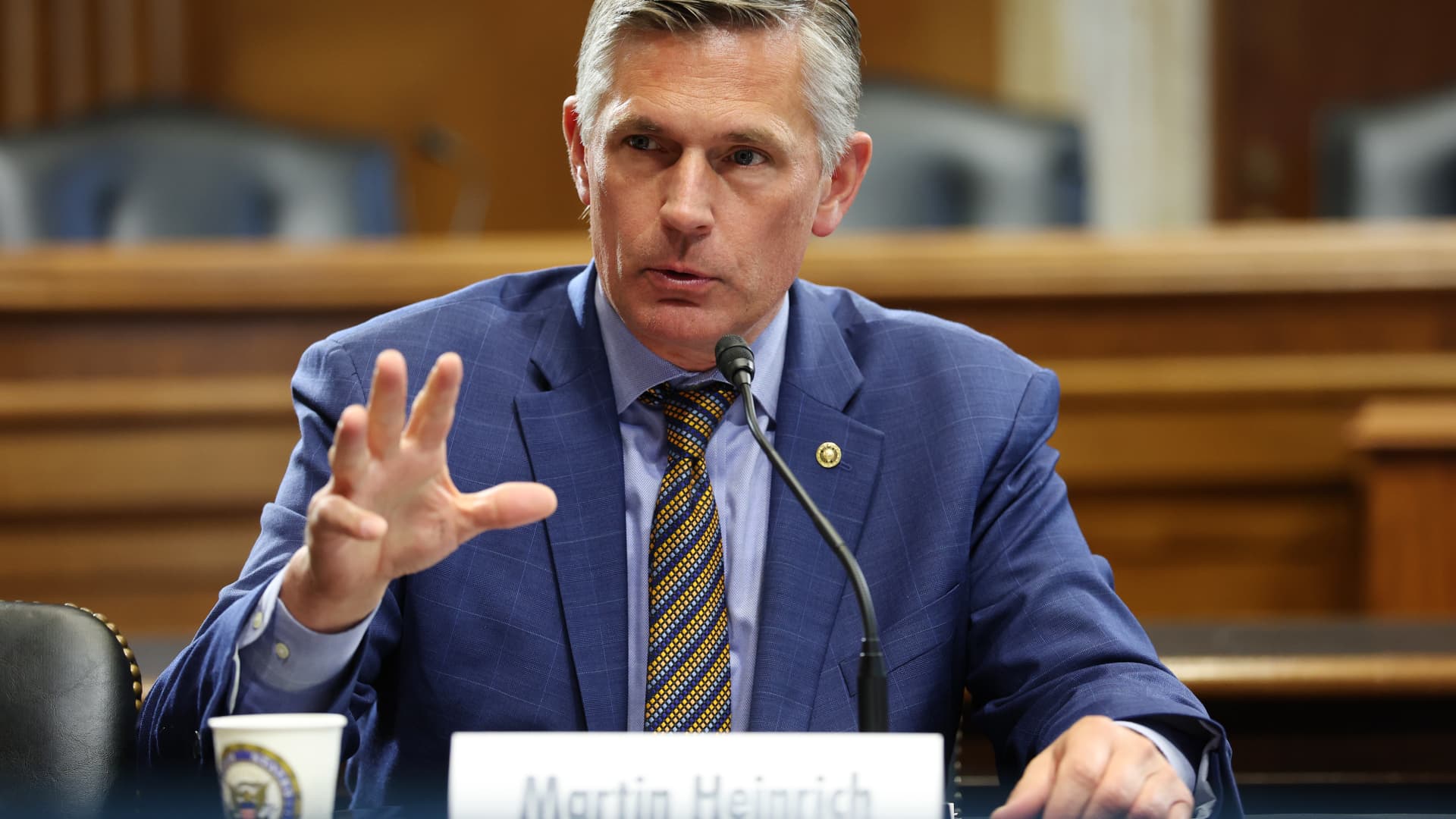
Sen. Martin Heinrich (D-New Mexico) speaks to reporters after a roundtable discussion on rising energy costs at the Capitol on March 17, 2026 in Washington, DC.
Anna Moneymaker | Getty Images
The top Democrat on the Senate Energy and Natural Resources Committee is questioning whether the Trump administration properly planned the de facto closure of the Strait of Hormuz, which has disrupted energy markets for weeks as the war with Iran drags on.
In a letter dated Tuesday to Energy Secretary Chris Wright that was shared exclusively with CNBC, Sen. Martin Heinrich (D.M.) asked for answers to a series of questions about how the administration prepared to close the Straits ahead of starting a war with Iran. The Islamic Republic has effectively blocked the strait since the start of the conflict.
“I am deeply concerned that the President’s decision to wage a reckless war against Iran will wreak havoc on energy markets for the foreseeable future, drive up energy costs for Americans across the country, and cause global economic disruption,” Heinrich said in the letter. “The administration ignored or failed to fully appreciate the impact that closing the Strait would have on domestic energy and household costs as it entered the war with Iran and lacked a coherent strategy to end the war and stabilize domestic and global energy markets.”
Iran’s suppression of traffic in the strait has become one of the Iranian regime’s biggest responsibilities during its war effort. Earlier this week, the United States began blockading Iranian ports in an effort to pressure Iran to allow tankers through. Meanwhile, U.S. gas prices average more than $4 a gallon even months before the 2026 midterm elections, potentially threatening President Donald Trump and the Republican Party’s grip on power.
Mr. Heinrich asked Mr. Wright to provide any reports or assessments the department might have prepared before the outbreak of war and during the war effort to analyze the impact of the war and the Strait closure on domestic and international energy markets. He also asked whether the department had provided any such reports to the White House or any Cabinet-level agencies or councils.
Mr. Heinrich also sought an assessment related to damage to energy infrastructure in the Persian Gulf and investigated the source of Mr. Wright’s controversial March 10 X post, which falsely claimed that the United States had escorted a tanker through the Strait of Hormuz.
“Please explain why you posted that the US Navy ‘successfully escorted an oil tanker through the Strait of Hormuz,’ and where the information in that post came from,” Heinrich wrote.
He also asked whether the department had done any analysis of the impact of President Trump’s blockade, and whether the department had done any additional analysis regarding the threat that the Iranian-backed Houthis might try to blockade the Bab al-Mandeb Strait, another key energy chokepoint connecting the Red Sea, the Gulf of Aden and the Arabian Sea.
