

Known for its cloud infrastructure that allows developers to deploy agents without managing servers, Vercel has quietly become one of the most leading companies in AI software. The company currently sees 6 million deployments per day, half of which are triggered by coding agents, and more than 1 trillion tokens pass through its AI gateway every day.
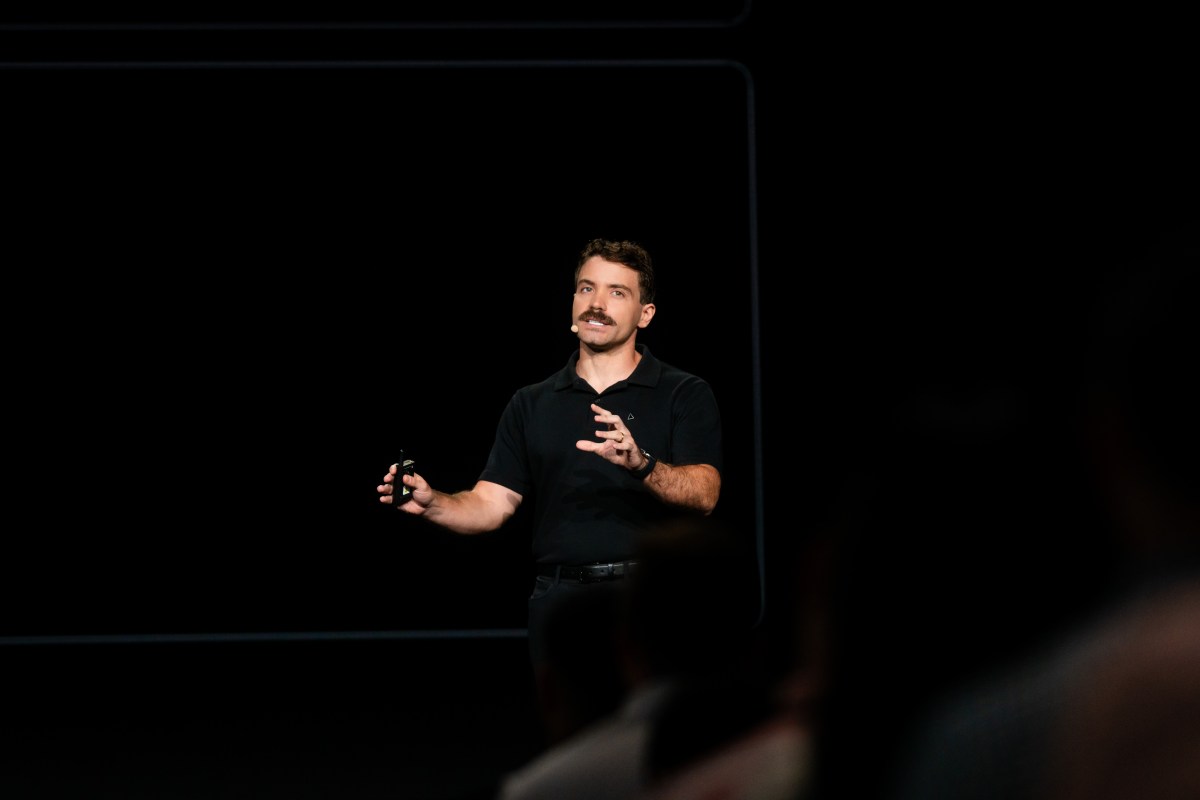
After the company’s ShipNYC conference last week, we spoke with Vercel CEO Guillermo Rauch about his current take on AI and how platform companies like Vercel will compete with big labs. Below is a lightly edited transcript.
It feels like there’s a different energy in the community this year, less pilot programs and more focus on how to actually make things work. I’m sure you’ve seen a lot of interaction with clients, but I’m curious to see what that journey has been like within Vercel.
Last year was all about prototyping. The sky is the limit, freeing agents, anyone can build, etc. We did it and learned a lot as we had hundreds of agents organically developed and deployed internally. Then I started understanding the reality of agents in production and some of the challenges.
The biggest takeaway for me was the home run use case, the agent’s two killer apps. One, of course, is the coding agent. This is facilitating the use of many tokens around the world, but when you create this much software, you need a place to put it. The second killer app for agents is the in-house agent that helps you run your company. The challenge is how to access data securely. How do you audit agent behavior? How do you get a trail of all the tool calls and access controls that the agent required to complete its job?
To solve that, we devised a framework called Eve that allows you to lay out an agent’s instructions and skills in natural language. Another tool is Vercel Sandbox, which puts agents in small cages. You have the freedom to express your intelligence, but you can enforce policies on what data can be accessed and what can leave the sandbox.
What kind of problems does it help avoid?
The biggest advantage of sandboxing is data control. The real risk with AI that I always think about is that when you get a coding IDE like Devin or Cursor, if you set it up wrong, it can train on your entire codebase. I remember talking about this with the president of Airbus. He has decades of accumulated C++ code specific to aerospace engineering. If someone comes in and installs the wrong developer tools, all the code will be sent to the cloud for training.
I’d love to know more about that second killer use case. We all know about coding agents, but what do in-house agents actually look like?
So there’s a sales person sitting there[in Vercel’s office]. She works at Installed Base. Her job is to grow existing accounts. The bottleneck for people like her was data, not her creativity, intelligence, or ability to build relationships. “I don’t know which accounts are growing faster. To help me prioritize my work, what are the five accounts that have added the most seats in the past two weeks?” She wasn’t able to ask that question before. We had to wait until the first quarter project for the new sales dashboard was completed.
At Vercel, we had been in that bottleneck for years, and it was really frustrating because we’re the fastest-moving company in the world in terms of R&D. However, I was very incompetent when it came to the sales engine, Salesforce engineering (side). I had never opened Salesforce in my life.
Eve can be used as a customer-facing agent and can also be used to improve productivity, so I feel like she can really impact the company as a whole. It’s the same technology, just an API. The agency is forcing businesses to open up, which will have dramatic long-term effects. Many of these SaaS giants have built entire kingdoms around trapping data, which is not compatible with agents.
How do you think the relationship between customers and leading AI labs will change?
Last year, many people said they would choose one lab partner and build everything with OpenAI or Anthropic. Now they understand how everything works: models, harnesses, data platforms, sandboxes, gateways, etc. It says all parts are plug and play. You can use OpenAI, you can use Anthropic, you can use Gemini. Although it hasn’t been in the news much, we’re seeing great growth for Gemini. This is because people are now optimizing production. In reality, when optimizing for production, you consider price and performance. Gemini models have excellent price and performance characteristics. Since we have also introduced an open model, DeepSeek and GLM-5.2 are also becoming popular. Data doesn’t lie.
There are some places that are in direct competition with research labs, right? Just last week, OpenAI released a new set of tools to publish directly to the web without leaving your OpenAI enclave.
It’s a natural next step for them to host a small website. And this is a great start for us because now people will think of ChatGPT as a tool for creating websites. And when they keep asking the model about web hosting, the model recommends us. But as you say, as more features are added to the model and platform, it becomes a direct competitor to existing infrastructure platforms.
I think at the moment we are deciding whether to combine the model and the agent.
Do you get all your information from one place, or do you get modules, libraries, or building blocks from one provider and build on top of them? This is more of the traditional way of software engineering, and that’s what we’re actually delivering to the market. As we become this generation of AWS, we are clearly fighting for a world of open protocols.
If you buy through links in our articles, we may earn a small commission. This does not affect editorial independence.
