

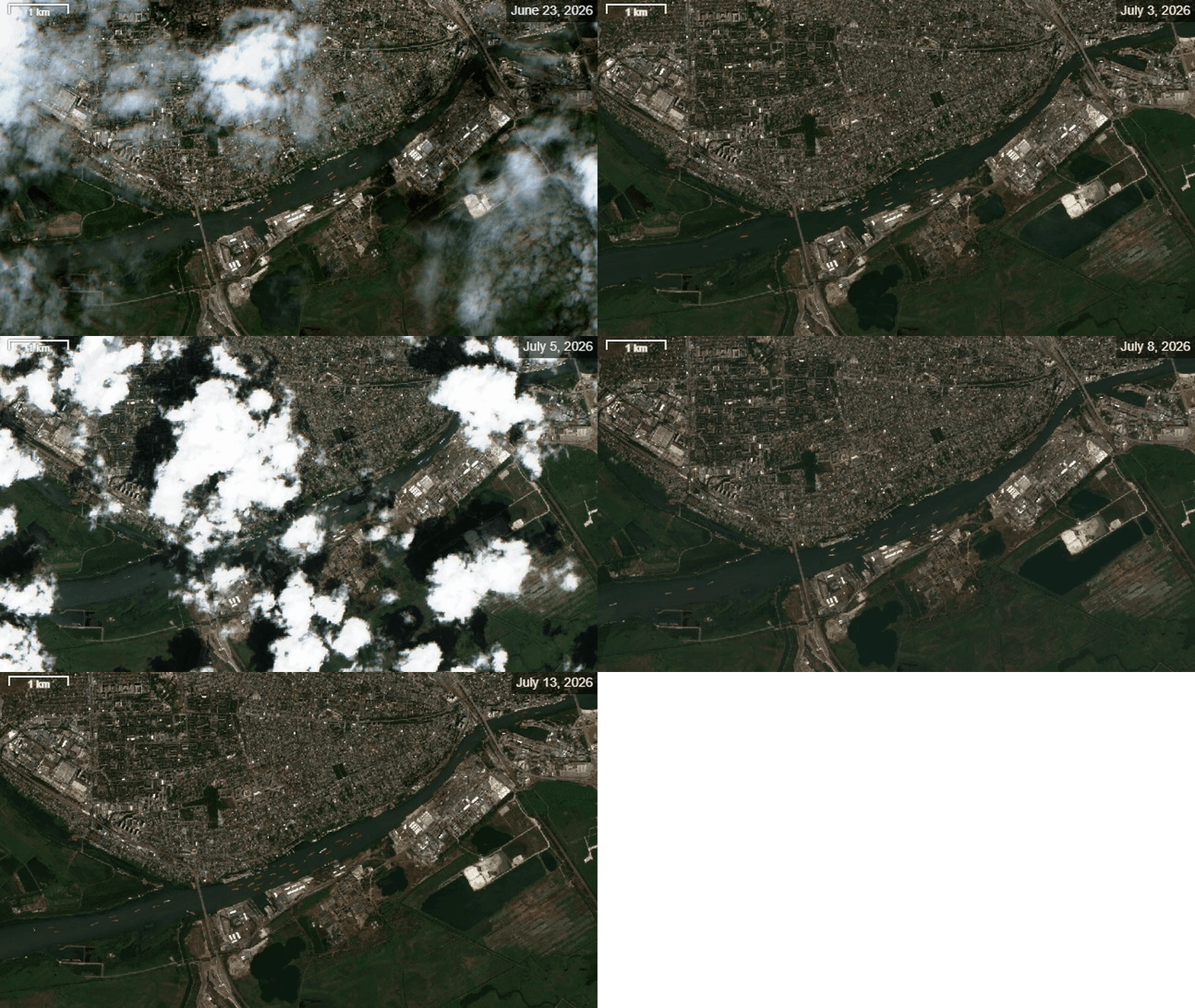
Russia’s grip on the gateway to the Black Sea is waning after a series of Ukrainian attacks prompted Moscow to suspend traffic on the vital waterway this week, limiting the Kremlin’s ability to trade with the rest of the world.
This development marks a major reversal of fortunes for Russia, as the Sea of Azov has long been beyond Kiev’s reach, providing Russia with a convenient base from which to attack Ukraine and linking vast areas of southern Russia to the world’s oceans.
However, recent advances in Ukraine’s drone program have changed the situation. Robert Brobdy, commander of Ukraine’s Unmanned Air Force, said on Wednesday that Kiev had attacked 116 Russian vessels in the Sea of Azov in the past nine days, a number that had risen sharply.
Previously, attacks on Russian shipping were mainly limited to shadow fleets and warships. CNN cannot independently verify Brobdy’s claims, but videos of some recent attacks shared by Ukrainian officials show direct hits.
The persistent attacks forced Russia to halt traffic through the Sea of Azov by closing two chokepoints in its corners: the Don Azov Strait, which connects the Sea of Azov with inland waterways, and the Kerch Strait, which connects it with the Black Sea.
Satellite images and ship tracking services show long lines of ships waiting on both sides of the ocean.
Ukraine has been increasingly successful in targeting a shadow fleet of Russian oil tankers carrying sanctioned fuel, but the blockade of the Sea of Azov could have broader implications, including exports not subject to sanctions, such as wheat and sunflower oil.
The Institute for War Studies, a U.S.-based conflict watchdog, said Tuesday that Ukraine’s attack in the Sea of Azov “represents a new phase in Ukraine’s efforts to isolate occupied Crimea from Russian logistics networks and disrupt Russia’s maritime shipping routes, especially for oil products and grain.”
According to the U.S. Department of Agriculture’s Foreign Agricultural Service, Russia is the world’s largest grain exporter, accounting for about one-fifth of global wheat exports.
According to Andrei Sizov, a leading Black Sea agricultural market analyst, about a quarter of Russia’s wheat exports are shipped via the Sea of Azov.
“The Black Sea is to the wheat market what the Persian Gulf is to the oil market. The Black Sea is by far the largest supplier of wheat to the world market,” he said, adding that if the situation continues, Russia’s economic losses could amount to billions of dollars.
Wheat futures prices, a key indicator of traders’ expectations, have soared in recent days, partly due to the Sea of Azov crisis. Russia claims it can bypass the Sea of Azov and reroute all grain exports through other terminals in the Black Sea, but Sizov said that would not be possible during the peak season when Russia’s total grain exports far exceed the capacity of these ports.
Russia, which has regularly targeted civilian infrastructure in Ukraine, has accused Kiev of terrorism and launched attacks on the port of Odesa in southern Ukraine and other targets in the region.
Russian Foreign Minister Sergei Lavrov said Wednesday that Kiev’s operations in the Sea of Azov “go beyond piracy.”
“Pirates at least loot and keep the loot for themselves. But here, it’s a case of ‘neither for themselves nor for others,’ and their purpose is simply to cause damage and intimidate. This is terrorism,” he said.
Ukraine claims it is intentionally attacking only military targets.

Ukraine’s operation in the Sea of Azov began as an effort to isolate Crimea in the southern part of the Ukrainian peninsula, which has been illegally annexed by Russia since 2014. Russian-installed authorities declared a state of emergency in Crimea last month after Ukraine’s attack on the peninsula caused widespread power outages and fuel shortages.
Kiev then stepped up strikes against bridges, highways and railways, depriving Russia of its ability to transport goods and people through the “land bridge” linking Crimea to Russia via occupied southern Ukraine. At the same time, it is also targeting Russian vessels attempting to transport fuel to the peninsula.
The Sea of Azov is an inland sea located between the southern coast of Ukraine and Russia, and is something of an appendage to the larger Black Sea.
After Ukraine gained independence from the Soviet Union, Moscow and Kiev signed a waterway-sharing agreement in 2003. But the Kremlin has repeatedly broken this agreement after it first started a war in eastern Ukraine in 2014 and illegally annexed Crimea.
After launching a full-scale invasion in February 2022, Russia successfully occupied all of Ukraine surrounding the Sea of Azov, blocking Kiev’s access to the Sea. Russian President Vladimir Putin even claimed that the sea was an internal Russian waterway.
Although the Sea of Azov is relatively small and shallow, it plays an important role in Russia’s economy. It is a vital link in an extensive system of inland rivers and canals that transport oil, grain, vegetable products, steel and other goods from vast regions of southern Russia to the Black Sea and then around the world.
Although this network was built during the Soviet era, the first attempts to connect important waterways date back to the reign of Peter the Great at the end of the 17th century.
After launching a full-scale invasion of Ukraine in 2022, Russia seized control of the Sea of Azov and used the waterway as a base for attacks on Ukraine’s main ports of Mariupol, Melitopol, and Berdyansk.
