

Published June 29, 2026
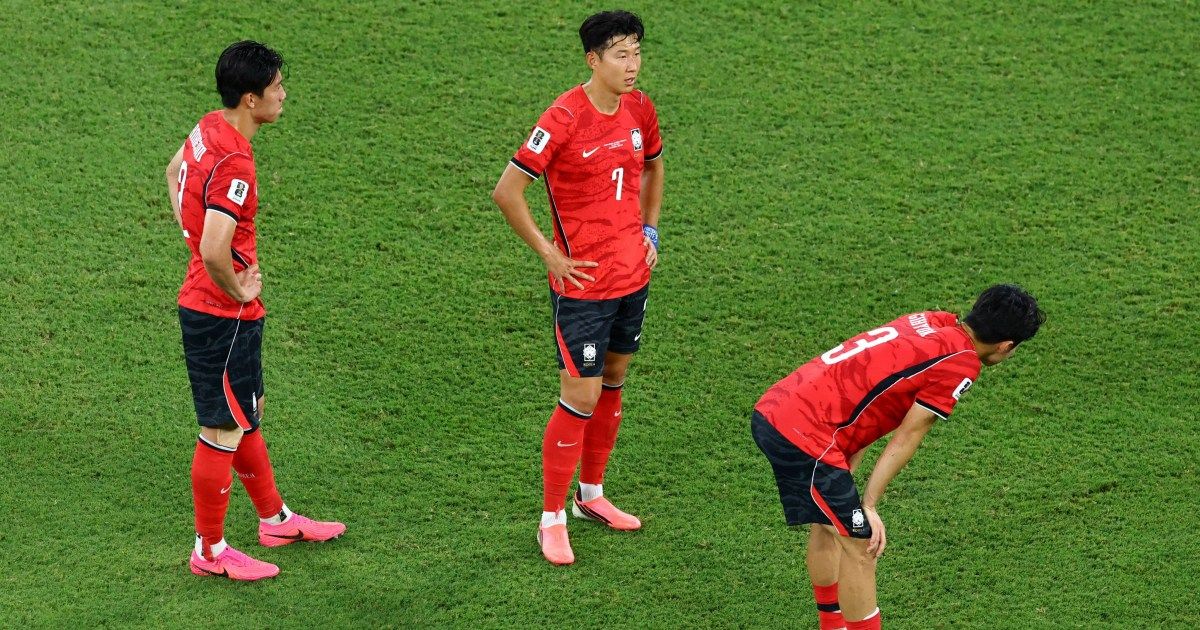
South Korea’s disastrous exit from the first round of the World Cup has sparked outrage within the country, and calls for complete reform of the top team have not been silenced by coach Hong Myung-bo’s resignation.
South Korea advanced to the semi-finals of the 2002 World Cup as co-hosts, but was one of the top eight teams in the top three to advance to the finals, and limped out of the tournament.
They were within range of advancing to the last 32, but suffered a shocking 1-0 loss to lower-ranked South Africa.
Their early departures prompted coach Hong to resign on Sunday, casting doubt on captain Son Heung-min’s international future.
The team was also reprimanded by President Lee Jae-myung, who pointed the finger at “incompetent people” and apologized to the people.
The president’s comments reflect public anger that has reached a boiling point after years of growing dissatisfaction with South Korea’s soccer leadership.

Former captain Park Ji-sung said, “We may have predicted this result years ago.
“You have to look back and ask yourself why this happened,” the former Manchester United player said after his team’s defeat was confirmed.
“Despite spending 10 years preparing for the World Cup and learning how to develop Korean soccer, we have forgotten that lesson again.”
South Korea was expected to be eliminated from Group A, which included co-hosts Mexico, South Africa and the Czech Republic.
They started with a 2-1 win over the Czech Republic, but lost to Mexico 0-1 and then lost to South Africa.
The team was scheduled to return home on Tuesday morning, but local media reported that the Korean Football Association (KFA) had no plans to organize an event to welcome the team back.
In 2014, when the team returned from the World Cup in Brazil, where they were eliminated in the group stage during Hong’s first spell as manager, angry fans threw Korean candy at the team – an insult seen as extremely offensive.

“Message to change”
Hong has been a lightning rod for criticism since returning to the job in July 2024, five months after his predecessor, German World Cup winner Jurgen Klinsmann, was sacked.
The KFA has come under fire over the process that led to Hong’s reappointment, questioning its transparency and fairness.
Coach Hong, who was regularly booed by fans, had no role in the World Cup, dropping star player Son against South Africa, when South Korea only needed one point.
Hong later admitted that he was struggling to understand what had gone wrong as the nation nervously awaited the results of other fateful matches.

Lee Chun-soo, a member of the 2002 World Cup team, said during the match against the Democratic Republic of the Congo, hoping that this result would help Korea advance, “I felt it was pathetic and frustrating to support Uzbekistan.”
“This is a message of change,” Lee said on his YouTube channel. “Everyone should be prepared to resign.”
Korean fans reserved a significant portion of their anger toward KFA president Chung Mong-gyu.
Before the World Cup, Chong said he would step down after the tournament, citing a “lack of virtue” following intense criticism of his 13-year tenure.
The 65-year-old, who is in his fourth term as KFA president, came under fire for trying to pardon former players banned for life for match-fixing.
Chung and Hong may not be the only players to resign, with captain Song yet to comment on his future.
The captain, who turns 34 next month, had previously hinted at retiring from international football.
Former captain Park said South Korea needs to learn from the past.
“It’s unfortunate that this cycle keeps repeating itself,” he said.
“We must dream and shape a better future and move forward one step at a time to avoid repeating these mistakes.”
